Microdosed cannabis is not a good pre-workout for weightlifting and resistance training. A systematic review of 15 studies on THC and exercise performance found zero improvements in strength and concluded that strength is "probably reduced."
The story changes when you use cannabis after a workout. CBD has demonstrated anti-inflammatory effects, and THC supports sleep, which is when muscle protein synthesis peaks. For lifters, cannabis belongs in your recovery protocol, not your pre-workout stack.
Why you should skip cannabis before heavy lifts
No strength benefit (possibly a strength loss)
Researchers with the Journal of Science and Medicine in Sport analyzed every study examining THC alongside exercise protocols. Of 15 studies, none showed improvement in strength or aerobic performance. Two studies found that cannabis precipitated reduced work capacity. The review's conclusion on strength was blunt: probably reduced.
Separate research noted that THC can decrease strength output for up to 24 hours after use. For anyone following a program with multiple training days per week, that's a meaningful window.
Increased perceived exertion
A 2024 study, published in Sports Medicine, found that cannabis increased perceived exertion during exercise, so the same workload felt harder.
For a runner, that's a tradeoff worth considering since mood and enjoyment also improved. For a lifter trying to progressive overload, it's not. If 225 pounds feels like 250, your training stimulus hasn't changed, but your perception of it has. You are more likely to cut sets short or avoid adding weight.
Even microdoses shift perception under load
At 2.5–5 mg THC, the effects are sub-intoxicating. You're not impaired in the way most people think of impairment. But there are subtle shifts in proprioception and spatial awareness. When microdosing cannabis on a hiking trail, those shifts are negligible, but not under a heavy barbell.
Squats, deadlifts, bench press, and other heavy lifts require precise motor control and constant awareness of bar path, joint position, and balance. The "enhanced body awareness" that benefits yoga or a long run works against you when the goal is controlled movement under high loads. You need sharp, reflexive coordination, not a slightly altered sense of where your body is in space.
THC also increases heart rate through CB1 receptor activation. Resistance training elevates heart rate on its own, and stacking the two produces a more pronounced cardiovascular response, which is undesirable when you're bracing hard under a heavy squat.
Cannabis helps with weight training recovery
Early research shows that cannabis aids workout recovery through multiple mechanisms.
Microdosing cannabis for DOMS and muscle damage
A 2021 study on CBD and resistance training gave trained lifters CBD before an intensive squat protocol and measured markers of muscle damage at 24, 48, and 72 hours post-exercise. At 72 hours, the CBD group showed a significantly dampened myoglobin response (a marker of muscle damage) and maintained their squat one-repetition maximum, while the placebo group had not fully recovered.
A pilot study on cannabis and eccentric exercise measured IL-6, an inflammatory cytokine, after a damaging bout of bicep curls. The placebo group showed a visible spike in IL-6 at 48 and 72 hours, while the group that received cannabis did not.
For lifters who train 4–6 days per week, even a modest reduction in muscle damage markers between sessions can translate to better performance on subsequent training days.
Read more about how microdosing cannabis can help with DOMS.
Microdosing cannabis for inflammation management
A 2021 systematic review of cannabinoids and inflammatory cytokines examined 26 preclinical studies. CBD and CBD + THC combinations reduced pro-inflammatory cytokines (TNF-alpha, IL-6, IL-1β) in 22 of them.
THC alone did not produce the same anti-inflammatory effect as products that also included CBD. If your goal is managing training-related inflammation, a high CBD product (or a balanced THC:CBD ratio) is going to do more for you than THC alone. This is the opposite of what most recreational cannabis users reach for, but lifters aren't optimizing for the same thing.
Survey data from a 2023 study in the Journal of Cannabis Research supports this, with 93% of exercisers who used CBD confirming it aided their recovery. CBD users also reported training at higher intensities than THC-only users, which suggests that CBD's anti-inflammatory effects may support sustained hard training rather than hindering it.
Microdosing cannabis for sleep
Muscle doesn't grow in the gym, but during sleep. Growth hormone release follows a circadian pattern tied to deep sleep stages, and muscle protein synthesis peaks during the overnight recovery window. If your sleep quality is poor, your training stimulus is being wasted.
THC has been shown to support sleep onset and duration. Among exercisers surveyed about their cannabis use, sleep improvement was consistently one of the top reasons for use. A 5–10 mg THC dose taken 30–60 minutes before bed can support the recovery window without any interference with the training session that happened hours earlier.
For lifters who train in the late afternoon or evening and struggle to downshift their nervous system before bed, this is one of the most practical applications of microdosed cannabis. You don't need to be sedated. You need the sympathetic activation from your session to dissipate so your body can shift into recovery mode.
Read more about the benefits of THC for sleep.
Microdosing cannabis for cortisol management
Intense resistance training elevates cortisol. That's normal and part of the adaptive response. The problem is chronic elevation from overtraining or accumulated life stress. Sustained high cortisol is catabolic and works against muscle growth and recovery.
Some human research has linked CBD to reduced cortisol levels. The mechanism isn't fully understood, but it's consistent with CBD's broader effects on the stress response and parasympathetic nervous system activation. For lifters in high-volume training phases or managing significant stress outside the gym, evening CBD may help.
Learn more about microdosing cannabis for stress reduction.
Microdosing cannabis for pain management without NSAIDs
Many lifters rely on ibuprofen or naproxen for chronic joint pain, tendon issues, and training-related soreness. According to 2017 research, chronic NSAID use around training can blunt muscle protein synthesis. The very adaptation you're training for gets suppressed by the drug you're taking to manage the discomfort from training.
CBD offers anti-inflammatory properties through a different mechanism, acting on endocannabinoid and adenosine receptors rather than the COX pathway that NSAIDs target. While we can't say definitively that CBD avoids the MPS-blunting effect (it hasn't been studied in that context), the mechanism is different enough that it's a reasonable alternative for lifters who need daily pain management but don't want to compromise their adaptations.
For more information, read our cannabis vs ibuprofen comparison for muscle recovery.
Timing and dosing for lifters
Post-workout, same day
Dose: 5–10 mg THC with 10–25 mg CBD.
Goal: Anti-inflammatory support, nervous system downregulation, and sleep quality.
Timing: Take 30–60 minutes before bed, or at a minimum of 2–3 hours after your training session. The buffer between session end and cannabis intake is a precaution against potential interference with the acute inflammatory signaling that drives hypertrophy.
Rest days
Dose: 2.5–5 mg THC with 5–15 mg CBD.
Goal: Ongoing inflammation management, soreness reduction, and general recovery support.
Timing: Afternoon or evening. Lower doses keep you functional during the day while still providing anti-inflammatory benefits. If DOMS from a previous session is significant, the higher end of this range in the evening is appropriate.
Before training
Dose: None.
Don't take THC or CBD within 3–4 hours before a lifting session. A low-dose edible consumed at noon will still be active at a 3 PM session. Plan your dosing around your training schedule, not the other way around.
Product QUIZ
Need help deciding what product is best for you? Take our quiz, just three questions until your perfect match!
Best nama products for lifters
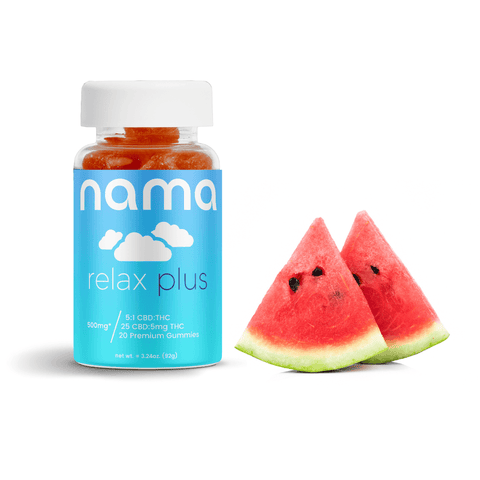
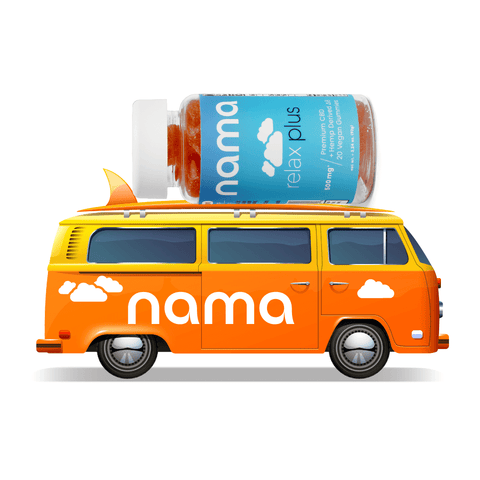
For post-workout recovery and sleep, our gummies higher in CBD, such as our Relax Plus gummies, deliver the anti-inflammatory and sleep-promoting benefits that support the overnight recovery window. A gummy with 5–10 mg THC and higher CBD taken in the evening aligns with the dosing protocol for lifters.
For flexible dosing, Buzz Drops let you dial in your exact dose. Add them to a post-workout shake, water, tea, or any other drink. Each dropper is 2.5 mg THC and 2.5 mg CBD, so you can build up to your target in precise increments.
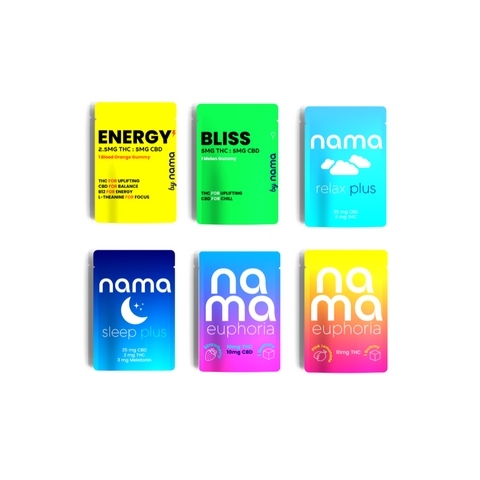
Every nama product is hemp-derived, third-party lab tested, and labeled with exact cannabinoid content. When you're tracking sets, reps, protein, and sleep, your recovery supplements should be just as precise. Choose from our range of THC gummies or try a THC gummy sampler to figure out which of our best-sellers works for you.
Cannabis and weightlifting FAQ
Cannabis does not appear to impair or enhance muscle growth at microdose levels.
Anti-inflammatory compounds taken immediately around training could theoretically blunt the inflammatory signaling cascade that triggers hypertrophy, though this hasn't been confirmed for CBD specifically. THC's impact on testosterone is minimal at low doses and in habitual users.
Used as a recovery tool in the evening, hours after training, microdosed cannabis is unlikely to hurt your gains and may support them through better sleep and inflammation management.
Heavy, chronic THC use has been associated with temporary testosterone suppression in some studies, though the effect appears mild and reversible. In habitual users at moderate doses, multiple human studies show little to no impact.
At microdose levels, there is no evidence of meaningful testosterone suppression. CBD does not appear to affect testosterone. If you're microdosing a few times per week for recovery, this is not a realistic concern based on current evidence.
Yes, but timing matters. To avoid any theoretical interference with the acute inflammatory response that drives muscle adaptation, wait 2–3 hours after your session before taking CBD.
An evening dose of 10–25 mg CBD (with or without 5–10 mg THC) supports overnight recovery through anti-inflammatory and sleep-promoting effects. A 2021 study found that CBD supplementation helped lifters maintain squat performance at 72 hours post-exercise compared to placebo.
Keep at least 3–4 hours between your last cannabis dose and your training session. THC's psychoactive effects from a low-dose edible typically last 2–4 hours, but can linger longer depending on individual metabolism. At microdose levels with evening-only use, your morning or afternoon session the next day should be unaffected.
Top Sellers
New? Start with our Ultimate Sampler!
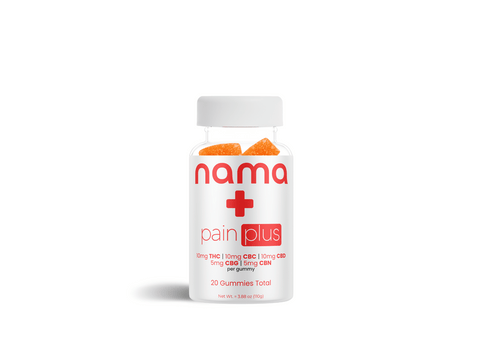
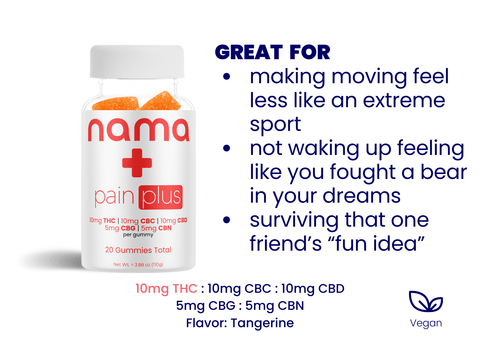
10mg THC | 10mg CBD | 10mg CBC | 5mg CBG | 5mg CBN (per gummy)
Resources
Kennedy M. C. (2017). Cannabis: Exercise performance and sport. A systematic review. Journal of science and medicine in sport, 20(9), 825–829. https://doi.org/10.1016/j.jsams.2017.03.012
Isenmann, E., Veit, S., Starke, L., Flenker, U., & Diel, P. (2021). Effects of Cannabidiol Supplementation on Skeletal Muscle Regeneration after Intensive Resistance Training. Nutrients, 13(9), 3028. https://doi.org/10.3390/nu13093028
Gibson, L.P., Giordano, G.R., Bidwell, L.C. et al. Acute Effects of Ad Libitum Use of Commercially Available Cannabis Products on the Subjective Experience of Aerobic Exercise: A Crossover Study. Sports Med 54, 1051–1066 (2024). https://doi.org/10.1007/s40279-023-01980-4
Isenmann, E., Veit, S., Starke, L., Flenker, U., & Diel, P. (2021). Effects of Cannabidiol Supplementation on Skeletal Muscle Regeneration after Intensive Resistance Training. Nutrients, 13(9), 3028. https://doi.org/10.3390/nu13093028
Stone, W. J., Tolusso, D. V., Pancheco, G., Brgoch, S., & Nguyen, V. T. (2023). A Pilot Study on Cannabidiol (CBD) and Eccentric Exercise: Impact on Inflammation, Performance, and Pain. International journal of exercise science, 16(2), 109–117. https://doi.org/10.70252/VWUK7519
Henshaw, F. R., Dewsbury, L. S., Lim, C. K., & Steiner, G. Z. (2021). The Effects of Cannabinoids on Pro- and Anti-Inflammatory Cytokines: A Systematic Review of In Vivo Studies. Cannabis and cannabinoid research, 6(3), 177–195. https://doi.org/10.1089/can.2020.0105
Pinzone, A. G., Erb, E. K., Humm, S. M., Kearney, S. G., & Kingsley, J. D. (2023). Cannabis use for exercise recovery in trained individuals: a survey study. Journal of cannabis research, 5(1), 32. https://doi.org/10.1186/s42238-023-00198-5
Zeiger, J. S., Silvers, W. S., Fleegler, E. M., & Zeiger, R. S. (2019). Cannabis use in active athletes: Behaviors related to subjective effects. PloS one, 14(6), e0218998. https://doi.org/10.1371/journal.pone.0218998
Henson, J. D., Vitetta, L., Quezada, M., & Hall, S. (2021). Enhancing Endocannabinoid Control of Stress with Cannabidiol. Journal of clinical medicine, 10(24), 5852. https://doi.org/10.3390/jcm10245852
Lilja, M., Mandić, M., Apró, W., Melin, M., Olsson, K., Rosenborg, S., Gustafsson, T., & Lundberg, T. R. (2017). High doses of anti‐inflammatory drugs compromise muscle strength and hypertrophic adaptations to resistance training in young adults. Acta Physiologica, 222(2). https://doi.org/10.1111/apha.12948
Further Reading
Is caffeine or cannabis better as a preworkout?
Microdosing cannabis for athletes
How to microdose cannabis for marathon running
nama CBD FDA & legal disclaimer
Our products are not intended to diagnose, treat, cure, or prevent any disease. They are not a replacement for prescription medications and have not been evaluated by the Food and Drug Administration (FDA).
The information provided on this website does not and is not intended to constitute legal advice or any statements of the status of any laws. Any information, content, and materials available on this site are for general informational purposes only and are not intended to be relied upon for any purpose.
Readers of this website should contact their attorney to obtain advice concerning any particular legal matter, including decisions on what products are, or are not, legal to sell, possess, or consume. No reader, user, or browser of this site should act or refrain from acting based on information on this site without first seeking legal advice from their own counsel in the relevant jurisdiction.
Only your attorney can provide assurances that the information contained herein—and your interpretation of it—is applicable or accurate for your particular situation. Use of, and access to, this website or any of the links or resources contained within the site do not create an attorney-client relationship between the reader, user, or browser, and website authors, contributors, contributing law firms, or committee members and their respective employers.

About
Learn
Join us on this journey
© Copyright 2026 nama Products LLC. All Rights Reserved.
†These statements have not been evaluated by the Food and Drug Administration. These products are not intended to diagnose, treat, cure or prevent any disease. All information presented here is not meant as a substitute for or alternative to information from health care practitioners. Please consult your health care professional about potential interactions or other possible complications before using any product.
††The information provided on this website does not, and is not intended to, constitute legal advice or any statements of the status of any laws. Any information, content, and materials available on this site are for general entertainment purposes only, and are not intended to be relied upon for any purpose.
⚠️ CALIFORNIA WARNING: Consuming this product during pregnancy exposes your child to delta-9-THC, which can affect your child’s behavior and learning ability. For more information go to www.P65Warnings.ca.gov/cannabis.
nama: The only source for Buzz Drops™
By clicking ‘Yes,’ you agree to our
Terms & Conditions and Privacy Policy
123 John Doe Street
Your Town, YT 12345
Store Hours
Sun: Closed
Mon-Fri: 9:00 - 17:00
Sat: 10:00 - 13:00
What to expect at pickup
Closed
Closing at 5pm
Closing at 5pm
Closing at 5pm
Closing at 5pm
Closing at 5pm
Closing at 1pm

Comments (0)
There are no comments for this article. Be the first one to leave a message!