Microdosed cannabis vs. ibuprofen for muscle recovery

Mar 20, 2026The nama Team

Ibuprofen is the default recovery tool for most athletes and gym-goers. The approach works in the short term, but the trade-offs can stack up. Microdosed cannabis targets the same post-exercise pain and inflammation through a different mechanism, one that doesn't carry the same organ-level risks or blunt your body's repair process.

Ibuprofen kills your soreness but may also kill your gains. Compare the muscle recovery science behind NSAIDs and microdosed cannabis, and when each one works best.

nama's microdosed THC edibles and THC drinks deliver precise cannabinoid doses that support recovery without the side effects of reaching for the ibuprofen bottle after every session.

Buzz Drops™ [THC Drink Drops]
On Sale from $27.95
Buzz Drops™ [THC Drink Drops]

2.5mg THC | 2.5mg CBD (per dropper full)

Save up to $41.05 THC
Buzz Packs™ [THC and CBD Powder Drink Mix]
On Sale from $29.95
Buzz Packs™ [THC and CBD Powder Drink Mix]

5mg THC | 5mg CBD (per pack)

Save up to $50.00 THC

How does ibuprofen work for muscle recovery?

Ibuprofen belongs to the NSAID (nonsteroidal anti-inflammatory drug) class. It inhibits cyclooxygenase enzymes, COX-1 and COX-2, which stop the production of prostaglandins, chemical messengers that drive inflammation, pain, and fever.

But prostaglandins do more than cause pain. They protect your stomach lining, maintain kidney blood flow during dehydration, and play a direct role in muscle protein synthesis after exercise. When ibuprofen shuts down COX enzymes, it shuts down all of these functions.

For muscle recovery, the research is concerning. A 2002 study found that 1,200 mg of ibuprofen taken before resistance exercise decreased prostaglandin production and muscle protein synthesis 24 hours post-exercise. 

In another study, published in 2018, young adults who took 1,200 mg of ibuprofen daily during 8 weeks of resistance training gained roughly half the muscle volume as the low-dose aspirin control group. Muscle growth in the aspirin group increased by 7.5%, while the ibuprofen group managed 3.7%.

A 2023 study review summarized the evidence. Large doses of NSAIDs used after high-intensity training can reduce muscle protein synthesis and hypertrophy, while lower doses have little to no effect. The dose matters, but the doses most people take for post-workout soreness (600–1,200 mg) are within the problematic range.

Ibuprofen and gastrointestinal issues

NSAIDs are one of the most common causes of gastrointestinal injury. They strip away the protective mucus lining of your stomach, which can lead to ulcers and bleeding. The prevalence of peptic ulcers in NSAID users runs between 15–40%. A 2026 systematic review and meta-analysis found that ibuprofen carried a significant risk of gastrointestinal bleeding.

Ibuprofen and kidney damage

Ibuprofen can also damage the kidneys. A Stanford study of ultramarathoners found that runners who took ibuprofen during a 50-mile race had higher rates of acute kidney injury than those who took a placebo. 

This risk spikes when you combine NSAIDs with the dehydration that's common after intense exercise. A Kaiser Permanente study found that dehydration combined with NSAID use was associated with the vast majority of acute kidney injuries in athletes with exertional rhabdomyolysis.

How does microdosed cannabis work for muscle recovery?

Microdosed cannabis works through the endocannabinoid system (ECS), a network of receptors and enzymes that regulates pain, inflammation, mood, and sleep. CB1 receptors concentrate in the brain and central nervous system, and CB2 receptors cluster in immune cells and peripheral tissues, the same tissues actively repairing after a hard workout.

Your body already produces its own cannabinoids during and after exercise. Anandamide and 2-AG levels rise during aerobic activity, and these endocannabinoids help drive the post-exercise mood lift and pain modulation that used to be attributed solely to endorphins. Plant-derived THC and CBD supplement this natural system.

Read more about microdosing cannabis for athletes.

Microdosed cannabis for post-exercise recovery

A systematic review of 26 preclinical studies found that CBD reduced pro-inflammatory cytokines TNF-α, IL-1β, and IL-6 while boosting anti-inflammatory cytokines like IL-10. THC alone didn't move the needle on inflammatory markers, but CBD and THC combinations did. 

A product with both cannabinoids targets inflammation more effectively than either compound in isolation. Research shows that CBD and THC downregulate TNF-α and IL-12, and habitual cannabis users display lower circulating levels of C-reactive protein (CRP), a marker of systemic inflammation.

A 2021 study found that participants who took CBD before an intensive resistance exercise session showed a dampened myoglobin response (a marker of muscle damage) and maintained their one-repetition maximum strength at 72 hours post-exercise, while the placebo group lost strength.

In a 2023 survey of 111 cannabis-using exercisers published in the Journal of Cannabis Research, 93% of respondents said CBD helped with exercise recovery, and 87% said THC provided recovery benefits, including pain relief, inflammation reduction, and improved sleep.

Microdosed cannabis for recovery during sleep

During deep sleep, your body releases growth hormone, which drives muscle protein synthesis and repairs tissue. Hard training can wreck your sleep quality through residual pain and elevated cortisol. 

Microdosed THC helps initiate sleep, while CBD reduces the anxiety and mental chatter that keeps athletes staring at the ceiling. Together, they support the deep sleep stages where muscle repair peaks.

When microdosed cannabis is the better choice

Frequent trainers who need daily recovery

If you train 4–6 days a week, you need a recovery tool you can use every day without cumulative side effects. Daily ibuprofen at doses that affect soreness (600–1,200 mg) carries risks of GI damage, potential kidney stress, and interference with muscle adaptations. 

Microdosing cannabis for muscle recovery at 2.5–5 mg THC paired with CBD doesn't accumulate the same organ-level risks. You can use it Monday through Saturday without worrying about your stomach lining or your gains.

People who want to build muscle

This is where the research gets compelling for strength athletes. If your goal is hypertrophy (building muscle), ibuprofen at standard OTC doses may work against you. 

Unlike ibuprofen, cannabinoids don't interfere with COX-mediated prostaglandin production. You get pain relief and inflammation management without compromising the molecular signals your muscles need to grow.

Athletes concerned about gut health

Runners, cyclists, and triathletes already experience exercise-induced GI distress at high training volumes. Adding NSAIDs to an already stressed gut is a bad combination. 

Cannabinoids target pain and inflammation through CB1 and CB2 receptor activation, not COX-1 inhibition, so they don't strip away the protective mucus lining of your stomach or increase bleeding risk.

Read more about microdosing THC for pain relief.

Evening and overnight recovery

Ibuprofen alleviates pain, but it doesn't help you sleep, while microdosed cannabis can address both. A 2.5 mg THC gummy taken in the evening reduces post-workout soreness and supports the sleep quality that drives overnight recovery. You're not just masking pain, you're creating better conditions for repair.

Long-term recovery protocols

If you're managing chronic training-related soreness over months or years, the risk profile of daily NSAIDs worsens with time. Kidney damage, GI complications, and cardiovascular risks all increase with prolonged use. 

Cannabinoids at microdose levels are a repeatable recovery tool with a different safety profile. The entourage effect between multiple cannabinoids targets inflammation through several pathways at once without the cumulative organ damage.

When ibuprofen is still the better choice

Acute injuries

A rolled ankle, a pulled muscle, or a joint that swells up during a game calls for fast, aggressive anti-inflammatory action. Ibuprofen's COX inhibition reduces swelling and pain within 30–60 minutes. For acute, short-term use in a genuine injury scenario, NSAIDs remain the standard of care. Cannabinoids work through a slower, more modulatory pathway that's better suited to daily recovery than acute injury management.

When you need immediate pain relief

Ibuprofen starts working in 20–30 minutes. Edibles take 45–90 minutes. If you're in significant pain right now and need fast relief, ibuprofen is the more practical choice. Liquid options like Buzz Drops have a faster onset (10–20 minutes), but for raw speed of pain relief, ibuprofen usually wins.

Anyone subject to drug testing

Standard drug panels test for THC metabolites, which are detectable for weeks after use. A 2.5 mg gummy taken on a weekend can trigger a positive test days later. If you're subject to workplace or athletic drug testing, skip THC-containing products. A CBD-only product should not cause a positive result, but the safest route is ibuprofen or acetaminophen if testing is a concern.

Competition-day recovery

If you need to recover between events at a multi-day competition, ibuprofen's speed and predictability make it the better tool. Cannabis can alter perception, and even at microdose levels, you may not want any psychoactive effects during competition.

Can you use both?

Yes, and for many athletes, this is the most practical approach.

Ibuprofen and cannabinoids target different pathways, so they don't directly interfere with each other. The most logical strategy is to use them for different situations rather than stacking them simultaneously.

If you want to use both on the same day, separate them by timing and purpose. Take ibuprofen immediately post-workout for acute soreness (at the lowest effective dose), and take a microdosed edible in the evening for overnight recovery and sleep. Don't combine high-dose ibuprofen with cannabis as a daily habit; use each tool where it's strongest instead.

The goal is to reduce your total NSAID load over time. Every dose of ibuprofen you replace with a cannabinoid microdose is one less dose wearing on your stomach, kidneys, and muscle adaptation pathways.

Product QUIZ

Need help deciding what product is best for you? Take our quiz, just three questions until your perfect match!

Best nama products for muscle recovery

Our lineup includes several products that fit different recovery windows and training demands. Each delivers a precise, lab-tested dose so you can build a repeatable recovery protocol without guesswork.

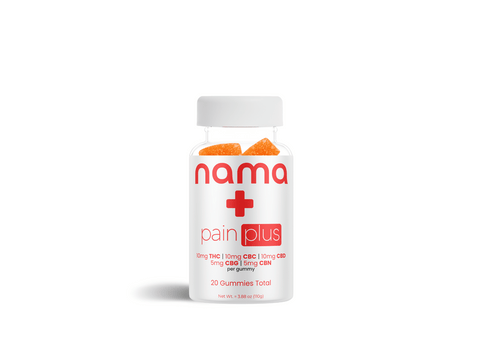
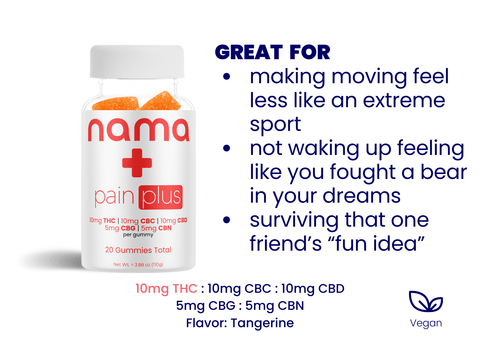
  • Pain Plus gummies contain five cannabinoids: 10 mg THC, 10 mg CBC, 10 mg CBD, 5 mg CBG, and 5 mg CBN. For post-workout recovery after a demanding session, Pain Plus delivers the most comprehensive cannabinoid coverage in our lineup.
  • Buzz Drops deliver 2.5 mg THC and 2.5 mg CBD per dropper in a flavorless liquid. Add them to your post-workout shake or water, and effects start in 10–20 minutes.
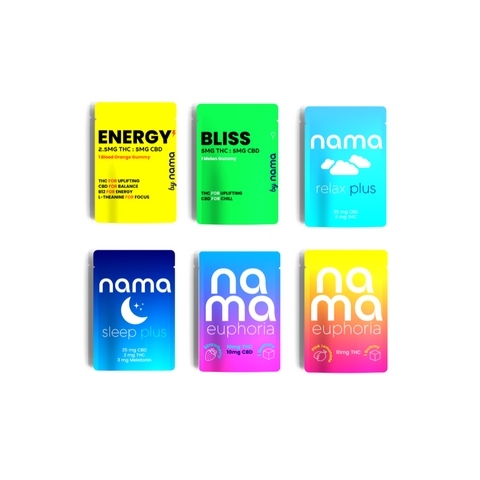
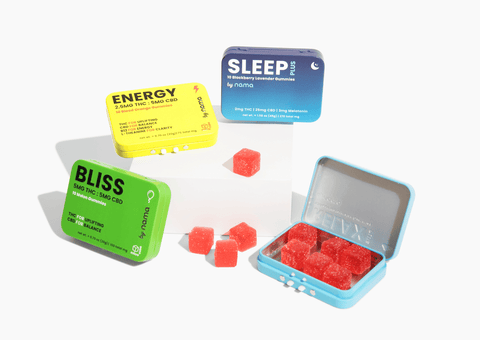
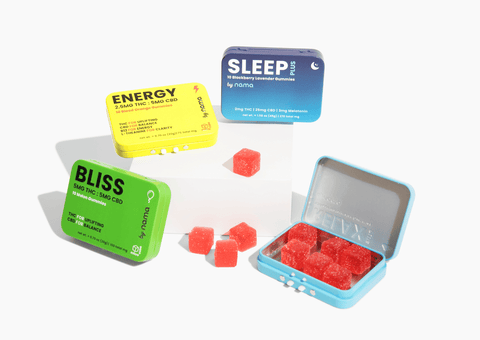
  • Sleep Plus gummies combine 25 mg CBD, 2 mg THC, and 3 mg melatonin. Recovery happens during deep sleep, and Sleep Plus supports both falling asleep and staying in the restorative stages where growth hormone release and muscle protein synthesis peak.
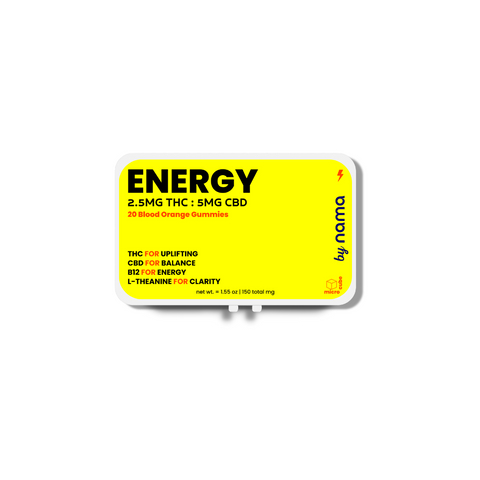
  • Energy gummies combine 2.5 mg THC and 5 mg CBD with 1000 mcg of B12 and 50 mg of L-theanine. For the day after a tough session, when you're recovered enough to train but still carrying some residual soreness, Energy gummies provide subtle mood elevation and focus without impairment.

All nama products are made from American-grown hemp, vegan, gluten-free, and third-party tested for purity and potency.

Ibuprofen vs microdosed cannabis FAQ

Cannabis and ibuprofen carry different risk profiles over time. Chronic ibuprofen use at standard OTC doses (600–1,200 mg) is linked to gastrointestinal erosion, kidney stress, and potential interference with muscle adaptation. These risks compound with each week of daily use. 

Microdosed cannabis (2.5–5 mg THC paired with CBD) doesn't carry the same organ-level risks, as there's no GI erosion mechanism, no COX-mediated kidney vasoconstriction, and no evidence of interference with muscle protein synthesis. 

That said, "safer" doesn't mean "zero risk." THC can affect mood and sleep architecture at higher doses, and cognitive function if you escalate beyond microdose ranges. The advantage is that cannabis side effects are dose-dependent, while ibuprofen's gastrointestinal and renal risks can develop at any dosage.

Read about the best microdosing amounts for THC.

The psychoactive effects of cannabis wear off within 4–8 hours. An evening gummy for post-workout recovery won't leave you impaired the next morning. Reaction time and cognitive sharpness return to baseline well before your alarm goes off. 

This applies to microdoses. If you take 10+ mg of THC, residual cognitive effects can linger into the next day, especially if you're a newer user. Stick with precise, low-dose products, and you won't have a problem training at full capacity the following day.

A few signals suggest ibuprofen isn't serving you well as a daily recovery tool, including:

  • Stomach discomfort or acid reflux
  • Needing higher doses to get the same relief
  • Strength plateaus despite consistent training
  • Relying on ibuprofen more than 3–4 days a week

If any of those apply, your body is telling you that chronic COX inhibition comes at a cost. 

Start by replacing one or two of your weekly ibuprofen doses with a microdosed THC and CBD gummy for pain on lighter recovery days, and work your way up. Keep ibuprofen for acute situations and let cannabinoids handle the baseline soreness that comes with training hard across a full week.

Top Sellers

New? Start with our Ultimate Sampler!
Buzz Packs™ [THC and CBD Powder Drink Mix]
On Sale from $29.95
Buzz Packs™ [THC and CBD Powder Drink Mix]

5mg THC | 5mg CBD (per pack)

Save up to $50.00 THC
Buzz Drops™ [THC Drink Drops]
On Sale from $27.95
Buzz Drops™ [THC Drink Drops]

2.5mg THC | 2.5mg CBD (per dropper full)

Save up to $41.05 THC
Pain Plus Gummies | THC, CBD, CBG, CBC, CBN
From $49.00
Pain Plus Gummies | THC, CBD, CBG, CBC, CBN

10mg THC | 10mg CBD | 10mg CBC | 5mg CBG | 5mg CBN (per gummy)

THC
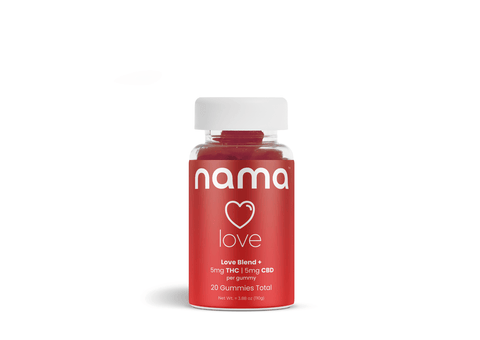
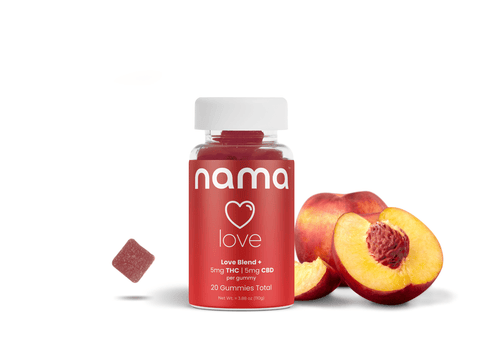
Love | Libido Boosting Gummies With CBD and THC
From $44.00
Love | Libido Boosting Gummies With CBD and THC

5mg THC | 5mg CBD (per gummy)

THC
The Ultimate nama Gummy Sampler
Save $4.05 THC

Resources

Trappe, T. A., White, F., Lambert, C. P., Cesar, D., Hellerstein, M., & Evans, W. J. (2002). Effect of ibuprofen and acetaminophen on postexercise muscle protein synthesis. American journal of physiology. Endocrinology and metabolism, 282(3), E551–E556. https://doi.org/10.1152/ajpendo.00352.2001

Lilja, M., Mandić, M., Apró, W., Melin, M., Olsson, K., Rosenborg, S., Gustafsson, T., & Lundberg, T. R. (2018). High doses of anti-inflammatory drugs compromise muscle strength and hypertrophic adaptations to resistance training in young adults. Acta physiologica (Oxford, England), 222(2), 10.1111/apha.12948. https://doi.org/10.1111/apha.12948

Bateman, L.S., McSwain, R.T., Lott, T. et al. Effects of Ibuprofen on Muscle Hypertrophy and Inflammation: a Review of Literature. Curr Phys Med Rehabil Rep 11, 43–50 (2023). https://doi.org/10.1007/s40141-023-00381-y

Tawfik, A. G., Gomez-Lumbreras, A., Del Fiol, G., Kawamoto, K., Trinkley, K. E., Reese, T., Jones, A., & Malone, D. C. (2026). Nonsteroidal Anti-Inflammatory Drugs and Risk of Gastrointestinal Bleeding: A Systematic Review and Meta-Analysis. Clinical pharmacology and therapeutics, 119(1), 46–62. https://doi.org/10.1002/cpt.70054

Pain reliever linked to kidney injury in endurance runners. (2025, July 1). News Center. https://med.stanford.edu/news/all-news/2017/07/pain-reliever-linked-to-kidney-injury-in-endurance-runners.html

Sabouri, A. H., Yurgionas, B., Khorasani, S., Durant, E. J., Kafaie, J., Hung, Y., Klingman, J. G., & Nemazie, S. (2024). Acute kidney injury in hospitalized patients with exertional rhabdomyolysis. JAMA Network Open, 7(8), e2427464. https://doi.org/10.1001/jamanetworkopen.2024.27464

Henshaw, F. R., Dewsbury, L. S., Lim, C. K., & Steiner, G. Z. (2021). The Effects of Cannabinoids on Pro- and Anti-Inflammatory Cytokines: A Systematic Review of In Vivo Studies. Cannabis and cannabinoid research, 6(3), 177–195. https://doi.org/10.1089/can.2020.0105

Ajrawat, P., Yang, Y., Wasilewski, E., Leroux, T., Ladha, K. S., Bhatia, A., Singh, M., Thaker, S., Kapoor, M., Furlan, A. D., Kotra, L. P., & Clarke, H. (2024). Medical Cannabis Use and Inflammatory Cytokines and Chemokines Among Adult Chronic Pain Patients. Cannabis and cannabinoid research, 9(1), 267–281. https://doi.org/10.1089/can.2022.0143

Isenmann, E., Veit, S., Starke, L., Flenker, U., & Diel, P. (2021). Effects of Cannabidiol Supplementation on Skeletal Muscle Regeneration after Intensive Resistance Training. Nutrients, 13(9), 3028. https://doi.org/10.3390/nu13093028 

Further Reading

Should you microdose cannabis for hiking?

Can microdosed cannabis benefit weightlifters?

What are the benefits of CBD for inflammation?

Best products for microdosing THC

Should you microdose cannabis before yoga?

nama CBD FDA & legal disclaimer

Our products are not intended to diagnose, treat, cure, or prevent any disease. They are not a replacement for prescription medications and have not been evaluated by the Food and Drug Administration (FDA).

The information provided on this website does not and is not intended to constitute legal advice or any statements of the status of any laws. Any information, content, and materials available on this site are for general informational purposes only and are not intended to be relied upon for any purpose.

Readers of this website should contact their attorney to obtain advice concerning any particular legal matter, including decisions on what products are, or are not, legal to sell, possess, or consume. No reader, user, or browser of this site should act or refrain from acting based on information on this site without first seeking legal advice from their own counsel in the relevant jurisdiction.

Only your attorney can provide assurances that the information contained herein—and your interpretation of it—is applicable or accurate for your particular situation. Use of, and access to, this website or any of the links or resources contained within the site do not create an attorney-client relationship between the reader, user, or browser, and website authors, contributors, contributing law firms, or committee members and their respective employers.

More articles

Comments (0)

There are no comments for this article. Be the first one to leave a message!

Leave a comment

Please note: comments must be approved before they are published