Hiking is the most popular way people exercise with cannabis. In a study on how adults use cannabis during physical activity, 60% of respondents reported hiking as their cannabis-paired activity of choice.
The top reasons people gave for hiking on weed included improved focus, better experience, and enhanced mind-body connection.
The connection between cannabis and hiking runs deeper than vibes. There's a biochemical reason hiking on cannabis is enjoyable, and it starts with what your body is already doing when you hike.
Hiking activates your endocannabinoid system
Hiking is moderate-intensity aerobic exercise, and that type of movement triggers your endocannabinoid system. Your body produces molecules called anandamide and 2-AG that bind to the same CB1 and CB2 receptors that THC also targets. These endocannabinoids create the mood elevation and pain reduction that some people experience during long bouts of exercise.
A 2023 systematic review found that 14 of 17 studies detected increased endocannabinoid levels after a single exercise session, with moderate intensity being the most reliable trigger. A 2024 study from the Medical University of Graz measured endocannabinoid levels before and after a 60-minute outdoor run and found that both anandamide and 2-AG increased.
When you take a microdose of THC before a hike, you're supplementing a system your body is already ramping up and amplifying a process that's already in motion.
This is also why the "runner's high" isn't what most people think it is. For decades, endorphins got the credit, but a 2015 study demonstrated that cannabinoid receptors, not opioid receptors, are responsible for the anxiety reduction and pain relief people feel after sustained exercise. When researchers blocked opioid receptors, the runner's high persisted, but vanished when they blocked cannabinoid receptors.
Read about the benefits of microdosing cannabis for running.
Hiking amplifies the sensory enhancements of microdosed cannabis
At 2.5–5 mg THC, the perceptual changes are minor. Sub-intoxicating doses nudge attention and sensory processing without distorting them. You're not experiencing anything new, just paying more attention to what's already there.
These shifts can be wasted indoors. On a ridge above a valley or a trail cutting through old-growth forest in the late afternoon light, they turn a good hike into one that sticks with you.
Cannabis addresses the mental wall on long hikes
Cannabis doesn't make you hike faster or farther, but it can change how the miles feel while you're in them.
The physical demands of hiking are usually manageable, but the mental demands are what make people quit early. After two hours on the trail, motivation might fade. You fixate on how far you still have to go, or on the ache in your knees, or on the steepness of the next switchback.
The CU Boulder SPACE study, published in 2024, found that cannabis before a treadmill run increased enjoyment and motivation. Runners felt more positive about the experience and were less inclined to quit. On a multi-hour hike where the primary enemy is mental fatigue, that shift in engagement matters more than any performance metric.
Anti-inflammatory support starts on the trail
Hiking on uneven terrain, especially with elevation gain, produces inflammation in joints, ankles, knees, and soft tissues. Both CBD and THC interact with the inflammatory response.
A 2021 systematic review of preclinical studies found that CBD and CBD + THC combinations reduced pro-inflammatory cytokines like TNF-alpha, IL-6, and IL-1β in 22 of 26 studies examined.
A microdosed edible taken before a hike isn't just shaping the experience in real time. It may also be contributing to less soreness when you get home. The anti-inflammatory effects of CBD, in particular, start working as the compound enters your bloodstream, meaning recovery overlaps with your enhanced experience.
How to dose cannabis for a hike
Dosing for a hike is different from dosing for a couch. You're outdoors, exerting yourself, potentially at altitude, and hours away from the comfort of your living room. If something feels off, you might be hours away from home.
A dose of 2.5 mg THC is the right starting point if you have never microdosed before a hike. This is low enough that most people won't feel impaired but high enough to notice a subtle shift in mood and awareness.
For experienced microdosers who already know their sensitivity, 5 mg THC is a reasonable trail dose. Going above 5 mg introduces real risks you don't want outdoors, such as impaired balance and decision-making changes that could become dangerous on exposed or technical terrain.
Survey data from exercisers found that CBD and THC users trained at higher intensities than THC-only users, which suggests that CBD's calming effects may support sustained physical effort rather than hinder it.
For hikes over 3–4 hours, a 2.5 mg re-dose at the midpoint is reasonable if you're experienced with the product and know how it affects you. Do not re-dose within the first two hours. Stacking doses because the first one "isn't working yet" is the most common mistake in cannabis-paired activity, and it's a worse mistake on a trail than it is on your couch.
Practical considerations for the trail
Hydration
THC causes dry mouth through CB1 receptor activation in your salivary glands, and hiking causes fluid loss through sweat. The combination means you need more water than you'd carry on the same hike without cannabis.
Bring 20–30% more water than you normally would for the distance and elevation profile. If your usual 6-mile hike calls for 1.5 liters, bring 2. Supplement with electrolytes since you're losing sodium and potassium through sweat. Cannabis won't help you retain them.
Altitude
High-altitude hiking (above 8,000 feet / 2,400 meters) means lower oxygen levels. Your body is already working harder to oxygenate your blood. THC intensifies at altitude because reduced oxygen saturation changes how your body processes cannabinoids. Effects that feel mild at sea level can feel stronger at 10,000 feet.
If you're visiting a mountain destination like Colorado, Utah, the Pacific Northwest, or anywhere with significant elevation, cut your normal dose in half for your first hike. A dose that feels like 2.5 mg at home may hit like 4–5 mg at altitude, especially when combined with the exertion of hiking uphill with a pack.
The combination of altitude, exertion, dehydration, and THC can produce lightheadedness, nausea, or disorientation. None of those are problems you want to solve on a mountainside. Start conservative and adjust on subsequent hikes once you know how your body responds at elevation.
Heat and sun exposure
THC can alter thermoregulation, so your body may be slightly less efficient at cooling itself. At microdose levels, the effect is minimal. But in direct sun with sustained exertion, even a small reduction in cooling efficiency compounds over hours.
Wear sun protection, hike during cooler parts of the day when possible, and treat hydration as non-negotiable rather than aspirational. If you're hiking in desert or exposed alpine environments, respect the heat the same way you would on a sober hike and add extra water for the cannabis factor.
Trail difficulty and terrain
Microdosing cannabis is appropriate for moderate, well-marked trails where the physical and navigational demands are within your comfort zone.
It is not appropriate for Class 3+ scrambles, exposed ridgelines that require route-finding under pressure, river crossings, or any terrain where a momentary lapse in balance or judgment could result in serious injury. Even at 2.5 mg, you're introducing a variable into your decision-making. Keep that variable on terrain where the consequences of a minor error are a stumble, not a fall.
Stick to trails you've done before, or trails that are well within your ability level. Save the ambitious routes for sober days.
Legal considerations
Cannabis, including hemp-derived THC products, is prohibited on all federal land. That means national parks, national forests, BLM land, and national monuments. State parks vary by state. Learn the rules for the land you're hiking on before microdosing.
Hike with a group
If you're hiking with others, not everyone needs to microdose. But on longer or more remote hikes, at least one person in the group should be fully sober and oriented to the trail. This is standard backcountry practice regardless of cannabis. Someone should always be clear-headed enough to handle navigation, weather decisions, and first-aid situations.
Product QUIZ
Need help deciding what product is best for you? Take our quiz, just three questions until your perfect match!
Best nama microdosed cannabis products for hiking
Buzz Drops are the most trail-friendly format. Each dropper delivers 2.5 mg THC and 2.5 mg CBD. Add them directly to your water bottle at the trailhead for a 10–20 minute onset that syncs with your first miles. For longer hikes, carry the bottle and add a second dropper to a fresh water fill at the midpoint.
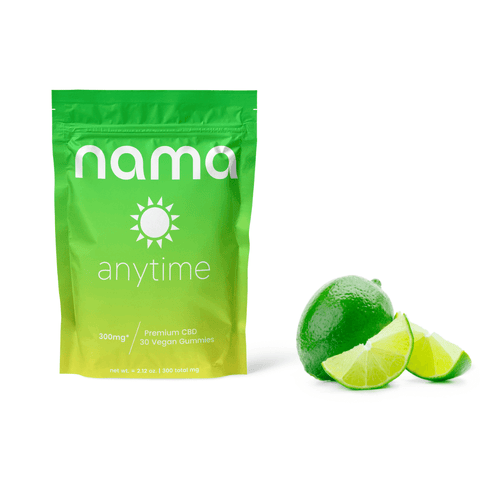
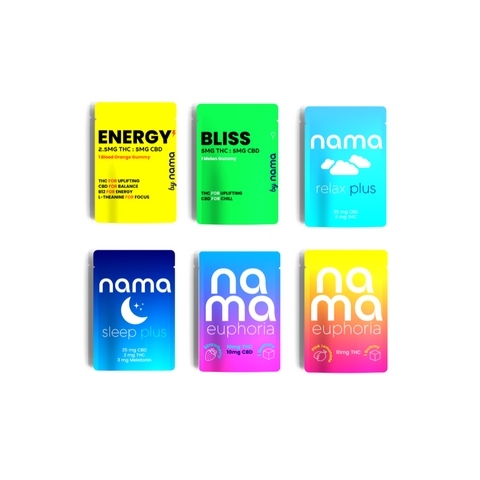
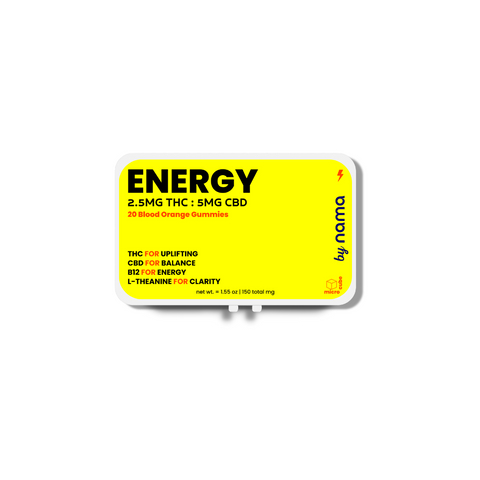
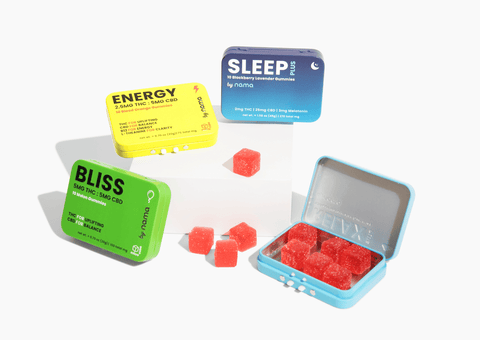
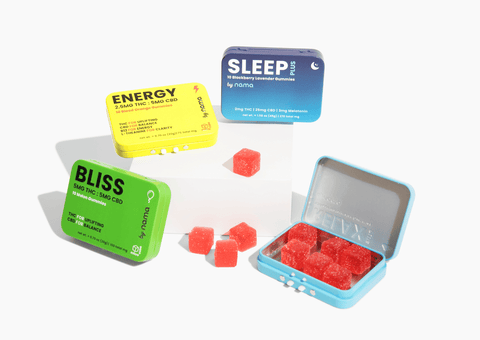
Our THC gummies offer precise dosing you can take 60–90 minutes before you hit the trail. Take them at home or in the car before you leave, and effects will build as you start hiking.
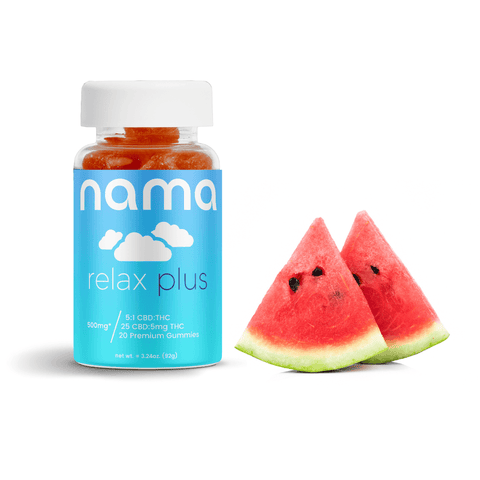
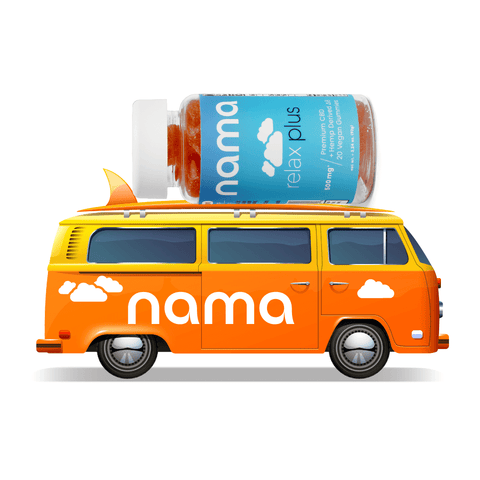
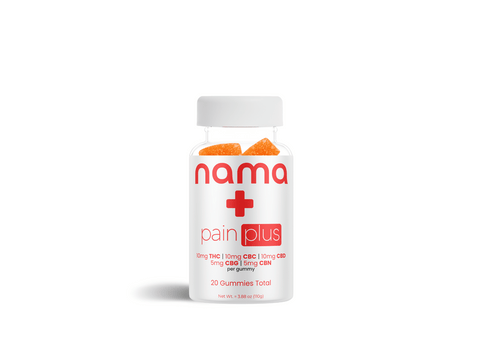
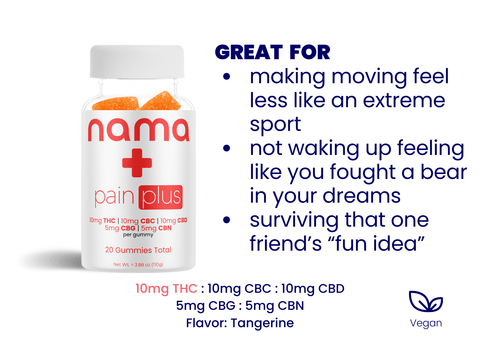
For post-hike recovery, nama's gummies high in CBD, such as our Relax and Pain Plus gummies, support the anti-inflammatory and sleep benefits that help your body repair after a long day on the trail.
Cannabis for hiking FAQ
Cannabis is prohibited on all federal land, including national parks, national forests, and BLM land, regardless of state legalization status. nama's products are hemp-derived and federally legal to purchase and possess under the 2018 Farm Bill, but consumption on federal land is a separate legal question. Know the regulations for the specific land you're hiking on before you go.
Most people feel the effects of a 2.5–5 mg edible for 3–5 hours, though this varies with metabolism, body weight, and whether you ate beforehand. On a hike, physical exertion and increased circulation can accelerate the onset slightly but don't meaningfully shorten the duration. Plan your dose timing around your full expected trail time, not just the first hour.
THC can raise resting heart rate by 10–20 bpm. Hiking already elevates heart rate, so the two effects stack. At microdose levels, the increase is small enough that most healthy adults won't notice it. If you have a cardiovascular condition or take heart rate-related medication, talk to your doctor before combining cannabis with sustained aerobic activity.
CBD has anti-inflammatory properties, including reduced levels of pro-inflammatory cytokines associated with exercise-induced muscle and joint soreness. THC supports recovery through improved sleep onset and duration. Together, they help manage the soreness and fatigue that follow a long hike. A post-hike dose of around 5–10 mg THC with higher CBD in the evening is the most effective for recovery benefits.
At 2.5–5 mg THC, most people feel comfortable hiking with their dog.
Make sure you securely store cannabis products away from dogs. Dogs are far more sensitive to THC than humans. Keep cannabis products in sealed, dog-proof containers and treat them the same way you'd treat chocolate or xylitol on a hike.
Top Sellers
New? Start with our Ultimate Sampler!
10mg THC | 10mg CBD | 10mg CBC | 5mg CBG | 5mg CBN (per gummy)
Resources
Ogle, W. L., Gold, G. J., Coppen, L. E., & Copriviza, C. (2022). How and why adults use cannabis during physical activity. Journal of cannabis research, 4(1), 24. https://doi.org/10.1186/s42238-022-00134-z
Siebers, M., Biedermann, S. V., & Fuss, J. (2023). Do Endocannabinoids Cause the Runner's High? Evidence and Open Questions. The Neuroscientist : a review journal bringing neurobiology, neurology and psychiatry, 29(3), 352–369. https://doi.org/10.1177/10738584211069981
Weiermair, T., Svehlikova, E., Boulgaropoulos, B., Magnes, C., & Eberl, A. (2024). Investigating Runner's High: Changes in Mood and Endocannabinoid Concentrations after a 60 min Outdoor Run Considering Sex, Running Frequency, and Age. Sports (Basel, Switzerland), 12(9), 232. https://doi.org/10.3390/sports12090232
J. Fuss, J. Steinle, L. Bindila, M.K. Auer, H. Kirchherr, B. Lutz, & P. Gass, A runner’s high depends on cannabinoid receptors in mice, Proc. Natl. Acad. Sci. U.S.A. 112 (42) 13105-13108, https://doi.org/10.1073/pnas.1514996112
Gibson, L.P., Giordano, G.R., Bidwell, L.C. et al. Acute Effects of Ad Libitum Use of Commercially Available Cannabis Products on the Subjective Experience of Aerobic Exercise: A Crossover Study. Sports Med 54, 1051–1066 (2024). https://doi.org/10.1007/s40279-023-01980-4
Henshaw, F. R., Dewsbury, L. S., Lim, C. K., & Steiner, G. Z. (2021). The Effects of Cannabinoids on Pro- and Anti-Inflammatory Cytokines: A Systematic Review of In Vivo Studies. Cannabis and cannabinoid research, 6(3), 177–195. https://doi.org/10.1089/can.2020.0105
Pinzone, A. G., Erb, E. K., Humm, S. M., Kearney, S. G., & Kingsley, J. D. (2023). Cannabis use for exercise recovery in trained individuals: a survey study. Journal of cannabis research, 5(1), 32. https://doi.org/10.1186/s42238-023-00198-5
Lewis, M. F., Ferraro, P., Mertens, H. W., & Steen, J. A. (1976). Interaction between marihuana and altitude on a complex behavioral task in baboons. Aviation, space, and environmental medicine, 47(2), 121–123.
Wenger, T., & Moldrich, G. (2002). The role of endocannabinoids in the hypothalamic regulation of visceral function. Prostaglandins, leukotrienes, and essential fatty acids, 66(2-3), 301–307. https://doi.org/10.1054/plef.2001.0353
Further Reading
Should you microdose cannabis before weightlifting?
Microdosing cannabis for athletes
The benefits of cannabis for muscle recovery
How to microdose cannabis for marathon running
nama CBD FDA & legal disclaimer
Our products are not intended to diagnose, treat, cure, or prevent any disease. They are not a replacement for prescription medications and have not been evaluated by the Food and Drug Administration (FDA).
The information provided on this website does not and is not intended to constitute legal advice or any statements of the status of any laws. Any information, content, and materials available on this site are for general informational purposes only and are not intended to be relied upon for any purpose.
Readers of this website should contact their attorney to obtain advice concerning any particular legal matter, including decisions on what products are, or are not, legal to sell, possess, or consume. No reader, user, or browser of this site should act or refrain from acting based on information on this site without first seeking legal advice from their own counsel in the relevant jurisdiction.
Only your attorney can provide assurances that the information contained herein—and your interpretation of it—is applicable or accurate for your particular situation. Use of, and access to, this website or any of the links or resources contained within the site do not create an attorney-client relationship between the reader, user, or browser, and website authors, contributors, contributing law firms, or committee members and their respective employers.

About
Learn
Join us on this journey
© Copyright 2026 nama Products LLC. All Rights Reserved.
†These statements have not been evaluated by the Food and Drug Administration. These products are not intended to diagnose, treat, cure or prevent any disease. All information presented here is not meant as a substitute for or alternative to information from health care practitioners. Please consult your health care professional about potential interactions or other possible complications before using any product.
††The information provided on this website does not, and is not intended to, constitute legal advice or any statements of the status of any laws. Any information, content, and materials available on this site are for general entertainment purposes only, and are not intended to be relied upon for any purpose.
nama: The only source for Buzz Drops™
By clicking ‘Yes,’ you agree to our
Terms & Conditions and Privacy Policy
123 John Doe Street
Your Town, YT 12345
Store Hours
Sun: Closed
Mon-Fri: 9:00 - 17:00
Sat: 10:00 - 13:00
What to expect at pickup
Closed
Closing at 5pm
Closing at 5pm
Closing at 5pm
Closing at 5pm
Closing at 5pm
Closing at 1pm

Comments (0)
There are no comments for this article. Be the first one to leave a message!