Caffeine is the most studied performance enhancer in sports science. Decades of research confirm that it improves endurance, power output, and reaction time.
Cannabis as a pre-workout is less studied, but emerging research shows that it increases enjoyment, mind-body connection, and post-workout recovery.
Explore the research surrounding cannabis and caffeine as pre-workouts, and learn when and how to add cannabis to your fitness routine.
How caffeine works as a pre-workout
Caffeine blocks adenosine receptors in your brain. Adenosine is the molecule that makes you feel tired, and when caffeine prevents it from binding, you feel more alert and less fatigued. This is a direct central nervous system stimulant effect.
The International Society of Sports Nutrition recognizes caffeine as an effective ergogenic aid at doses of 3–6 mg per kilogram of body weight. For a 150-pound person, that works out to roughly 200–400 mg, or about 2–4 cups of coffee. At these doses, caffeine has been shown to improve endurance performance, increase power output, sharpen reaction time, and lower perceived exertion, so the workout feels easier than it actually is.
Caffeine reaches peak concentration in your blood within 30–60 minutes of consumption. Its effects last 3–5 hours, with a half-life of around 5 hours, meaning half the caffeine is still circulating in your system 5 hours later.
The downsides are familiar to anyone who's overdone it on coffee or a pre-workout powder:
- Jitteriness
- Elevated heart rate
- Gastrointestinal distress
- Anxiety
- Energy crashes when the effects wear off
For afternoon or evening exercisers, caffeine's long half-life creates a real problem, as a 3 PM pre-workout dose can still be disrupting your sleep at 10 PM.
Tolerance also builds quickly, so daily caffeine users need progressively more to get the same effect.
How microdosed cannabis works as a pre-workout
Microdosed cannabis works through a different system. THC and CBD interact with CB1 and CB2 receptors in the endocannabinoid system, a network that regulates mood, pain perception, inflammation, and reward. This is the same system your body activates during exercise.
Your body produces its own cannabinoids (anandamide and 2-AG) during aerobic activity, and these molecules are now understood to be the primary drivers of the "runner's high." A 2015 study demonstrated that cannabinoid receptors, not opioid receptors, mediate the anxiety reduction and pain relief people experience after running. When researchers blocked opioid receptors, the runner's high persisted. When they blocked cannabinoid receptors, it disappeared.
A 2023 systematic review found that 14 of 17 studies detected increased endocannabinoid levels after a single exercise session (particularly at moderate intensities). Microdosed THC and CBD interact with the same receptor system your body is already ramping up when you start moving.
At microdose levels (2.5–5 mg THC), the effects are sub-intoxicating:
- Mild mood elevation
- Reduced anxiety
- Enhanced body awareness
- Subtle shift in how you experience the workout
You aren't “high”. You’re closer to the state your body naturally reaches after 30–40 minutes of sustained exercise.
The most relevant performance data comes from a 2024 study published in Sports Medicine. Researchers had 42 runners use cannabis before a treadmill session and compared the experience to a sober control session. Cannabis increased positive mood and enjoyment during the workout, so runners felt more motivated. But THC also increased perceived exertion, meaning the same pace felt harder even though enjoyment was higher.
CBD activates the parasympathetic nervous system, which can reduce heart rate and promote vasodilation (wider blood vessels, more blood flow). Survey data from a 2023 study in the Journal of Cannabis Research found that CBD users reported training at higher intensities than THC-only users, both in aerobic and resistance exercise. The researchers suggested that CBD's calming effects may help people push harder without the anxiety that sometimes accompanies intense effort.
When microdosed cannabis is the better choice
Evening workouts
Caffeine's 5-hour half-life makes it a poor choice for anyone training after 3–4 PM. A 200 mg dose at 5 PM means 100 mg is still in your system at 10 PM, which is enough to delay sleep onset and reduce sleep quality. Microdosed cannabis has no stimulant carryover. A 2.5 mg THC gummy before an evening yoga class won't keep you up. If anything, the residual effects may support sleep later.
Caffeine sensitivity
Some people metabolize caffeine slowly or respond strongly to its stimulant effects. If a cup of coffee gives you a racing heart, GI distress, or anxious energy that makes it hard to focus, caffeine-based pre-workouts amplify the problem. Microdosed cannabis won't produce stimulant-related side effects.
Yoga, stretching, and mobility work
Body awareness and relaxation are central to yoga, stretching, and mobility exercises. Caffeine pushes your nervous system in the wrong direction for a slow flow or a dedicated stretching session. Low-dose THC+CBD enhances the mind-body connection that makes these practices effective. In survey data, 58% of cannabis-using exercisers reported pairing cannabis with yoga, and the top reason was enhancing the mind-body-spirit connection.
Long, steady-state cardio
On a 90-minute run, a two-hour bike ride, or a full-day hike, the primary challenge isn't physical output, but mental endurance. Boredom, fixation on discomfort, and the desire to quit are the real enemies. Cannabis increases enjoyment and motivation during sustained moderate exercise, which is what these sessions demand. It doesn't make you faster, but it may keep you from cutting the run short.
People who struggle with workout motivation
If the barrier to exercise isn't energy but enjoyment, caffeine is solving the wrong problem. A jolt of alertness doesn't help if the issue is that running feels tedious or the gym feels like a chore. Cannabis shifts the experience. When a workout feels more engaging and less like something to endure, you're more likely to do it again tomorrow.
Recovery-minded athletes
Caffeine helps you perform, but then it's done. Microdosed cannabis can benefit your workout and recovery. The anti-inflammatory properties of CBD have been demonstrated in preclinical research that showed reduced levels of pro-inflammatory cytokines like TNF-alpha and IL-6.
A 2021 study on CBD and resistance training found that CBD supplementation dampened myoglobin response (a marker of muscle damage) and helped maintain squat strength at 72 hours post-exercise.
Read more about microdosing cannabis for DOMS and muscle recovery.
When caffeine is still the better choice
Competition or performance testing
If your goal is measurable output, like a race time, a max lift, or a fitness test, caffeine has decades of evidence supporting its ergogenic effects.
Heavy compound lifts
Squats, deadlifts, bench press, and Olympic lifts require sharp coordination, CNS activation, and complete spatial awareness. Even at microdose levels, perception-altering substances might increase risk during max lifts.
Morning workouts
If you're rolling out of bed at 5:30 AM and need to go from groggy to functional before a workout, caffeine wakes you up.
Anyone subject to drug testing
Standard workplace and athletic drug panels test for THC metabolites, not active THC, which are detectable for weeks after use. A 2.5 mg gummy taken on a Saturday can show up on a Monday test, so skip products with THC if you are subject to testing. A CBD-only product should not cause a positive drug test result.
HIIT and sprint work
High-intensity interval training depends on reducing perceived exertion so you can push through maximal efforts with short rest. Caffeine lowers perceived exertion, while THC may increase it.
Can you use both?
The research on combining caffeine and THC is limited and mostly comes from animal studies, which makes it hard to draw firm conclusions for humans.
A 2024 study that administered caffeine and CBD simultaneously found no noticeable subjective changes in participants roughly two hours after consumption.
An older animal study suggested that caffeine combined with low-dose THC impaired working memory in rats more than a higher dose of THC alone, which isn't a reassuring result even if the translation to humans is uncertain.
Both caffeine and THC increase heart rate through different mechanisms. Caffeine does it through sympathetic nervous system activation, while THC does it through CB1 receptor binding. Stacking the two could produce a more pronounced cardiovascular response, which could cause issues if you have any heart-related concerns.
If you want to use both, separate them by use case. Use caffeine for the workout itself (energy, focus, performance) and save microdosed cannabis for post-workout recovery and sleep. This gives you the ergogenic benefits of caffeine during the session and the anti-inflammatory and sleep-promoting benefits of cannabinoids afterward, without the unpredictability of combining them.
If you do want to experiment with both before a workout, start with your normal caffeine dose and the lowest possible THC dose (2.5 mg or less), and pay close attention to how your heart rate and anxiety levels respond. Don't assume that because each substance is fine on its own, the combination will be fine too.
Product QUIZ
Need help deciding what product is best for you? Take our quiz, just three questions until your perfect match!
Best nama products for before and after a workout
Our lineup includes several products that fit different pre-workout timing windows and workout types. Each delivers a precise, lab-tested dose so you can build a repeatable pre-workout protocol.
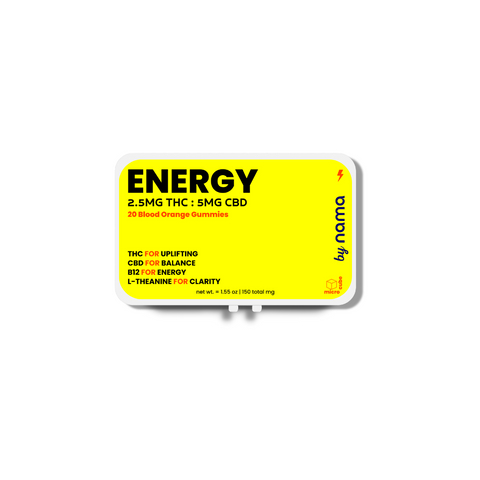
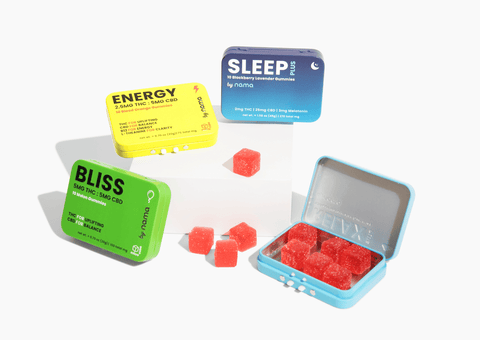
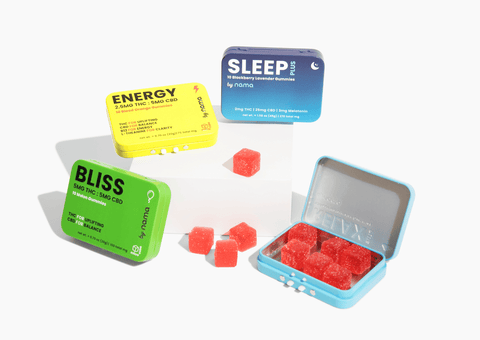
- Energy gummies combine 2.5 mg THC and 5 mg CBD with 1,000 mcg of B12 and 50 mg of L-theanine. The low THC dose provides subtle mood elevation without impairment, while the B12 and L-theanine support mental clarity and sustained focus.
- Buzz Drops give you 2.5 mg THC and 2.5 mg CBD per dropper in a flavorless liquid. Add them to water or a sports drink and sip during your warm-up. For evening exercisers replacing caffeine to protect their sleep, Buzz Drops are the most practical swap.
- Buzz Packs deliver 5 mg THC and 5 mg CBD in a powder drink mix. Tear one open, add it to your water bottle, and drink it on the way to the gym. A good middle ground for experienced microdosers who want a slightly stronger effect than a single dropper of Buzz Drops.
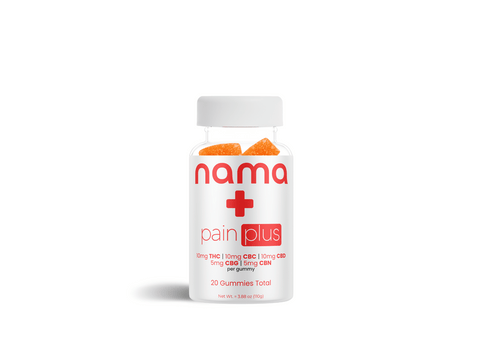
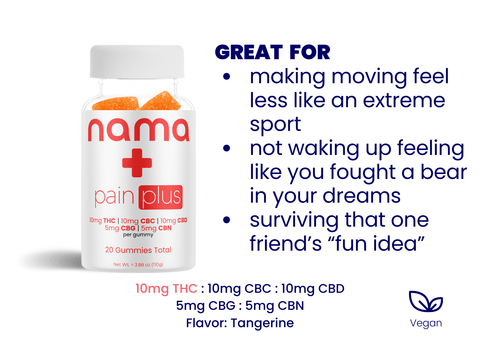
- Pain Plus gummies contain five cannabinoids: 10 mg THC, 10 mg CBC, 10 mg CBD, 5 mg CBG, and 5 mg CBN. For post-workout recovery after a particularly demanding session, Pain Plus delivers the most comprehensive cannabinoid coverage in our lineup. Take one in the evening after a hard training day when soreness and sleep quality are the priorities.
All nama products are made from American-grown hemp, vegan, gluten-free, and third-party tested for purity and potency.
Cannabis vs caffeine FAQ
Microdosed cannabis (2.5–5 mg THC) clears your system's active effects within 4–8 hours. If you take a gummy in the evening for overnight recovery, you'll wake up clear-headed and ready to train. Higher doses may cause residual grogginess, which is why you should stick with small, precise amounts that provide recovery benefits without bleeding into the next day.
THC gummies take 45–90 minutes to reach full effect because they pass through your digestive system. Take them before your commute to the gym or while you're getting dressed. Liquid formats like nama Buzz Drops have a faster onset of 10–20 minutes, so they’re better suited for on-the-spot timing.
Don't take a second dose within the first two hours if you don't feel the effects. Edibles onset slower than many people expect, and stacking doses is the most common mistake.
THC increases heart rate through CB1 receptor activation, and exercise raises it further. At microdose levels (2.5–5 mg), the increase is modest, typically 5–10 bpm above your normal exercise heart rate, and most healthy adults won't notice a meaningful difference.
If you have a cardiovascular condition or take heart rate-targeted medications like beta blockers, talk to your doctor before combining cannabis with exercise. CBD may partially offset THC's heart rate effect by activating the parasympathetic nervous system, which is one reason balanced THC and CBD products are preferred for active use.
Tolerance to THC develops with consistent use, but more slowly at microdose levels than at recreational doses. If you notice diminishing effects after several weeks of regular use, take 3–5 days off.
Some microdosers cycle their use (3–4 days on, 2–3 days off) to maintain sensitivity. CBD does not appear to produce tolerance in the same way, so the anti-inflammatory and recovery benefits of CBD-forward products tend to remain consistent over time.
A small amount of food, especially something with dietary fat, can improve absorption and smooth out the onset curve of a THC edible. Taking a gummy on a completely empty stomach may produce a faster but less predictable onset, and some people report mild nausea when combining an empty stomach with THC and physical exertion.
A light snack 15–30 minutes before your gummy, like a handful of nuts or a piece of toast with peanut butter, is enough. You don't need a full meal.
Top Sellers
New? Start with our Ultimate Sampler!
10mg THC | 10mg CBD | 10mg CBC | 5mg CBG | 5mg CBN (per gummy)
Resources
Guest, N. S., VanDusseldorp, T. A., Nelson, M. T., Grgic, J., Schoenfeld, B. J., Jenkins, N. D. M., Arent, S. M., Antonio, J., Stout, J. R., Trexler, E. T., Smith-Ryan, A. E., Goldstein, E. R., Kalman, D. S., & Campbell, B. I. (2021). International society of sports nutrition position stand: caffeine and exercise performance. Journal of the International Society of Sports Nutrition, 18(1), 1. https://doi.org/10.1186/s12970-020-00383-4
J. Fuss,J. Steinle,L. Bindila,M.K. Auer,H. Kirchherr,B. Lutz, & P. Gass, A runner’s high depends on cannabinoid receptors in mice, Proc. Natl. Acad. Sci. U.S.A. 112 (42) 13105-13108, https://doi.org/10.1073/pnas.1514996112
Siebers, M., Biedermann, S. V., & Fuss, J. (2023). Do Endocannabinoids Cause the Runner's High? Evidence and Open Questions. The Neuroscientist : a review journal bringing neurobiology, neurology and psychiatry, 29(3), 352–369. https://doi.org/10.1177/10738584211069981
Gibson, L.P., Giordano, G.R., Bidwell, L.C. et al. Acute Effects of Ad Libitum Use of Commercially Available Cannabis Products on the Subjective Experience of Aerobic Exercise: A Crossover Study. Sports Med 54, 1051–1066 (2024). https://doi.org/10.1007/s40279-023-01980-4
Pinzone, A. G., Erb, E. K., Humm, S. M., Kearney, S. G., & Kingsley, J. D. (2023). Cannabis use for exercise recovery in trained individuals: a survey study. Journal of cannabis research, 5(1), 32. https://doi.org/10.1186/s42238-023-00198-5
Ogle, W. L., Gold, G. J., Coppen, L. E., & Copriviza, C. (2022). How and why adults use cannabis during physical activity. Journal of cannabis research, 4(1), 24. https://doi.org/10.1186/s42238-022-00134-z
Henshaw, F. R., Dewsbury, L. S., Lim, C. K., & Steiner, G. Z. (2021). The Effects of Cannabinoids on Pro- and Anti-Inflammatory Cytokines: A Systematic Review of In Vivo Studies. Cannabis and cannabinoid research, 6(3), 177–195. https://doi.org/10.1089/can.2020.0105
Isenmann, E., Veit, S., Starke, L., Flenker, U., & Diel, P. (2021). Effects of Cannabidiol Supplementation on Skeletal Muscle Regeneration after Intensive Resistance Training. Nutrients, 13(9), 3028. https://doi.org/10.3390/nu13093028
Raypole, C. (2025, June 19). What happens when you mix caffeine and cannabis? Healthline. https://www.healthline.com/health/caffeine-and-marijuana
Panlilio, L. V., Ferré, S., Yasar, S., Thorndike, E. B., Schindler, C. W., & Goldberg, S. R. (2012). Combined effects of THC and caffeine on working memory in rats. British journal of pharmacology, 165(8), 2529–2538. https://doi.org/10.1111/j.1476-5381.2011.01554.x
Further Reading
Microdosing cannabis for weightlifting
The benefits of cannabis for athletes
Should you microdose THC for pain relief?
What are the benefits of cannabis for running?
What terpenes are good for inflammation?
nama CBD FDA & legal disclaimer
Our products are not intended to diagnose, treat, cure, or prevent any disease. They are not a replacement for prescription medications and have not been evaluated by the Food and Drug Administration (FDA).
The information provided on this website does not and is not intended to constitute legal advice or any statements of the status of any laws. Any information, content, and materials available on this site are for general informational purposes only and are not intended to be relied upon for any purpose.
Readers of this website should contact their attorney to obtain advice concerning any particular legal matter, including decisions on what products are, or are not, legal to sell, possess, or consume. No reader, user, or browser of this site should act or refrain from acting based on information on this site without first seeking legal advice from their own counsel in the relevant jurisdiction.
Only your attorney can provide assurances that the information contained herein—and your interpretation of it—is applicable or accurate for your particular situation. Use of, and access to, this website or any of the links or resources contained within the site do not create an attorney-client relationship between the reader, user, or browser, and website authors, contributors, contributing law firms, or committee members and their respective employers.

More articles
About
Learn
Join us on this journey
© Copyright 2026 nama Products LLC. All Rights Reserved.
†These statements have not been evaluated by the Food and Drug Administration. These products are not intended to diagnose, treat, cure or prevent any disease. All information presented here is not meant as a substitute for or alternative to information from health care practitioners. Please consult your health care professional about potential interactions or other possible complications before using any product.
††The information provided on this website does not, and is not intended to, constitute legal advice or any statements of the status of any laws. Any information, content, and materials available on this site are for general entertainment purposes only, and are not intended to be relied upon for any purpose.
nama: The only source for Buzz Drops™
By clicking ‘Yes,’ you agree to our
Terms & Conditions and Privacy Policy
123 John Doe Street
Your Town, YT 12345
Store Hours
Sun: Closed
Mon-Fri: 9:00 - 17:00
Sat: 10:00 - 13:00
What to expect at pickup
Closed
Closing at 5pm
Closing at 5pm
Closing at 5pm
Closing at 5pm
Closing at 5pm
Closing at 1pm

Comments (0)
There are no comments for this article. Be the first one to leave a message!