Microdosing cannabis won't shave minutes off your marathon time, but it can improve the training experience. A 2024 University of Colorado study tracked runners who used cannabis before workouts and found significant increases in enjoyment and motivation, with no impairment to heart rate, pace, or exertion capacity.
nama's microdosed THC products and THC drinks give marathon runners precise, measured doses that support training without the guesswork or lung damage of smoking.
Key takeaways
- Cannabis does not improve marathon pace, VO2max, or stamina, but a study found it increases enjoyment and motivation during training runs.
- THC changes your relationship to discomfort rather than eliminating it, which helps runners push through high-mileage training over weeks.
- Cannabis improves exercise recovery. A survey found that 87% felt THC aided post-exercise recovery through pain relief, reduced inflammation, and better sleep.
- Microdosed edibles and THC drinks give marathon runners precise, repeatable doses without the lung irritation that comes with smoking or vaping.
How does cannabis affect endurance during long runs?
Cannabis does not make you faster or give you extra miles. The University of Colorado study tested 49 runners on treadmills and found no improvement in speed, power output, or cardiovascular efficiency after cannabis use. A 2025 randomized controlled trial from the University of Sydney confirmed similar results for CBD: neither 50 mg nor 300 mg of CBD altered endurance performance, perceived exertion, or pain during submaximal running in 25 trained runners.
Cannabis can change how you feel while you run. Runners in the Colorado study reported feeling more present, less stressed, and more willing to continue even when the workout got hard. A bit of cannabis courage can keep you motivated while you grind out long runs during marathon training.
Read about the benefits of microdosed cannabis for runners.
The endocannabinoid system and the runner’s high
Your body has a built-in signaling network, the endocannabinoid system (ECS), that controls pain, mood, inflammation, appetite, and sleep through two types of receptors. Your brain and central nervous system contain CB1 receptors that affect mood, pain perception, and motivation. CB2 receptors live in your immune cells and peripheral tissues, where they manage inflammation and immune response.
To activate these receptors, your body produces its own cannabis-like molecules called endocannabinoids. The one that matters most for runners is anandamide, a molecule that binds to CB1 receptors in your brain. When anandamide levels rise, you feel calmer, less anxious, and more focused. THC mimics anandamide, as it fits into the same CB1 receptors and produces similar effects. CBD blocks the enzyme that breaks anandamide down, so more of your body's natural supply stays active longer.
During aerobic exercise, anandamide levels surge. This spike is what creates the calm, euphoric mental state runners call "runner's high." For decades, endorphins got the credit. A 2022 review challenged that narrative and found that endocannabinoids are the primary drivers.
Endorphins are too large to cross the blood-brain barrier efficiently, so they contribute more to peripheral pain relief than to the mental shift runners experience. Anandamide crosses that barrier with ease, which is why runner's high feels like reduced anxiety and quiet focus rather than numbness.
Microdosing THC helps with the mental side of marathon training
Marathon training is a mental endurance test as much as a physical one. The monotony of repeating the same routes week after week can wear you down. THC activates CB1 receptors that regulate mood, motivation, and reward processing, which is why runners report that cannabis makes repetitive miles feel less tedious.
A 2019 study on cannabis and exercise behavior found that cannabis users were more likely to meet recommended exercise guidelines and reported stronger motivation to train. The researchers suggested that cannabis may lower the psychological barrier to starting a workout.
CBD supports marathon recovery
CBD doesn't activate CB1 receptors directly, so there's no psychoactive effect. Instead, CBD inhibits the enzyme that breaks down anandamide, your body's natural endocannabinoid. More anandamide in your system means prolonged pain-relieving and anti-inflammatory effects after a run.
A 2023 review examined CBD's potential for athletic performance and recovery and found preclinical evidence that CBD may protect against exercise-induced myocardial stress while demonstrating anti-inflammatory, anti-apoptotic, and antioxidant properties. The authors noted that CBD for muscle relaxation and recovery warrants more clinical investigation, but the existing evidence supports its use as a recovery supplement.
The University of Sydney trial found that CBD at 50 mg and 300 mg didn't hurt endurance performance. This means marathon runners can use CBD as a daily supplement during training blocks without concern about compromising their running capacity.
THC and CBD together
The entourage effect describes how cannabinoids, terpenes, and other cannabis compounds enhance each other's effects. For marathon recovery, combining THC and CBD in a single dose may provide more comprehensive relief than either compound alone, THC for direct pain modulation and mood improvement, and CBD for sustained anti-inflammatory action and anandamide preservation.
Microdosing cannabis for marathon training recovery
Recovery is where cannabis adds the most measurable value for marathon runners. A 2023 survey study of 111 regular exercisers found that 87% of participants felt THC aided their recovery from exercise. Among those who used THC after aerobic exercise (61% of participants), the primary reported benefits were pain relief and improved sleep.
THC interacts with CB1 and CB2 receptors to modulate inflammatory responses and pain signaling, which may support faster turnaround between hard sessions.
A 2025 review of cannabinoids in pain management found that THC acts on multiple pain pathways, including nociceptive and neuropathic signaling. For marathon runners dealing with repetitive stress injuries or general muscle soreness, this multi-pathway action may offer broader relief than single-mechanism options.
Read more about microdosed cannabis for muscle recovery.
When should you skip cannabis during marathon training?
- Speed work and intervals: THC can impair reaction time and coordination at higher doses. Interval sessions and track workouts require precise pacing and mechanical focus. Save cannabis for easy and long runs.
- Technical trail runs: If your practice involves trails with rocks or steep descents, THC may reduce spatial awareness enough to increase fall risk. Stick to CBD or skip cannabis on technical terrain.
- Race day: Never introduce a new variable on race day. If you haven't tested cannabis during training runs that simulate race conditions, don't experiment at the starting line.
- If you have a history of anxiety with THC: Some runners experience increased anxiety or paranoia with cannabis, even at low doses. If THC makes you more anxious rather than less, it's not a useful training tool for you.
How to use cannabis for marathon workouts?
Experiment to find your sweet spot. Below are some recommended protocols from cannabis marathoners. They don’t represent nama guidelines or medical advice.
Pre-run dosing
- Edibles: Take 45–60 minutes before your run. Effects peak around 90 minutes and last 4–6 hours, which covers most long training runs. A 2.5–5 mg THC dose is the sweet spot for most runners.
- THC drinks: Add to water or a sports drink 20–30 minutes before your run. Liquid THC absorbs faster than gummies, with effects starting in 10–20 minutes. This gives you more control over timing, especially for morning runs when you don't want to wake up extra early to dose.
- Dose: Start at 2.5 mg THC for your first cannabis-assisted run. Increase to 5 mg only after you know how your body responds during exercise.
Post-run recovery dosing
- Timing: Take within 60 minutes of finishing your run to target acute inflammation.
- Dose: 5–10 mg THC with 10–25 mg CBD for broader anti-inflammatory coverage.
Bedtime recovery dosing
- Timing: 30–60 minutes before bed.
- Dose: 2–5 mg THC with 25 mg CBD, or a dedicated sleep formula with melatonin and CBN.
Should I use cannabis during taper week?
Taper week is the two to three weeks before your marathon, where you reduce mileage to let your body recover. Your legs might feel heavy, and the reduced training volume might leave you restless and anxious. Runners call this "taper madness."
Cannabis can help with tapering anxiety and restlessness. If you've been microdosing throughout your training block, continue at the same dose. If you haven't used cannabis during training, taper week is not the time to start.
The goal during taper is to minimize variables and let your body do what it already knows how to do. A consistent, low-dose cannabis routine that you've already tested during training fits that goal. A new substance you've never tried does not.
Product QUIZ
Need help deciding what product is best for you? Take our quiz, just three questions until your perfect match!
Best nama products for marathon training
Pre-run: Energy gummies
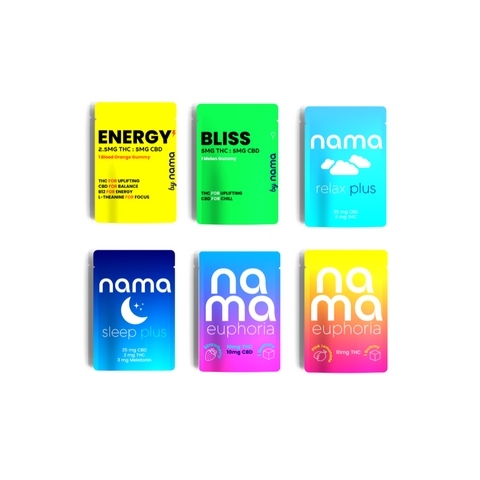
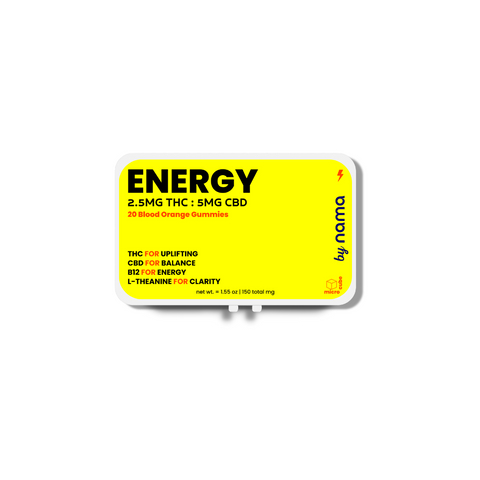
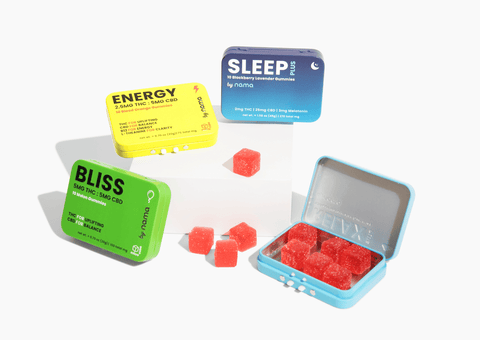
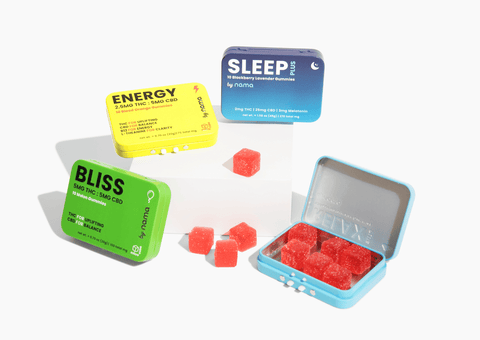
Energy gummies contain 2.5 mg of THC and 5 mg of CBD, plus 1,000 mcg of B12 and 50 mg of L-theanine. The THC-to-CBD ratio keeps the effect subtle and functional while B12 and L-theanine support sustained focus without jitters. Take one gummy 45–60 minutes before your long run.
Post-run recovery: Relax Plus gummies
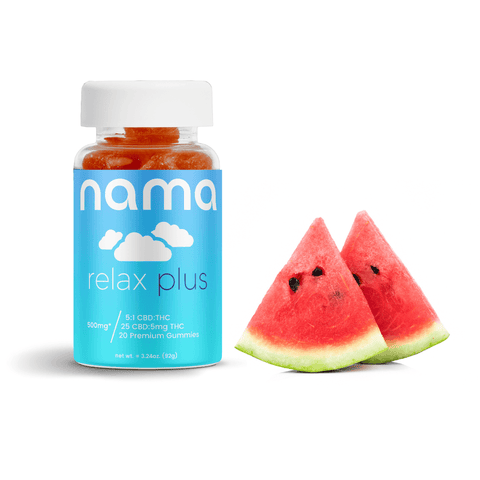
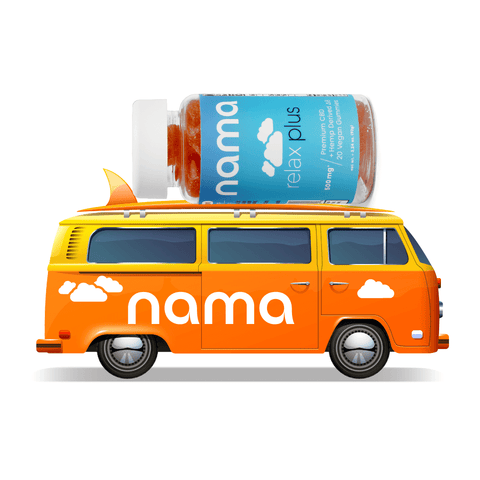
Relax Plus gummies deliver 5 mg of THC and 25 mg of CBD per gummy. The higher CBD ratio targets inflammation and muscle repair, while the THC handles pain and mood. Take one within an hour of finishing your workout.
Flexible dosing: Buzz Drops
Buzz Drops give you 2.5 mg of THC and 2.5 mg of CBD per dropper. Add them to water, a sports drink, or a post-run smoothie. Effects start in 10–20 minutes, which makes them the fastest-acting option for runners who want to dose close to their workout. They're flavorless, calorie-free, and portable enough to toss in your running vest.
Sleep support: Sleep Plus gummies
Sleep Plus gummies combine 2 mg of THC, 25 mg of CBD, and 3 mg of melatonin. During peak mileage weeks when sleep quality tanks, these target pain, inflammation, and your overactive mind at bedtime.
All nama products are made from organic, American-grown hemp. They're vegan, third-party tested for purity and potency, and contain the exact dose listed on the label. Shop our full collection of microdosed cannabis products.
Microdosing cannabis for marathon training FAQ
Cannabis and NSAIDs work through different mechanisms. THC modulates pain through the endocannabinoid system while ibuprofen blocks COX enzymes that produce prostaglandins.
Some marathon runners use microdosed cannabis as an alternative to ibuprofen to avoid the gastrointestinal side effects that come with regular NSAID use during heavy training blocks.
NSAIDs can impair gut lining integrity, which is already compromised during long runs. Cannabis doesn't carry this risk, though its anti-inflammatory effects are less studied in clinical settings than ibuprofen's.
Smoking and vaping deliver THC faster but irritate lung tissue and impair oxygen uptake, both of which conflict with endurance training. Edibles and THC drinks avoid respiratory harm entirely and provide longer-lasting, more predictable effects. For marathon runners, gummies and liquid drops are the practical choice.
Caffeine and THC affect different systems. Caffeine blocks adenosine receptors to delay fatigue and improve time to exhaustion. THC doesn't improve performance metrics but enhances the subjective experience of running. Some runners use cannabis and caffeine together, caffeine for the physiological boost and a low THC dose for mental ease. L-theanine (found in nama's Energy gummies) can smooth out caffeine's jittery edge when stacked this way.
Read about how microdosed cannabis and caffeine compare as a preworkout.
THC remains on the World Anti-Doping Agency (WADA) prohibited list for in-competition use. The threshold is 150 ng/mL in urine, which means a microdose taken the night before a race could trigger a violation. CBD was removed from the WADA prohibited list in 2018 and is permitted at any time.
If you race in events governed by WADA or USADA rules, use CBD-only products only, as their tests screen for THC. For recreational marathons without drug testing, hemp-derived THC products that comply with the 2018 Farm Bill are legal in most states.
THC can cause dry mouth by reducing saliva production. Carry a little more water than you normally would for the distance and conditions. If you're using Buzz Drops in a water bottle, that counts toward your hydration, but don't rely on a single bottle for runs over 10 miles. Bring your normal hydration setup and add the cannabis dose to your first bottle so it kicks in early.
Top Sellers
New? Start with our Ultimate Sampler!
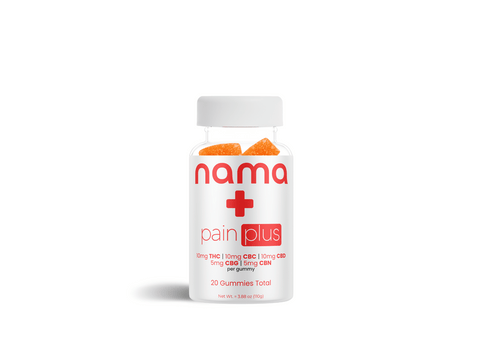
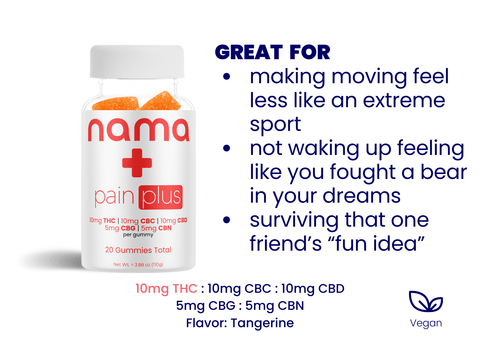
10mg THC | 10mg CBD | 10mg CBC | 5mg CBG | 5mg CBN (per gummy)
Resources
Gibson, L. P., Giordano, G. R., Bidwell, L. C., Hutchison, K. E., & Bryan, A. D. (2024). Acute effects of ad libitum use of commercially available cannabis products on the subjective experience of aerobic exercise: a crossover study. Sports Medicine, 54, 1051–1066. https://doi.org/10.1007/s40279-023-01980-4
Siebers, M., Biedermann, S. V., & Fuss, J. (2023). Do endocannabinoids cause the runner's high? Evidence and open questions. The Neuroscientist, 29(3), 352–369. https://doi.org/10.1177/10738584211069981
YorkWilliams, S. L., Gust, C. J., Mueller, R., Bidwell, L. C., Hutchison, K. E., Gillman, A. S., & Bryan, A. D. (2019). The new runner's high? Examining relationships between cannabis use and exercise behavior in states with legalized cannabis. Frontiers in Public Health, 7, 99. https://doi.org/10.3389/fpubh.2019.00099
Pinzone, A. G., Erb, E. K., Humm, S. M., Kearney, S. G., & Kingsley, J. D. (2023). Cannabis use for exercise recovery in trained individuals: a survey study. Journal of Cannabis Research, 5(1), 32. https://doi.org/10.1186/s42238-023-00198-5
Rojas-Valverde, D., & Fallas-Campos, A. (2023). Cannabidiol in sports: insights on how CBD could improve performance and recovery. Frontiers in Pharmacology, 14, 1210202. https://doi.org/10.3389/fphar.2023.1210202
Sahinovic, A., Irwin, C., Engel, L., Engel, R., Guelfi, K. J., & Wallman, K. E. (2025). The acute effects of cannabidiol on physiological and subjective responses to endurance exercise: a dose-ranging randomised controlled crossover trial. Sports Medicine - Open, 11. https://doi.org/10.1186/s40798-025-00895-w
Johnson, B. W., Strand, N. H., Raynak, J. C., Jara, C., Habtegiorgis, K., Hand, B. A., Hong, S., & Maloney, J. A. (2025). Cannabinoids in chronic pain management: a review of the history, efficacy, applications, and risks. Biomedicines, 13(3), 530. https://doi.org/10.3390/biomedicines13030530
Further reading
The benefits of cannabis for athletes
Taking CBD for muscle relaxation
nama CBD FDA & legal disclaimer
Our cannabis products are not intended to diagnose, treat, cure, or prevent any disease. They are not a replacement for prescription medications and have not been evaluated by the Food and Drug Administration (FDA).
The information provided on this website does not and is not intended to constitute legal advice or any statements of the status of any laws. Any information, content, and materials available on this site are for general informational purposes only and are not intended to be relied upon for any purpose.
Readers of this website should contact their attorney to obtain advice concerning any particular legal matter, including decisions on what products are, or are not, legal to sell, possess, or consume. No reader, user, or browser of this site should act or refrain from acting based on information on this site without first seeking legal advice from their counsel in the relevant jurisdiction.
Only your attorney can provide assurances that the information contained herein—and your interpretation of it—is applicable or accurate for your particular situation. Use of, and access to, this website or any of the links or resources contained within the site do not create an attorney-client relationship between the reader, user, or browser, and website authors, contributors, contributing law firms, or committee members and their respective employers.

About
Learn
Join us on this journey
© Copyright 2026 nama Products LLC. All Rights Reserved.
†These statements have not been evaluated by the Food and Drug Administration. These products are not intended to diagnose, treat, cure or prevent any disease. All information presented here is not meant as a substitute for or alternative to information from health care practitioners. Please consult your health care professional about potential interactions or other possible complications before using any product.
††The information provided on this website does not, and is not intended to, constitute legal advice or any statements of the status of any laws. Any information, content, and materials available on this site are for general entertainment purposes only, and are not intended to be relied upon for any purpose.
nama: The only source for Buzz Drops™
By clicking ‘Yes,’ you agree to our
Terms & Conditions and Privacy Policy
123 John Doe Street
Your Town, YT 12345
Store Hours
Sun: Closed
Mon-Fri: 9:00 - 17:00
Sat: 10:00 - 13:00
What to expect at pickup
Closed
Closing at 5pm
Closing at 5pm
Closing at 5pm
Closing at 5pm
Closing at 5pm
Closing at 1pm

Comments (0)
There are no comments for this article. Be the first one to leave a message!