Why edibles don't work for me

Apr 24, 2026The nama Team

You ate the edible an hour ago and feel nothing. Don’t worry. You’re not crazy.

THC edibles don't produce the same effects for everyone, and yes, you probably took enough. While rare, your liver metabolism, your genetic makeup, your gut health, and the quality of the edible can sabotage the experience before THC ever reaches your brain.

Low THC bioavailability, liver metabolism, and genetic enzyme variations can prevent edibles from producing effects. Learn how to make edibles work for you.

If homemade or dodgy-quality edibles have let you down, try nama water-soluble THC drinks and THC gummies for a precisely dosed experience.

Buzz Drops™ [THC Drink Drops]
On Sale from $27.95
Buzz Drops™ [THC Drink Drops]

2.5mg THC | 2.5mg CBD (per dropper full)

Save up to $41.05 THC
Buzz Packs™ [THC and CBD Powder Drink Mix]
On Sale from $29.95
Buzz Packs™ [THC and CBD Powder Drink Mix]

5mg THC | 5mg CBD (per pack)

Save up to $50.00 THC

How does your body process edibles?

When you smoke or vape cannabis, THC enters your bloodstream through the lungs within seconds. Edibles take a different route. After you swallow a THC edible, it travels to your stomach, gets broken down, and moves into the small intestine for absorption. From there, THC enters the portal vein and heads to the liver. This is where "first-pass metabolism" happens, and your liver processes THC before it ever reaches general circulation.

During first-pass metabolism, liver enzymes convert THC into 11-hydroxy-THC (11-OH-THC), a metabolite that crosses the blood-brain barrier more readily than THC itself. That's why edibles can feel stronger and last longer than smoking. 

Read more about the bioavailability of THC.

Can your metabolism cancel out THC from edibles?

If edibles hit your friends but skip you entirely, your liver may be outrunning the THC.

When liver enzymes work too fast, they can break down THC before it has a chance to produce effects.

The liver enzymes responsible for THC metabolism belong to the cytochrome P450 family, primarily CYP2C9 and CYP3A4. These enzymes convert THC into 11-OH-THC (the psychoactive metabolite) and then further into 11-nor-9-carboxy-THC (THC-COOH), which is inactive. If your liver runs this conversion too efficiently, THC gets neutralized before enough 11-OH-THC builds up to produce noticeable effects.

People with fast metabolisms tend to chew through THC at an accelerated rate. THC is fat-soluble, so people with lower body fat may also process and eliminate it faster. Age, sex, and even recent fasting can shift enzyme activity. A 36-hour fast, for example, has been shown to reduce CYP2C9 activity by roughly 19%.

The role of genetics in how edibles affect you

Genetics most often determine whether or not edibles work for you. Your liver produces an enzyme called CYP2C9 that breaks down THC when you eat it. Think of this enzyme as a security guard between your stomach and your brain; it intercepts THC and decides how much gets through. The gene that builds this enzyme comes in several versions, and the version you inherited from your parents determines how aggressive the enzyme is.

Most people carry the standard version of this gene (called CYP2C9*1), which processes THC at a normal rate (some THC gets neutralized, while some converts into 11-hydroxy-THC and produces psychoactive effects). But people who carry the CYP2C9*3 variant have an enzyme that might chew through THC so fast that almost none survives the trip to the brain.

A study by Sachse-Seeboth and colleagues gave oral THC to 43 healthy volunteers and measured how much THC actually reached their bloodstreams. People with two copies of the *3 variant had three times more THC circulating in their blood than people with the standard gene, which sounds like good news, but the flip side is that their bodies also produced 70% less of the inactive waste product. That imbalance suggests their enzymes were converting THC through a different metabolic pathway, one that may short-circuit the psychoactive effects for some carriers. The researchers concluded that the CYP2C9*3 variant may affect the therapeutic and adverse effects of THC.

About 15–20% of the population carries some version of the CYP2C9*3 allele. This trait is hereditary, so if edibles don't work for a parent or sibling, there's a reasonable chance you share the same enzyme variant. 

Genetic testing services can reveal your CYP2C9 status if you know how to read the raw data, though most people won't need to go that far. If you've tried multiple edibles and doses from reputable brands and still feel nothing, your DNA may be working against you.

Can high THC tolerance make edibles stop working?

If you regularly consume cannabis in other forms, tolerance is a likely culprit.

Chronic THC exposure triggers the CB1 receptors in your endocannabinoid system to downregulate and desensitize. Your brain reduces the number and sensitivity of the receptors that THC binds to, so the same dose produces weaker effects over time.

A landmark 2012 PET imaging study provided the first evidence of this process in living human brains. Chronic daily cannabis smokers showed significant CB1 receptor downregulation compared to non-users, with the reduction correlating to years of cannabis use. The downregulation was most pronounced in cortical brain regions, including the hippocampus. After approximately four weeks of monitored abstinence, CB1 receptor density returned to normal levels.

This tolerance isn't limited to one method of consumption. If you've built up tolerance from smoking, that tolerance carries over to edibles. Your desensitized CB1 receptors respond weakly to THC regardless of how it arrives. Heavy daily smokers may need higher edible doses to feel anything, or they may not feel edibles at all until they take a break.

A tolerance break ("T-break") of 2–4 weeks allows CB1 receptors to recover. After a reset, even a microdose of THC (2–5 mg) can produce noticeable effects. Starting low after a break also reduces the risk of overcorrecting with a dose that's too strong for your newly sensitized receptors.

Faulty edibles could be a reason you’re not feeling anything

Homemade edibles are notoriously inconsistent. Proper decarboxylation (the heat activation step that converts inactive THCA into psychoactive THC) requires precise temperature and timing. Too little heat and the THC stays locked in its acid form. Too much heat and you degrade it. 

Even with proper decarboxylation, homemade batches distribute THC unevenly, so one brownie from the same tray might contain 30 mg while the one next to it contains 5 mg.

Commercial edibles can vary in quality. Products without third-party lab testing may contain far less THC than the label claims. A 2015 study found that only 17% of edible cannabis products sold in dispensaries were accurately labeled, while most were significantly underdosed. If you bought a "10 mg" edible that actually contained 3 mg, you didn't fail to feel the edibles; the edible failed you.

Buy from brands that publish certificates of analysis (COAs) from independent labs and state the milligram content per serving, such as nama.

Can gut health affect edible absorption?

Your gastrointestinal system is the gateway for edible absorption, and if that gateway has issues, THC may never make it through.

Conditions like irritable bowel syndrome (IBS), inflammatory bowel disease (IBD), Crohn's disease, and general malabsorption disorders all affect how the small intestine absorbs nutrients, medications, and cannabinoids. If your body can’t absorb food properly, it will also struggle with THC.

Gallbladder removal (cholecystectomy) can also block your buzz. The gallbladder stores bile, which helps break down fats. Since THC is fat-soluble, reduced bile availability can impair absorption. 

If you have a GI condition or a history of digestive surgery, water-soluble THC products that bypass the standard digestive absorption pathway may be worth trying before writing off cannabinoid edibles entirely.

Water-soluble THC absorbs faster than oil-soluble THC

Water-soluble THC products are the biggest shift in cannabis edible technology for people who don't respond to other edible cannabis options.

Standard edibles contain fat-soluble THC. Your body has to break down fats, absorb cannabinoids through the intestinal wall, and send them through the liver before anything happens. Water-soluble THC uses nanoemulsion technology to break THC into nano-sized particles (typically 20–200 nanometers) coated in a water-compatible carrier. These tiny particles disperse in liquid and absorb through the stomach lining and mucous membranes far faster than fat-soluble compounds.

THC drinks and water-soluble formulations can produce effects in 10–20 minutes compared to the 45–90 minute wait for traditional edibles. While oral THC from conventional edibles delivers 4–20% to the bloodstream, water-soluble formulations achieve significantly higher absorption rates because they bypass much of the first-pass metabolism that destroys THC in the liver.

Our Buzz Drops and Buzz Packs both use water-soluble THC. You add them to any drink, and the THC absorbs through a different pathway than a gummy or brownie, and the likelihood of you feeling the effects increases.

Product QUIZ

Need help deciding what product is best for you? Take our quiz, just three questions until your perfect match!

How to make edibles work better

If you want to give traditional edibles another shot before switching formats, here's what can improve your odds.

  • Pair with fat. Eat a snack containing healthy fats 20–30 minutes before you take an edible. This improves intestinal absorption of fat-soluble THC.
  • Try sublingual delivery. Holding a THC tincture or liquid under your tongue for 30–60 seconds allows cannabinoids to absorb through the blood vessels in your mouth, bypassing the GI tract and liver entirely. Onset is faster and absorption is less dependent on digestive function.
  • Take a tolerance break. If you're a regular cannabis consumer, even 2–4 weeks off can reset your CB1 receptors and restore sensitivity to lower doses.
  • Buy lab-tested products. Always check for third-party COAs that verify the exact THC content per serving. If the brand doesn't publish lab results, the dose on the label may be wrong. And that might be the entire reason edibles "don't work" for you.
  • Switch to water-soluble formulations. THC drinks and drink mixes absorb through a different mechanism. This single change solves the problem for many people whose bodies resist other oral THC products.

Best nama products for people who don't feel edibles

Buzz Drops are nama's water-soluble THC tincture: 2.5 mg THC and 2.5 mg CBD per dropper, flavorless, calorie-free, and sugar-free. Add them to any beverage, and the nano-sized THC particles absorb in 10–20 minutes.

Buzz Packs deliver the same water-soluble advantage in a powder format: 5 mg THC and 5 mg CBD per packet. Tear, pour into your drink, stir. The flavorless powder dissolves completely and absorbs through the same faster pathway as Buzz Drops. 

The Ultimate nama Sampler lets you test multiple formulas, including different cannabinoid ratios and delivery formats, to find what your body responds to. If you've never tried lab-tested, precisely microdosed edibles, a sampler is the lowest-risk way to discover whether the problem was always the product, not your body.

Every product ships with third-party lab results confirming the exact cannabinoid content per serving.

Edibles FAQ

Wait at least two hours. Fat-soluble edibles can take 45–90 minutes to produce initial effects, and some people don't feel the full onset until the two-hour mark. Taking more before the first dose has peaked is the most common cause of accidental overconsumption.

Read more about how long it takes for a THC gummy to kick in and what may affect this process.

CBD and THC interact at CB1 receptors, and high ratios of CBD to THC may modulate psychoactive intensity. A product with 25 mg CBD and 2 mg THC will feel different from one with equal parts of both. That said, moderate CBD alongside THC (like a 1:1 ratio) tends to smooth the experience rather than eliminate it. If you felt nothing, the CBD ratio alone probably isn't the explanation.

Usually not, and chasing higher doses can be risky. If the issue is genetic, doubling the dose just gives your liver more material to process. You're better off switching delivery methods (water-soluble THC, sublingual) than escalating the dose of a format your body doesn't absorb well.

For many people, yes. THC drinks made with water-soluble cannabinoids absorb through different mechanisms than fat-soluble edibles. The nano-sized particles can enter the bloodstream through the stomach lining and mucous membranes, which reduces dependence on the intestinal absorption and liver processing that fail some people.

Learn about the differences between THC drinks and edibles.

Look for third-party certificates of analysis (COAs) from an independent lab. The COA should list the exact milligrams of THC per serving. If the brand doesn't publish COAs, the labeled dose may be inaccurate. Products from gas stations, convenience stores, or unregulated online sellers are especially likely to contain less THC than advertised, or no psychoactive THC at all.

Top Sellers

New? Start with our Ultimate Sampler!
Buzz Packs™ [THC and CBD Powder Drink Mix]
On Sale from $29.95
Buzz Packs™ [THC and CBD Powder Drink Mix]

5mg THC | 5mg CBD (per pack)

Save up to $50.00 THC
Buzz Drops™ [THC Drink Drops]
On Sale from $27.95
Buzz Drops™ [THC Drink Drops]

2.5mg THC | 2.5mg CBD (per dropper full)

Save up to $41.05 THC
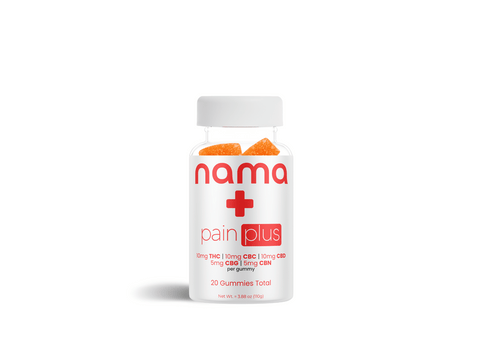
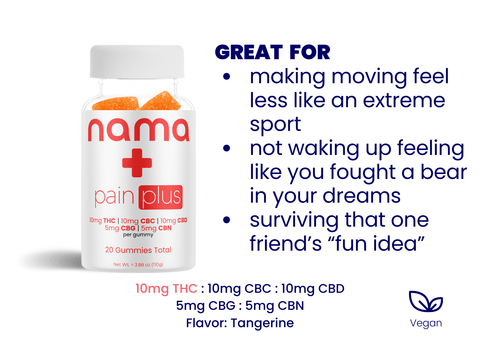
Pain Plus Gummies | THC, CBD, CBG, CBC, CBN
From $49.00
Pain Plus Gummies | THC, CBD, CBG, CBC, CBN

10mg THC | 10mg CBD | 10mg CBC | 5mg CBG | 5mg CBN (per gummy)

THC
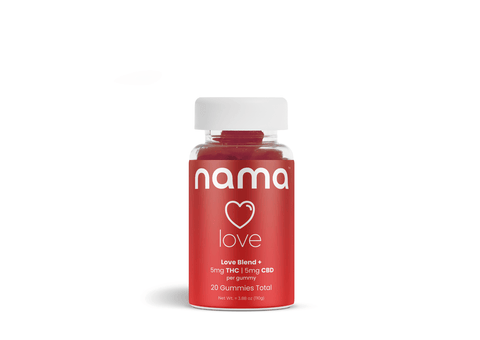
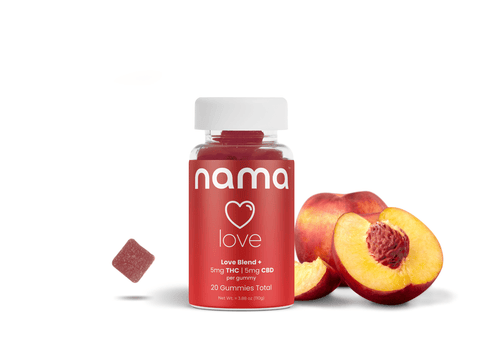
Love | Libido Boosting Gummies With CBD and THC
From $44.00
Love | Libido Boosting Gummies With CBD and THC

5mg THC | 5mg CBD (per gummy)

THC
The Ultimate nama Gummy Sampler
Save $4.05 THC

Resources

Yabut, K. C. B., Winnie Wen, Y., Simon, K. T., & Isoherranen, N. (2024). CYP2C9, CYP3A and CYP2C19 metabolize Δ9-tetrahydrocannabinol to multiple metabolites but metabolism is affected by human liver fatty acid binding protein (FABP1). Biochemical pharmacology, 228, 116191. https://doi.org/10.1016/j.bcp.2024.116191

Lammers, L. A., Achterbergh, R., van Schaik, R. H. N., Romijn, J. A., & Mathôt, R. A. A. (2017). Effect of Short-Term Fasting on Systemic Cytochrome P450-Mediated Drug Metabolism in Healthy Subjects: A Randomized, Controlled, Crossover Study Using a Cocktail Approach. Clinical pharmacokinetics, 56(10), 1231–1244. https://doi.org/10.1007/s40262-017-0515-7

Sachse-Seeboth, C., Pfeil, J., Sehrt, D., Meineke, I., Tzvetkov, M., Bruns, E., Poser, W., Vormfelde, S. V., & Brockmöller, J. (2009). Interindividual variation in the pharmacokinetics of Delta9-tetrahydrocannabinol as related to genetic polymorphisms in CYP2C9. Clinical pharmacology and therapeutics, 85(3), 273–276. https://doi.org/10.1038/clpt.2008.213

Hirvonen, J., Goodwin, R. S., Li, C. T., Terry, G. E., Zoghbi, S. S., Morse, C., Pike, V. W., Volkow, N. D., Huestis, M. A., & Innis, R. B. (2012). Reversible and regionally selective downregulation of brain cannabinoid CB1 receptors in chronic daily cannabis smokers. Molecular psychiatry, 17(6), 642–649. https://doi.org/10.1038/mp.2011.82

Vandrey R, Raber JC, Raber ME, Douglass B, Miller C, Bonn-Miller MO. Cannabinoid Dose and Label Accuracy in Edible Medical Cannabis Products. JAMA. 2015;313(24):2491–2493. https://doi:10.1001/jama.2015.6613 

Further reading

How fast do THC drinks work?

The benefits of microdosed THC

Will 5 mg of Delta 9 THC get me high?

How long do THC drinks last before they expire?

Do Buzz Packs work?

nama CBD FDA & legal disclaimer

Our cannabis products are not intended to diagnose, treat, cure, or prevent any disease. They are not a replacement for prescription medications and have not been evaluated by the Food and Drug Administration (FDA).

The information provided on this website does not and is not intended to constitute legal advice or any statements of the status of any laws. Any information, content, and materials available on this site are for general informational purposes only and are not intended to be relied upon for any purpose.

Readers of this website should contact their attorney to obtain advice concerning any particular legal matter, including decisions on what products are, or are not, legal to sell, possess, or consume. No reader, user, or browser of this site should act or refrain from acting based on information on this site without first seeking legal advice from their counsel in the relevant jurisdiction.

Only your attorney can provide assurances that the information contained herein—and your interpretation of it—is applicable or accurate for your particular situation. Use of, and access to, this website or any of the links or resources contained within the site do not create an attorney-client relationship between the reader, user, or browser, and website authors, contributors, contributing law firms, or committee members and their respective employers.

More articles

Comments (0)

There are no comments for this article. Be the first one to leave a message!

Leave a comment

Please note: comments must be approved before they are published