Cannabinoids are one of the most studied complementary treatments for multiple sclerosis. A 2024 systematic review and meta-analysis confirmed that cannabinoid treatments reduce spasticity in MS patients, and a pharmaceutical THC and CBD spray (nabiximols) is already approved in over 30 countries specifically for MS-related muscle stiffness.
The research base for CBD's role in MS spans spasticity, neuropathic pain, sleep disruption, fatigue, and nerve protection, with the strongest clinical results coming from products that combine CBD with THC.
nama's CBD and THC products deliver clean, lab-tested cannabinoid doses that you can add to your existing MS management plan.
Key takeaways
- Cannabinoid treatments containing both THC and CBD are approved in over 30 countries for MS-related spasticity.
- CBD shows strong neuroprotective and anti-inflammatory effects in animal models of MS, but human clinical evidence is still emerging.
- A 2024 systematic review and meta-analysis confirmed that cannabinoids have modest efficacy for MS spasticity, with the strongest results coming from THC and CBD combinations rather than CBD alone.
- CBD is not a disease-modifying therapy. It may help manage symptoms like spasticity and pain, but it won't slow MS progression or replace immunomodulatory medications.
What is multiple sclerosis?
Multiple sclerosis is an autoimmune disease where your immune system attacks the protective coating around your nerves called myelin. Myelin works like insulation on an electrical wire. It keeps nerve signals moving fast and efficiently between your brain and the rest of your body. When the immune system strips that insulation away (a process called demyelination), nerve signals misfire or stop entirely.
The damage creates numerous symptoms depending on which nerves are affected. The most common include muscle spasticity (stiffness and involuntary spasms), neuropathic pain (burning, tingling, or shooting sensations), fatigue, difficulty walking, bladder dysfunction, and sleep problems. MS follows different patterns in different people. Some experience relapses and remissions, while others have a slow, steady progression.
Current MS treatments focus on disease-modifying therapies (DMTs) that slow the immune attack on myelin and symptom management for the pain, spasticity, and fatigue that come with nerve damage. Cannabinoids fit into the second category. They don't stop MS from progressing, but they may help manage the symptoms that make daily life harder.
Your body has its own endocannabinoid system (ECS) that regulates pain, inflammation, immune function, and muscle tone. CBD and THC interact with this system, which is why cannabinoids affect so many MS symptoms.
Can CBD help with MS spasticity?
Spasticity is one of the most disabling MS symptoms. It causes muscles to stiffen involuntarily, sometimes locking limbs in painful positions. Spasms can make walking difficult, and they resist conventional treatments such as baclofen and tizanidine.
The strongest clinical evidence for cannabinoids and MS spasticity comes from THC and CBD combinations. A randomized controlled trial of 189 MS patients found that a THC and CBD oromucosal spray was significantly superior to placebo for reducing spasticity scores over six weeks. In a follow-up analysis, 74% of patients in the active treatment group reported at least 30% improvement in spasticity, compared to 51% in the placebo group.
The landmark CAMS study enrolled 630 MS patients across 33 UK centers and found that 61% of patients receiving oral cannabis extract reported improvement in spasticity, compared to 46% on placebo. A 2019 review of 27 studies confirmed that cannabinoids have modest efficacy for muscle spasticity in adults with MS.
A 2025 randomized trial is testing pure CBD (up to 80 mg/day) for MS spasticity that was causing gait problems in 49 patients. This is one of the few trials to isolate CBD from THC in an MS population, and the results will help clarify how much of the anti-spasticity effect comes from CBD alone versus the THC and CBD combination.
Trails consistently show that combined THC and CBD produce stronger spasticity relief than either cannabinoid alone. CBD contributes anti-inflammatory and muscle-relaxing effects, while THC acts directly on CB1 receptors that control motor function and pain. The entourage effect (cannabinoids have compounding effects when combined) appears to reduce spasticity more than other MS symptoms.
Does CBD reduce MS-related pain?
Neuropathic pain affects between 17% and 70% of MS patients. It results from damaged nerves sending false pain signals, like burning, tingling, stabbing, or electric shock sensations that don't respond well to standard painkillers.
A randomized controlled trial tested THC and CBD spray in 66 MS patients with central neuropathic pain. The treatment group experienced significant reductions in pain intensity compared to placebo over five weeks, along with improvements in sleep quality. The treatment was well-tolerated, with most side effects (dizziness, dry mouth) rated as mild.
A 2022 systematic review examining cannabinoid effects in MS and demyelination models found low to moderate quality evidence that CBD and THC mixtures reduce pain scores in clinical trials. The review also noted that nabiximols reduced sleep disturbance scores alongside pain, suggesting that better pain control at night may be part of how cannabinoids improve overall quality of life for MS patients.
CBD's role in MS pain management works through several mechanisms:
- It inhibits FAAH (the enzyme that breaks down anandamide), which extends your body's natural pain relief
- It acts on serotonin 5-HT1A receptors involved in pain perception
- It reduces the neuroinflammation that drives neuropathic pain in the first place
THC alongside CBD, may provide more complete pain relief than CBD alone, based on the consistent pattern across clinical trials.
Can CBD help with MS fatigue?
Fatigue is the most commonly reported MS symptom. It affects up to 80% of patients. MS fatigue isn't the same as being tired after a bad night's sleep. It's a deep, persistent exhaustion that doesn't improve with rest and can make even simple tasks feel overwhelming. It results from the combination of nerve damage, chronic inflammation, disrupted sleep, and the extra energy your body spends compensating for impaired motor function.
The evidence for CBD and MS fatigue is less direct than for spasticity or pain. No large randomized trial has tested CBD specifically for MS fatigue.
The research shows that CBD may address several of the factors that contribute to fatigue. CBD reduces inflammation through the endocannabinoid system, and chronic inflammation is a major driver of MS fatigue. CBD's anxiolytic effects (confirmed in a 2024 meta-analysis of eight randomized controlled trials) may help with the mental exhaustion that compounds physical fatigue. And by improving sleep quality (more on that below), CBD may give MS patients more restorative rest, which reduces daytime fatigue.
Does CBD improve sleep for people with MS?
Cannabinoids address several MS-related sleep problems, including spasms, neuropathic pain, and bladder dysfunction. A 2022 systematic review of 39 randomized trials and 5,100 patients found that cannabinoids mildly improve sleep quality versus placebo, particularly in people with chronic pain. A trial on cannabis for MS-related neuropathic pain also found that THC and CBD treatment improved sleep quality as a secondary outcome.
A clinical trial currently underway in the Netherlands (the CanISleepinMS study) is testing pure CBD oil at doses up to 300 mg daily specifically for sleep quality in MS patients with insomnia. This will be one of the first rigorous trials to isolate CBD's effect on sleep in an MS population.
For now, the practical approach is to target the symptoms that disrupt sleep. If spasms wake you up, a THC and CBD combination before bed may reduce spasm frequency. If anxiety keeps you awake, CBD's anti-anxiety effects may help you fall asleep faster. Pairing CBD with CBN (a cannabinoid with stronger sedative properties) and melatonin creates a targeted sleep formula that addresses multiple barriers at once.
Read about how to use CBD for sleep.
Can CBD protect nerves from MS damage?
In animal models of MS, the results are striking. A 2022 systematic review of 14 preclinical studies found that cannabinoid treatments reduced disease severity, decreased demyelination, protected nerve fibers from damage, strengthened anti-inflammatory immune responses, and, in some models, promoted remyelination (the regrowth of the protective myelin coating).
A 2021 systematic review focused on CBD's immunomodulatory potential in MS found consistent evidence that CBD reduces pro-inflammatory cytokines (like IL-17A, TNF-α, and IL-6) and increases anti-inflammatory cytokines (like IL-10) in rodent models. Multiple studies showed reduced demyelination and less infiltration of immune cells into the central nervous system.
But animal models don't necessarily translate to humans. The same 2021 review noted a "major discrepancy" between the strong preclinical evidence for CBD in MS and the limited, sometimes negative clinical results in human trials. The doses, delivery methods, and disease mechanisms differ enough between mice and people that caution is warranted.
The animal research does establish that the endocannabinoid system directly protects nerves and regulates the immune attack on myelin. CBD interacts with this system in ways that are neuroprotective in controlled settings. Whether those effects translate to meaningful nerve protection in MS patients is a question that only well-designed human trials can answer.
What CBD can't do for multiple sclerosis
- Stop MS progression: Disease-modifying therapies (interferons, glatiramer acetate, natalizumab, ocrelizumab, and others) target the immune processes that drive MS. CBD does not replace these medications. If your neurologist has prescribed a DMT, keep taking it.
- Reverse nerve damage: Once myelin is destroyed and nerve fibers are damaged, CBD cannot rebuild them. The remyelination seen in animal studies has not been demonstrated in human MS patients.
- Replace physical therapy: Spasticity management in MS requires a combination of medication, stretching, strengthening, and sometimes surgical intervention. CBD can supplement physical therapy, not substitute for it.
- Work the same for everyone: MS affects different nerves in different people, which means symptom profiles vary widely. A dose or product that helps one person's spasticity may not help another's neuropathic pain.
Talk to your neurologist before adding CBD to your MS management plan, especially if you take disease-modifying therapies or anti-seizure medications. CBD inhibits certain liver enzymes (CYP3A4 and CYP2C19) that metabolize many prescription drugs, which means it can change how your body processes other medications.
Product QUIZ
Need help deciding what product is best for you? Take our quiz, just three questions until your perfect match!
Best nama products for treating multiple sclerosis symptoms
Pain Plus gummies
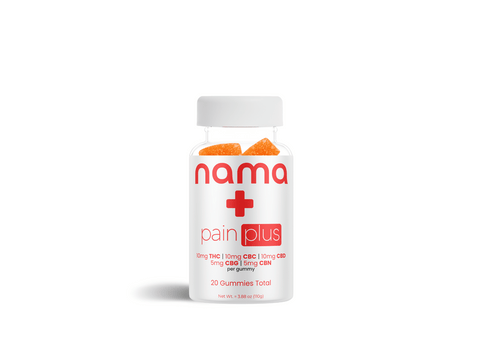
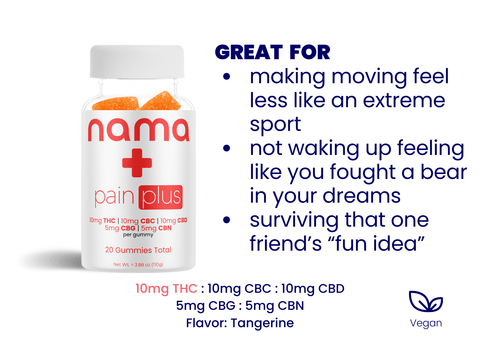
Pain Plus gummies are nama's most potent formula for complex pain. Each gummy contains five cannabinoids: 10 mg THC, 10 mg CBC, 10 mg CBD, 5 mg CBG, and 5 mg CBN. Our multi-cannabinoid profile targets pain through several pathways, which matters for MS patients dealing with neuropathic pain that doesn't respond to single-compound treatments.
Relax Plus gummies
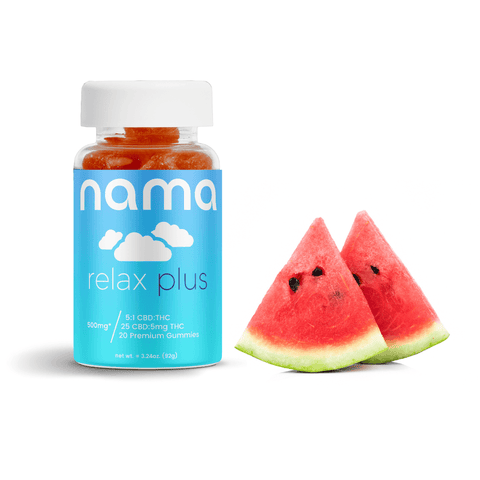
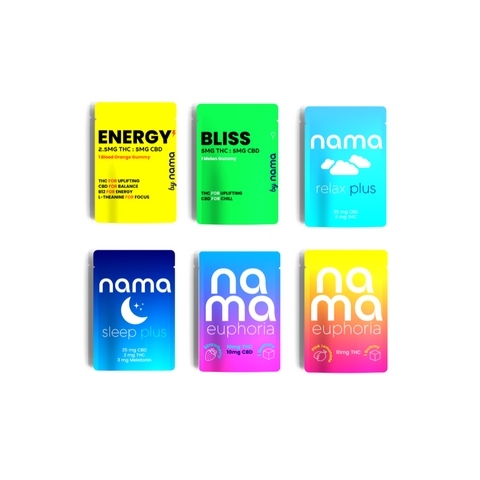
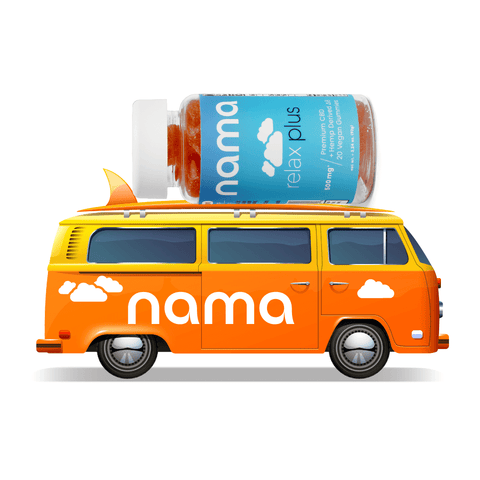
Relax Plus gummies pair 5 mg of THC with 25 mg of CBD. The higher CBD ratio targets inflammation and muscle tension, while the THC adds relief through CB1 receptor activation.
Sleep Plus gummies
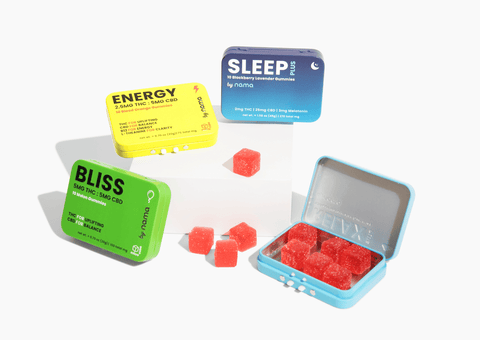
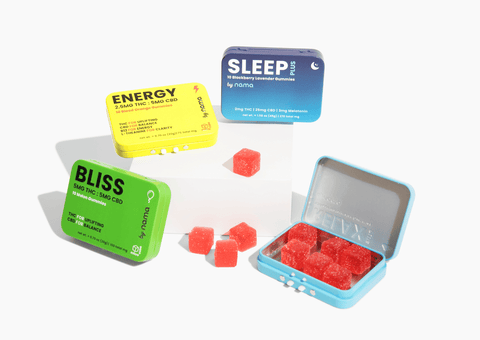
Sleep Plus gummies combine 2 mg of THC, 25 mg of CBD, and 3 mg of melatonin. For MS patients whose sleep is disrupted by nighttime spasms, pain, or anxiety, this formula targets all three barriers. The low THC dose provides pain relief without heavy sedation, and melatonin signals your brain to initiate sleep.
Relax gummies
Relax gummies deliver 25 mg of CBD with 100 mg of ashwagandha and zero THC. For MS patients who want cannabinoid support without any psychoactive effects (or who need to avoid THC due to drug testing or personal preference), these provide anti-anxiety and anti-inflammatory benefits through CBD and adaptogenic stress relief through ashwagandha.
Anytime CBD gummies
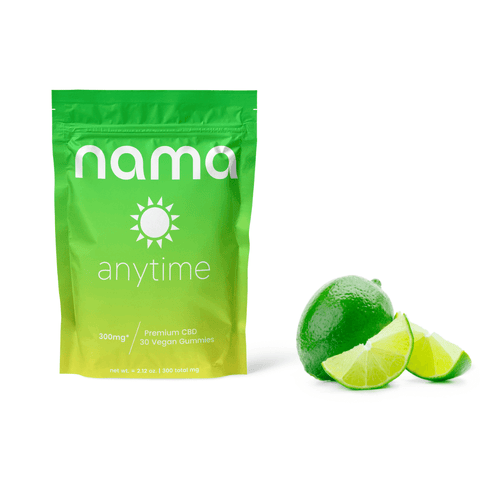
Anytime CBD gummies contain 10 mg of broad-spectrum CBD with zero THC. The lower dose works well for daytime anxiety management, mild tension, and general inflammatory support without any sedation or impairment.
All nama products are vegan, third-party tested for purity and potency, and made from organic, American-grown hemp. Every gummy contains the exact dose printed on the label. Shop nama's full collection.
CBD for multiple sclerosis FAQ
CBD is a symptom management supplement, not a disease-modifying therapy. It does not replace interferons, glatiramer acetate, natalizumab, ocrelizumab, or any other DMT your neurologist has prescribed. Those medications target the immune processes that drive MS progression. CBD targets the symptoms (pain, spasticity, sleep disruption) that result from nerve damage. Use CBD alongside your treatment plan, not instead of it.
The clinical evidence favors combinations over solitary cannabinoids. The trials showing the strongest spasticity improvement used THC and CBD together in roughly equal ratios. THC acts directly on CB1 receptors that control muscle tone, while CBD contributes anti-inflammatory and muscle-relaxing effects through indirect mechanisms. For spasticity, a product containing THC and CBD will likely produce better results than CBD alone.
Some effects (pain relief, reduced anxiety) may be noticeable within hours of a single dose. Spasticity improvement typically takes one to two weeks of consistent daily use, based on the timeframes reported in clinical trials. Neuroprotective effects, if they occur, would develop over months or longer. Track your symptoms in a journal so you can separate CBD's effects from the natural fluctuations of MS.
Daily use is both safe and preferred for MS symptom management. The clinical trials showing benefit used daily dosing over weeks to months. CBD has a strong safety profile at doses up to several hundred milligrams per day, though most people manage MS symptoms effectively at much lower doses (10–50 mg CBD daily, with or without THC).
Hemp-derived CBD products containing less than 0.3% THC are federally legal under the 2018 Farm Bill. nama's products comply with this threshold. State laws vary, so check your local regulations before purchasing. Pharmaceutical nabiximols (Sativex) is not FDA-approved (as of 2026) in the United States but is available by prescription in over 30 other countries.
Top Sellers
New? Start with our Ultimate Sampler!
10mg THC | 10mg CBD | 10mg CBC | 5mg CBG | 5mg CBN (per gummy)
Resources
Colman, I., et al. (2007). Randomized controlled trial of cannabis-based medicine in spasticity caused by multiple sclerosis. European Journal of Neurology, 14(3), 290–296. https://pubmed.ncbi.nlm.nih.gov/17355549/
Zajicek, J. P., et al. (2005). Cannabinoids in multiple sclerosis (CAMS) study: safety and efficacy data for 12 months follow up. Journal of Neurology, Neurosurgery & Psychiatry, 76(12), 1664–1669. https://doi.org/10.1136/jnnp.2005.070136
Rog, D. J., Nurmikko, T. J., Friede, T., & Young, C. A. (2005). Randomized, controlled trial of cannabis-based medicine in central pain in multiple sclerosis. Neurology, 65(6), 812–819. https://doi.org/10.1212/01.wnl.0000176753.45410.8b
Nielsen, S., et al. (2019). Cannabinoids for the treatment of spasticity. Developmental Medicine & Child Neurology, 61(6), 631–638. https://doi.org/10.1111/dmcn.14165
Badawi, A. H., et al. (2024). Cannabinoids for spasticity in patients with multiple sclerosis: a systematic review and meta-analysis. Annals of Medicine and Surgery, 86(10). https://pmc.ncbi.nlm.nih.gov/articles/PMC11536376/
Furgiuele, A., et al. (2022). Neurological benefits, clinical challenges, and neuropathologic promise of medical marijuana: a systematic review of cannabinoid effects in multiple sclerosis and experimental models of demyelination. Biomedicines, 10(3), 539. https://doi.org/10.3390/biomedicines10030539
Mecha, M., et al. (2021). Immunomodulatory potential of cannabidiol in multiple sclerosis: a systematic review. Journal of Neuroimmune Pharmacology, 16, 251–269. https://doi.org/10.1007/s11481-021-09982-7
Jones, É., & Vlachou, S. (2020). A critical review of the role of the cannabinoid compounds Δ9-tetrahydrocannabinol (Δ9-THC) and cannabidiol (CBD) and their combination in multiple sclerosis treatment. Molecules, 25(21), 4930. https://doi.org/10.3390/molecules25214930
Karimi-Haghighi, S., et al. (2025). A randomized trial on efficacy of purified cannabidiol on spasticity in multiple sclerosis patients with gait problems. Naunyn-Schmiedeberg's Archives of Pharmacology. https://doi.org/10.1007/s00210-025-04347-w
Han, K., Wang, J. Y., Wang, P. Y., & Peng, Y. C. H. (2024). Therapeutic potential of cannabidiol (CBD) in anxiety disorders: a systematic review and meta-analysis. Psychiatry Research, 339, 116049. https://doi.org/10.1016/j.psychres.2024.116049
Shalev, N., et al. (2022). Medical cannabis and cannabinoids for impaired sleep: a systematic review and meta-analysis of randomized clinical trials. Sleep, 45(2). https://pubmed.ncbi.nlm.nih.gov/34546363/
Further reading
Can you microdose THC for neurogenesis?
The benefits of CBN for pain relief
Best types of weed for neuropathic pain
Is sativa or indica better for pain?
nama CBD FDA & legal disclaimer
Our products are not intended to diagnose, treat, cure, or prevent any disease. They are not a replacement for prescription medications and have not been evaluated by the Food and Drug Administration (FDA).
The information provided on this website does not and is not intended to constitute legal advice or any statements of the status of any laws. Any information, content, and materials available on this site are for general informational purposes only and are not intended to be relied upon for any purpose.
Readers of this website should contact their attorney to obtain advice concerning any particular legal matter, including decisions on what products are, or are not, legal to sell, possess, or consume. No reader, user, or browser of this site should act or refrain from acting based on information on this site without first seeking legal advice from their own counsel in the relevant jurisdiction.
Only your attorney can provide assurances that the information contained herein—and your interpretation of it—is applicable or accurate for your particular situation. Use of, and access to, this website or any of the links or resources contained within the site do not create an attorney-client relationship between the reader, user, or browser, and website authors, contributors, contributing law firms, or committee members and their respective employers.

About
Learn
Join us on this journey
© Copyright 2026 nama Products LLC. All Rights Reserved.
†These statements have not been evaluated by the Food and Drug Administration. These products are not intended to diagnose, treat, cure or prevent any disease. All information presented here is not meant as a substitute for or alternative to information from health care practitioners. Please consult your health care professional about potential interactions or other possible complications before using any product.
††The information provided on this website does not, and is not intended to, constitute legal advice or any statements of the status of any laws. Any information, content, and materials available on this site are for general entertainment purposes only, and are not intended to be relied upon for any purpose.
⚠️ CALIFORNIA WARNING: Consuming this product during pregnancy exposes your child to delta-9-THC, which can affect your child’s behavior and learning ability. For more information go to www.P65Warnings.ca.gov/cannabis.
nama: The only source for Buzz Drops™
By clicking ‘Yes,’ you agree to our
Terms & Conditions and Privacy Policy
123 John Doe Street
Your Town, YT 12345
Store Hours
Sun: Closed
Mon-Fri: 9:00 - 17:00
Sat: 10:00 - 13:00
What to expect at pickup
Closed
Closing at 5pm
Closing at 5pm
Closing at 5pm
Closing at 5pm
Closing at 5pm
Closing at 1pm

Comments (0)
There are no comments for this article. Be the first one to leave a message!