Is CBD an effective muscle relaxant?

Apr 26, 2026The nama Team

CBD reduces the inflammatory signals and pain pathways that make muscles tighten and stay tight, without the sedation or dependency risks of pharmaceutical relaxants. 

A 2026 randomized controlled trial from the University of Florida gave 29 healthy adults oral CBD twice daily for 15 days, then induced muscle injury through repetitive exercise. The CBD group reported less pain at rest and during movement, less strength loss, and faster functional recovery than the placebo.

nama CBD gummies deliver clean, lab-tested doses in a format you can toss in a bag and take anywhere. Choose CBD-only formulas for muscle relief without THC, or grab a THC edible for deeper relaxation.

CBD reduces muscle tension via your endocannabinoid system, not by sedating your nervous system. It can help with muscle soreness, tightness, and spasms.

Main takeaways

  • CBD interacts with your endocannabinoid system and serotonin receptors to reduce muscle tension.
  • A 2026 trial found that CBD reduces pain and improves functional recovery after exercise-induced muscle injury in healthy adults.
  • A 2024 randomized double-blind trial on jaw muscle tension found that 10% CBD reduces pain by 57% and muscle activity by 42% over 30 days.
  • CBD addresses muscle tension by reducing inflammation, stress-driven tightness, and spasm frequency, as well as improving sleep quality for overnight repair.

Buzz Drops™ [THC Drink Drops]
On Sale from $27.95
Buzz Drops™ [THC Drink Drops]

2.5mg THC | 2.5mg CBD (per dropper full)

Save up to $41.05 THC
Buzz Packs™ [THC and CBD Powder Drink Mix]
On Sale from $29.95
Buzz Packs™ [THC and CBD Powder Drink Mix]

5mg THC | 5mg CBD (per pack)

Save up to $50.00 THC

How does CBD relax muscles?

Your body has a built-in signaling network called the endocannabinoid system (ECS) that regulates pain, inflammation, mood, and muscle function through two types of receptors. CB1 receptors exist in your brain and central nervous system, where they handle pain perception, mood, and motor control. CB2 receptors concentrate in immune cells and peripheral tissues, where they manage inflammatory responses and immune signaling.

To keep this system running, your body produces its own cannabinoids called endocannabinoids. The most relevant one for muscle relaxation is anandamide, a molecule that binds to CB1 receptors to reduce pain and promote calm. Your body also produces an enzyme called FAAH that breaks anandamide down after it does its job. CBD inhibits FAAH, so more anandamide remains active in your system for longer, extending natural pain relief and reducing inflammatory signaling without psychoactive effects.

Can CBD help with exercise-induced muscle soreness?

The inflammation and soreness that follow exercise (delayed-onset muscle soreness, or DOMS) are your body's way of rebuilding stronger tissue. CBD may reduce the pain and recovery time without shutting down the rebuilding process.

A 2026 randomized, placebo-controlled trial from the University of Florida gave 29 healthy adults hemp-derived CBD sublingually (67 mg total) for 15 days. On day 10, researchers induced muscle injury through repetitive quadriceps exercise. The CBD group reported lower peak pain at rest and during movement 48 hours post-injury, less strength loss, and less physical disability than placebo. They also recovered slightly faster overall.

A 2020 study found similar results in 23 trained participants. The CBD group received 16.67 mg of CBD daily and showed meaningful reductions in soreness scores at 24, 48, 72, and 96 hours after exercise-induced muscle damage. A 2021 crossover study also found that CBD weakened markers of muscle damage following resistance exercise in trained men and women.

A 2024 pilot study found that topical CBD cream did not reduce DOMS or improve performance after intensive lower-body exercise. A crossover study using oral CBD at 5 mg/kg found no significant effect on inflammation markers after muscle-damaging exercise. 

The delivery method and dosing schedule likely explain this gap. Topical application may not penetrate deep enough to reach damaged tissue, and single-dose protocols don't provide the sustained exposure that multi-day dosing achieves. The trials that showed positive results used consistent daily oral CBD over multiple days.

Learn about microdosing cannabis for DOMS.

Does CBD reduce stress-related muscle tension?

When your brain perceives a threat, your sympathetic nervous system floods your body with cortisol and adrenaline. These hormones tell your muscles to contract and brace for action. When the stress is short-lived, your muscles release once the threat passes. When the stress is chronic (deadlines, financial pressure, relationship strain), the contraction never fully lets go. 

CBD interrupts this cycle at the hormonal level. A 2024 study measured cortisol output during a standardized laboratory stressor and found that CBD lowered cortisol responsivity compared to placebo. Lower cortisol means less of the chemical signal that tells your muscles to tighten.

A 2024 meta-analysis of eight randomized controlled trials and 316 participants confirmed that CBD produces significant anti-anxiety effects. Less anxiety means less cortisol and less involuntary muscle contraction.

One of the clearest demonstrations comes from a 2024 randomized, double-blind trial on jaw muscle tension and sleep bruxism. Sixty patients received either 10% CBD, 5% CBD, or placebo applied topically to the masseter muscle (the large jaw muscle responsible for clenching and grinding). 

After 30 days, the 10% CBD group experienced a 57% reduction in pain and a 42% reduction in muscle activity measured by surface electromyography. This trial measured objective muscle firing, not just self-reported symptoms. CBD reduced actual contraction, not just the perception of tightness.

Can CBD help with muscle spasms?

Muscle spasms are involuntary contractions that involve sudden, uncontrolled muscle firing that can range from a minor twitch to a painful cramp. Spasms can result from dehydration, electrolyte imbalances, nerve damage, or neurological conditions like multiple sclerosis.

The strongest evidence for cannabinoids and spasticity comes from nabiximols, a pharmaceutical 1:1 THC:CBD spray approved in multiple countries for MS-related spasticity. A large randomized trial of 189 MS patients found that THC:CBD was significantly superior to placebo for reducing spasticity scores over six weeks. A 2019 review of 27 studies confirmed that cannabinoids have modest efficacy for muscle spasticity in adults with MS.

Most spasticity research uses THC:CBD combinations rather than CBD alone. CBD's indirect mechanisms (FAAH inhibition, serotonin receptor modulation, anti-inflammatory action) may contribute to reduced spasm frequency, but the clinical data is strongest when CBD is combined with other cannabinoids, due to the entourage effect

For occasional exercise-related cramps or stress-related spasms, CBD's anti-inflammatory and anxiolytic properties may help reduce the conditions that trigger them. For chronic or neurological spasticity, talk to your doctor about whether a cannabinoid-based approach fits your situation.

Does CBD improve sleep for muscle recovery?

Your muscles do most of their repair work during deep sleep, when growth hormone release peaks. If your sleep quality is poor, your muscles don't get the repair window they need. 

A 2022 systematic review and meta-analysis of 39 randomized trials and 5,100 patients found moderate certainty evidence that cannabinoids produce a small improvement in sleep quality versus placebo, particularly in people with chronic pain. The improvement was driven more by formulations that contain multiple cannabinoids than by CBD alone.

CBD may support sleep indirectly. By reducing the anxiety and pain that keep you awake, it removes barriers to falling asleep and staying asleep. A 2023 review on CBD in sports recovery noted that CBD's anti-anxiety and pain-relieving properties may improve sleep quality in athletes, though the authors called for more rigorous trials in athletic populations.

For people whose muscle tension worsens at night, a bedtime CBD dose may break the cycle of poor sleep and unresolved tightness. A combination of CBD with THC or CBN (a cannabinoid with stronger sedative properties) may produce better sleep outcomes than CBD alone.

Product QUIZ

Need help deciding what product is best for you? Take our quiz, just three questions until your perfect match!

When should you skip CBD for muscle relaxation?

  • Acute injuries requiring medical attention: A torn muscle, stress fracture, or severe sprain requires diagnosis and treatment. CBD can support recovery alongside medical care, but it shouldn't replace it or mask symptoms that signal a serious injury.
  • Drug interactions: CBD inhibits certain cytochrome P450 liver enzymes, which means it can change how your body metabolizes other medications. If you take blood thinners, anti-seizure drugs, or immunosuppressants, talk to your doctor before adding CBD. The interaction risk increases at higher doses (above 100 mg per day).
  • During pregnancy or breastfeeding: There isn't enough safety data on CBD use during pregnancy or breastfeeding to recommend it.
  • Immediate spasm relief: CBD takes 30–90 minutes to produce effects when taken orally. For acute muscle spasms that need fast intervention, stretching, hydration, and electrolyte replacement act faster.
  • Productive inflammation: After a strength training session where muscle adaptation is the goal, some inflammation is beneficial. Using high-dose anti-inflammatory agents (CBD included) immediately after every workout may blunt training adaptations over time. Reserve recovery dosing for your hardest sessions, not every workout.

Best nama products for muscle relaxation

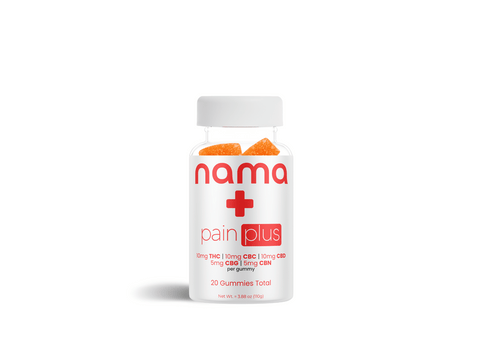
Pain Plus Gummies

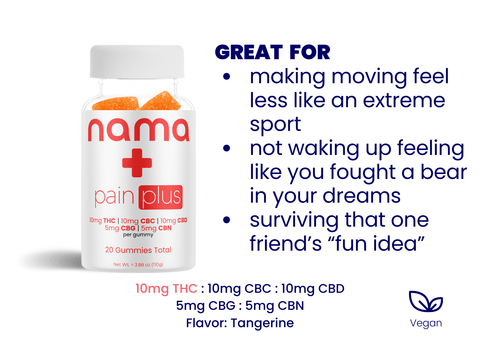
Pain Plus gummies are nama's most potent formula to treat pain. Each gummy packs five cannabinoids: 10 mg THC, 10 mg CBC, 10 mg CBD, 5 mg CBG, and 5 mg CBN. That multi-cannabinoid profile hits pain through several pathways at once.

Relax Gummies

Relax gummies combine 25 mg of CBD with 100 mg of ashwagandha per gummy. CBD reduces tension while ashwagandha targets cortisol, the stress hormone that keeps muscles locked up.

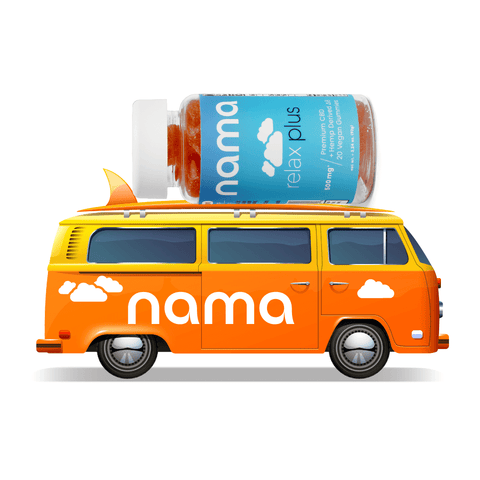
Relax Plus Gummies

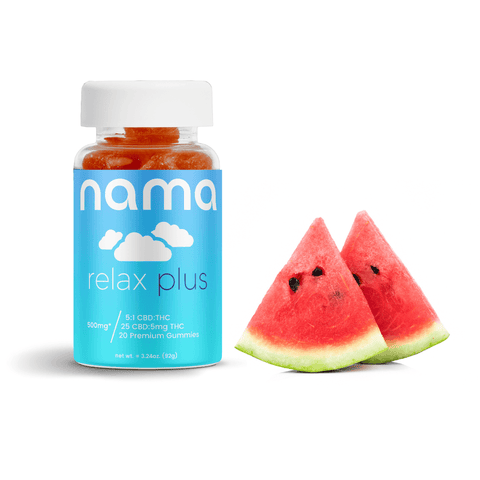
Relax Plus gummies pair 5 mg of THC with 25 mg of CBD. THC combined with CBD produces deeper muscle relaxation and stronger pain relief than CBD alone.

Anytime Gummies

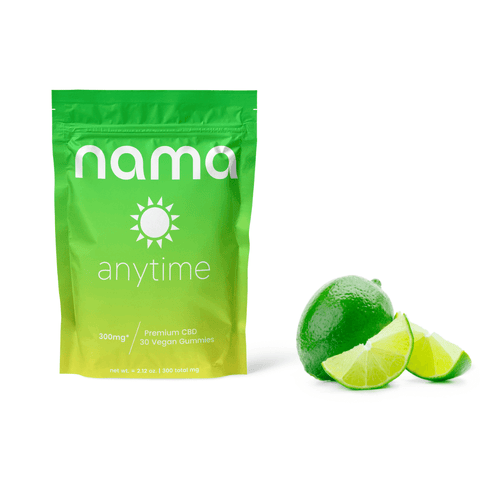
Anytime CBD gummies deliver 10 mg of broad-spectrum CBD per gummy with zero THC. The lower dose handles mild daily tension and headache-related muscle discomfort without any sedation or psychoactive effects.

Sleep Gummies

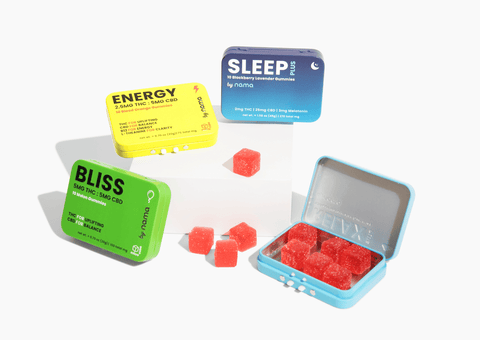
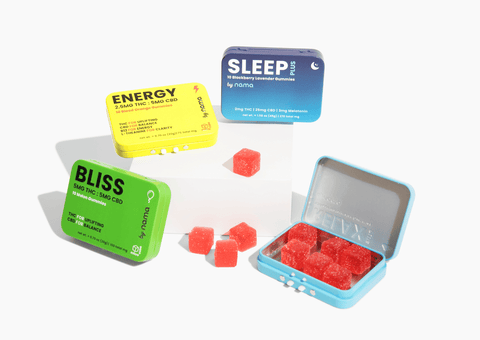
nama Sleep gummies pair 25 mg of CBD with 5 mg of CBN and 3 mg of melatonin. CBN has stronger sedative properties than CBD, and melatonin signals your brain to initiate sleep.

All nama products are vegan, third-party tested for purity and potency, and made from organic, American-grown hemp. Every gummy contains the exact dose printed on the label. Shop nama's full collection.

CBD for muscle relaxation FAQ

CBD and ibuprofen reduce inflammation through different mechanisms. Ibuprofen blocks COX enzymes that produce prostaglandins. CBD works through the endocannabinoid system and has a gentler side-effect profile, particularly for the gut. CBD may work better as a daily baseline supplement, with ibuprofen reserved for acute flare-ups.

Learn how microdosed cannabis and ibuprofen compare for muscle recovery.

CBD tolerance develops more slowly than THC tolerance, and some research suggests it may not develop meaningfully at all at low to moderate doses. Unlike THC, which directly activates CB1 receptors (leading to receptor downregulation over time), CBD works indirectly by modulating enzyme activity and receptor sensitivity. If you notice reduced effects over weeks of consistent use, try cycling off for 3–5 days rather than increasing the dose.

Oral CBD takes 30–90 minutes to produce noticeable effects, depending on whether you've eaten recently and your individual metabolism. The muscle-relaxing effects tend to build over days of consistent use rather than appearing fully after a single dose. The strongest clinical results for muscle recovery came from trials using multi-day protocols (7–15 days of daily dosing), which suggests that consistent use matters more than single-dose timing.

CBD inhibits cytochrome P450 enzymes in your liver, particularly CYP3A4 and CYP2C19. Many prescription muscle relaxants (including cyclobenzaprine and tizanidine) are metabolized through these pathways. Taking CBD alongside these medications could increase their concentration in your blood, which could amplify both effects and side effects. If you're on prescription muscle relaxants, consult your doctor before taking CBD.

Full-spectrum CBD contains trace amounts of THC (below 0.3%) along with other cannabinoids, terpenes, and flavonoids that may enhance the entourage effect. Broad-spectrum CBD contains these supporting compounds but with THC removed entirely. CBD isolate is pure CBD with no other cannabis compounds. For muscle relaxation, full-spectrum or broad-spectrum products tend to produce stronger effects than isolate because of the synergy between multiple cannabinoids.

Top Sellers

New? Start with our Ultimate Sampler!
Buzz Packs™ [THC and CBD Powder Drink Mix]
On Sale from $29.95
Buzz Packs™ [THC and CBD Powder Drink Mix]

5mg THC | 5mg CBD (per pack)

Save up to $50.00 THC
Buzz Drops™ [THC Drink Drops]
On Sale from $27.95
Buzz Drops™ [THC Drink Drops]

2.5mg THC | 2.5mg CBD (per dropper full)

Save up to $41.05 THC
Pain Plus Gummies | THC, CBD, CBG, CBC, CBN
From $49.00
Pain Plus Gummies | THC, CBD, CBG, CBC, CBN

10mg THC | 10mg CBD | 10mg CBC | 5mg CBG | 5mg CBN (per gummy)

THC
Love | Libido Boosting Gummies With CBD and THC
From $44.00
Love | Libido Boosting Gummies With CBD and THC

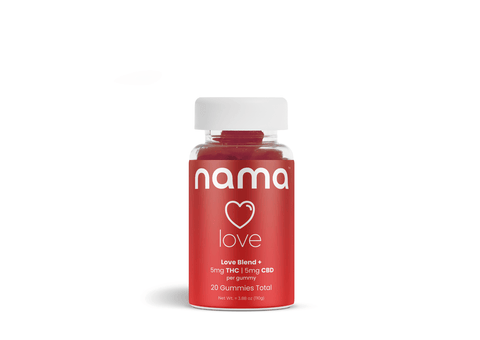
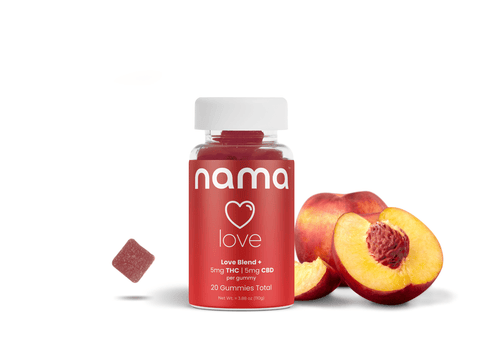
5mg THC | 5mg CBD (per gummy)

THC
The Ultimate nama Gummy Sampler
Save $4.05 THC

Resources

Stauffer, J., Crow, J., Bishop, M., et al. (2026). Efficacy and safety of cannabidiol on reducing pain and functional impairment associated with exercise-induced muscle injury: a randomized placebo-controlled feasibility trial. Journal of Cannabis Research. https://doi.org/10.1186/s42238-026-00431-x 

Walczyńska-Dragon, K., Kurek-Górecka, A., Niemczyk, W., Nowak, Z., Baron, S., Olczyk, P., Nitecka-Buchta, A., & Kempa, W. M. (2024). Cannabidiol intervention for muscular tension, pain, and sleep bruxism intensity: a randomized, double-blind clinical trial. Journal of Clinical Medicine, 13(5), 1417. https://doi.org/10.3390/jcm13051417

Boileau, I., Mansouri, E., Williams, B., Le Foll, B., Rusjan, P., Mizrahi, R., Tyndale, R. F., Huestis, M. A., Payer, D. E., Wilson, A. A., Houle, S., Kish, S. J., & Tong, J. (2016). Fatty Acid Amide Hydrolase Binding in Brain of Cannabis Users: Imaging With the Novel Radiotracer [11C]CURB. Biological psychiatry, 80(9), 691–701. https://doi.org/10.1016/j.biopsych.2016.04.012 

Resstel, L. B., Tavares, R. F., Lisboa, S. F., Joca, S. R., Corrêa, F. M., & Guimarães, F. S. (2009). 5-HT1A receptors are involved in the cannabidiol-induced attenuation of behavioural and cardiovascular responses to acute restraint stress in rats. British journal of pharmacology, 156(1), 181–188. https://doi.org/10.1111/j.1476-5381.2008.00046.x 

Hachett, A., Armstrong, K., Hughes, B., & Parr, B. (2020). The influence of cannabidiol on delayed onset of muscle soreness. International Journal of Physical Education, Sports and Health, 7(2), 89–94. 

Isenmann, E., Veit, S., Starke, L., Flenker, U., & Diel, P. (2021). Effects of Cannabidiol Supplementation on Skeletal Muscle Regeneration after Intensive Resistance Training. Nutrients, 13(9), 3028. https://doi.org/10.3390/nu13093028 

Spinella, T. C., Burdeyny, V., Oprea, A., Perrot, T. S., & Barrett, S. P. (2024). The impact of cannabidiol expectancy on cortisol responsivity in the context of acute stress: associations with biological sex. Cannabis and Cannabinoid Research, 9(4), 1006–1014. https://doi.org/10.1089/can.2022.0326 

Rojas-Valverde, D., & Fallas-Campos, A. (2023). Cannabidiol in sports: insights on how CBD could improve performance and recovery. Frontiers in Pharmacology, 14, 1210202. https://doi.org/10.3389/fphar.2023.1210202 

Colman, I., et al. (2007). Randomized controlled trial of cannabis-based medicine in spasticity caused by multiple sclerosis. European Journal of Neurology, 14(3), 290–296. https://pubmed.ncbi.nlm.nih.gov/17355549/ 

Nielsen, S., et al. (2019). Cannabinoids for the treatment of spasticity. Developmental Medicine & Child Neurology, 61(6), 631–638. https://doi.org/10.1111/dmcn.14165 

Shalev, N., et al. (2022). Medical cannabis and cannabinoids for impaired sleep: a systematic review and meta-analysis of randomized clinical trials. Sleep, 45(2). https://pubmed.ncbi.nlm.nih.gov/34546363/ 

Pastina, J. T., et al. (2024). Topical cannabidiol application may not attenuate muscle soreness or improve performance: a randomized, double-blinded, placebo-controlled pilot study. Cannabis and Cannabinoid Research. https://pubmed.ncbi.nlm.nih.gov/38980809/ 

Further reading

Microdosing cannabis for running

Taking CBD for inflammation

Can CBD help with arthritis?

Does CBD help with sciatica pain?

Microdosing cannabis for athletes

nama CBD FDA & legal disclaimer

Our products are not intended to diagnose, treat, cure, or prevent any disease. They are not a replacement for prescription medications and have not been evaluated by the Food and Drug Administration (FDA).

The information provided on this website does not and is not intended to constitute legal advice or any statements of the status of any laws. Any information, content, and materials available on this site are for general informational purposes only and are not intended to be relied upon for any purpose.

Readers of this website should contact their attorney to obtain advice concerning any particular legal matter, including decisions on what products are, or are not, legal to sell, possess, or consume. No reader, user, or browser of this site should act or refrain from acting based on information on this site without first seeking legal advice from their own counsel in the relevant jurisdiction.

Only your attorney can provide assurances that the information contained herein—and your interpretation of it—is applicable or accurate for your particular situation. Use of, and access to, this website or any of the links or resources contained within the site do not create an attorney-client relationship between the reader, user, or browser, and website authors, contributors, contributing law firms, or committee members and their respective employers.

More articles

Comments (0)

There are no comments for this article. Be the first one to leave a message!

Leave a comment

Please note: comments must be approved before they are published