Microdosing cannabis for focus

Apr 30, 2026The nama Team

Dosage determines whether cannabis increases or decreases focus. Low doses of THC modulate dopamine in the brain pathways that control focus, while higher doses overwhelm those same pathways. 

A 2021 review on cannabinoid modulation of dopamine found that the endocannabinoid system regulates dopamine release during motivated behavior and attentional processes, with effects that are dose-dependent and bidirectional.

nama's microdosed cannabis edibles and THC drinks give you precise microdoses that keep you in the zone.

Cannabis modulates dopamine in the brain regions that control attention. Research shows cannabis may sharpen focus at 2.5–5 mg and impair it above 10 mg.

Key takeaways

  • Cannabis has a biphasic effect on focus. Low doses (2.5–5 mg) may enhance attention and motivation by modulating dopamine in the brain's reward and attention pathways, while higher doses impair working memory and concentration.
  • A survey of adults with ADHD found that 75% had used cannabis, with many reporting improvements in hyperactivity and focus, though no clinical trial has confirmed cannabis as an effective ADHD treatment.
  • The endocannabinoid system regulates dopamine release in the mesolimbic pathway, which controls motivation, task engagement, and reward processing, all of which encourage sustained focus.
  • Microdosed edibles and THC drinks offer precise, repeatable dosing that keeps you in the narrow window where cannabis supports focus rather than disrupting it.

Buzz Drops™ [THC Drink Drops]
On Sale from $27.95
Buzz Drops™ [THC Drink Drops]

2.5mg THC | 2.5mg CBD (per dropper full)

Save up to $41.05 THC
Buzz Packs™ [THC and CBD Powder Drink Mix]
On Sale from $29.95
Buzz Packs™ [THC and CBD Powder Drink Mix]

5mg THC | 5mg CBD (per pack)

Save up to $50.00 THC

How does cannabis affect focus?

Focus depends on your brain's mesolimbic dopamine pathway, which runs from the ventral tegmental area (VTA) to the nucleus accumbens and prefrontal cortex. This pathway controls motivation and sustained attention. When dopamine levels in this circuit are too low, you feel unmotivated and distractible. When they're too high, you feel overstimulated and scattered.

THC activates CB1 receptors of the endocannabinoid system that sit on this dopamine circuitry. 

A review in Cold Spring Harbor Perspectives in Medicine found that all cannabinoids increase dopamine concentrations in the mesolimbic system. The effect follows a biphasic pattern, so low doses of a CB1 agonist increase firing rates of VTA dopamine neurons (the neurons that drive motivation and attention), while higher doses suppress them.

A 2013 study demonstrated biphasic effects of THC on brain reward thresholds in rodents. Low doses enhanced reward sensitivity (associated with increased motivation and task engagement), while higher doses suppressed it. Both effects were mediated through CB1 receptors.

A landmark 2017 study published in Nature Medicine found that chronic low-dose THC restored cognitive function in aging mice. Older mice (12–18 months) given low-dose THC performed as well as young, untreated mice on learning and memory tasks. The same low dose impaired young mice, which reinforces the biphasic principle that THC's cognitive effects depend on the baseline state of your endocannabinoid system.

A University of Colorado study on cannabis and exercise found that low-dose cannabis users reported feeling more present and more engaged during workouts. While that study measured exercise rather than desk work, the underlying mechanism, reduced mental resistance and increased willingness to stay on task, applies to cognitive focus as well.

This biphasic pattern is why some cannabis users report laser focus while others report brain fog. The dose determines which side of the curve you land on. At 2.5–5 mg of THC, you nudge dopamine in the direction of engagement and motivation without tipping into impairment. At 10–20 mg, the same system gets flooded, working memory suffers, and focus collapses.

Microdosing cannabis for ADHD and focus

ADHD is a dopamine regulation problem. The ADHD brain underproduces dopamine in the prefrontal cortex, which impairs executive function, sustained attention, impulse control, and working memory. Standard ADHD medications (methylphenidate, amphetamines) work by increasing dopamine availability in these pathways. Since THC also modulates dopamine in overlapping circuits, it's no surprise that people with ADHD are drawn to cannabis.

A 2023 survey of 900 adults with diagnosed ADHD found that 75% had used cannabis at some point, with 41% reporting use in the past 30 days. Users reported improvements in hyperactivity, impulsivity, and some aspects of attention. An earlier study surveyed 1,738 students and found that participants with ADHD who used cannabis reported acute beneficial effects on hyperactivity and impulsivity, and perceived cannabis to improve most of their medication side effects (irritability, anxiety, appetite loss).

The self-medication pattern is clear, but the clinical evidence is not. CADDRA's 2024 position statement (the Canadian ADHD Resource Alliance) reviewed the published literature and concluded that there is no evidence that cannabis is an effective treatment for ADHD or that it improves attention. A 2023 scoping review in the Journal of Psychiatric Research concluded that outcomes appear highly individualized, cannabis is associated with cognitive deficits and dependency risks (especially in adolescents), and no consensus exists on therapeutic efficacy.

Self-reported improvements may reflect reduced anxiety (which indirectly improves focus), improved mood, or better sleep rather than a direct effect on attention. Cannabis may also reduce the restlessness and irritability that make sustained focus harder for people with ADHD without actually improving core attentional processing.

Read more about microdosing cannabis for ADHD.

Microdosing cannabis to reduce mental fatigue

Mental fatigue is the brain's version of muscle exhaustion. After hours of sustained cognitive effort, your prefrontal cortex (the brain region responsible for decision-making and attention) runs low on the neurochemical resources it needs to keep performing.

The endocannabinoid system plays a role in mental fatigue. Endocannabinoid signaling modulates how your brain allocates energy and attention across competing demands. When your system is depleted, the balance tips toward fatigue and distraction.

By gently increasing dopamine activity in the mesolimbic pathway, low doses of cannabis can restore the motivational drive that mental fatigue erodes. A 2019 study on cannabis and exercise behavior found that cannabis users were more likely to meet recommended activity guidelines and reported stronger motivation to start workouts. Similar may apply to cognitive work, as the hardest part of a mentally fatiguing task is often starting the next block of focus, not the work itself.

Microdosing THC to help with flow state

Flow state is the mental zone where focus becomes effortless. It’s described by psychologists as a state where skill and challenge are matched, and self-consciousness dissolves.

Neurologically, flow involves a shift in brain activity. The prefrontal cortex, responsible for self-monitoring and inner criticism, quiets down in a process called transient hypofrontality. Dopamine and endocannabinoid activity increase, and the default mode network (the brain system that generates mind-wandering and self-referential thought) dials back.

Cannabis at low doses increases dopamine in reward circuits, which enhances task engagement. It activates CB1 receptors in the prefrontal cortex, which may quiet the self-critical inner monologue that blocks flow. And it reduces anxiety through serotonin 5-HT1A receptor modulation, which lowers the emotional friction that keeps you from sinking into deep work.

A University of Colorado study captured something close to flow, as cannabis users reported feeling more present and more willing to continue their activity. For creative work, the effect may be even more pronounced. 

Read about the benefits of microdosed cannabis for creativity.

When does cannabis reduce focus?

  • High doses: Above 10 mg of THC, working memory degrades measurably. A double-blind, placebo-controlled trial gave 60 healthy volunteers 20 mg of THC and found reduced cognitive processing speed and impaired attention on the d2 Test of Attention. The same study found that 800 mg of CBD alone had no effect on cognition, positive or negative.
  • Complex cognitive tasks: THC's effect on focus works best for sustained, repetitive, or creative tasks. Tasks requiring rapid switching between rules, precise sequential logic, or heavy working memory load may suffer even at low doses.
  • Adolescent brains: The developing brain is more vulnerable to THC's effects on cognitive architecture. Multiple studies link regular adolescent cannabis use to reductions in gray matter volume in the prefrontal cortex, the exact brain region responsible for focus and executive function. Microdosing research has not been conducted in adolescents, and the risk-benefit profile is different for developing brains.
  • Daily use without breaks: Your body adapts to THC with regular use. CB1 receptors downregulate, which means the same dose produces less effect over time. If you microdose daily for focus, you may find that 2.5 mg stops working after a few weeks. Taking 2–3 days off per week prevents tolerance from eroding the benefits.
  • When anxiety is the problem: For some people, THC increases anxiety even at low doses. If cannabis makes you more self-conscious or ruminative rather than less, it's working against focus, not for it. CBD-only products may be a better fit if THC triggers anxiety for you.

Product QUIZ

Need help deciding what product is best for you? Take our quiz, just three questions until your perfect match!

Best nama products for focus

Energy gummies

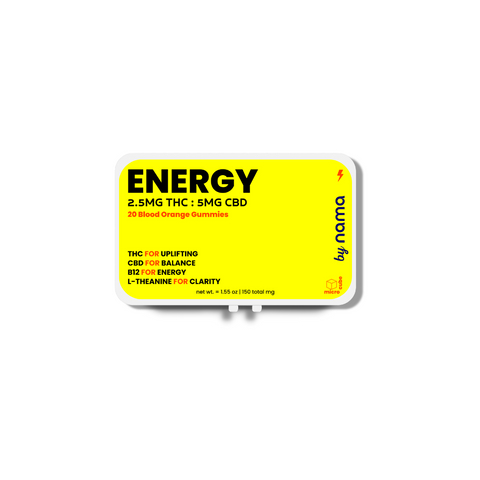
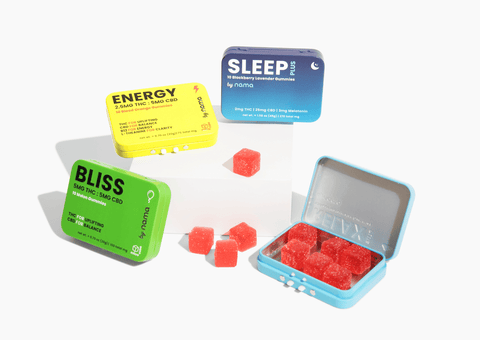
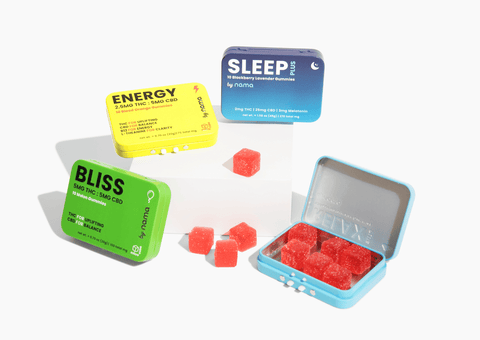
Energy gummies are nama's purpose-built focus formula. Each gummy contains 2.5 mg of THC, 5 mg of CBD, 1,000 mcg of B12, and 50 mg of L-theanine. The THC-to-CBD ratio keeps the effect functional and clear-headed. B12 supports sustained energy metabolism. L-theanine promotes alpha brain wave activity associated with relaxed attention. 

Buzz Drops

Buzz Drops deliver 2.5 mg of THC and 2.5 mg of CBD per dropper. Add them to water, tea, soda, or any drink at your desk. Effects start in 10–20 minutes, faster than gummies, which makes them the best option for timing a dose to a specific work block or meeting. They're flavorless, calorie-free, and discreet. 

Clarity mushroom gummies

If you want cognitive support without any cannabinoids, our Clarity gummies contain 2,000 mg of lion's mane extract, 50 mg of L-theanine, and vitamins C, D3, and B12. Boost gummies offer a similar non-cannabis option with 2,000 mg of cordyceps, L-theanine, and B12 for energy and focus without any psychoactive effects.

All nama products are vegan, third-party tested for purity and potency, and made from organic, American-grown hemp (for cannabinoid products) or organic mushroom extracts (for the functional mushroom line). Every product contains the exact dose printed on the label. Shop nama's full collection.

Microdosing cannabis for focus FAQ

At 2.5 mg of THC, most people don't experience a noticeable high. The effects include increased willingness to start tasks and a quieter inner monologue. You won't feel impaired, giggly, or spacey. Try 5 mg while you’re not at work, and, if it produces more psychoactive effects than you want, drop back to 2.5 mg.

Caffeine and THC affect different systems. Caffeine blocks adenosine receptors to delay fatigue, and THC modulates dopamine through CB1 receptors to increase task engagement. Some people find the combination effective. They use caffeine for alertness and THC for motivation. Start with half your normal caffeine intake when adding THC, so you don't overstimulate.

Read about microdosed cannabis and caffeine as pre-workouts.

Adderall (amphetamine) is a clinically validated treatment for ADHD that directly increases dopamine and norepinephrine levels. Its effects on attention are stronger and more consistent than cannabis at any dose. Cannabis is not a replacement for stimulant ADHD medication. 

Microdosed THC and CBD may complement stimulant treatment by reducing side effects like anxiety, irritability, and appetite loss that some people experience with Adderall. Talk to your doctor before combining them.

Hemp-derived THC products containing less than 0.3% THC by dry weight are federally legal under the 2018 Farm Bill. nama's products comply with this threshold. State laws vary, so check your local regulations. THC can trigger a positive result on standard drug tests regardless of dose, so if your employer tests, microdosing THC isn't an option during testing periods.

Top Sellers

New? Start with our Ultimate Sampler!
Buzz Packs™ [THC and CBD Powder Drink Mix]
On Sale from $29.95
Buzz Packs™ [THC and CBD Powder Drink Mix]

5mg THC | 5mg CBD (per pack)

Save up to $50.00 THC
Buzz Drops™ [THC Drink Drops]
On Sale from $27.95
Buzz Drops™ [THC Drink Drops]

2.5mg THC | 2.5mg CBD (per dropper full)

Save up to $41.05 THC
Pain Plus Gummies | THC, CBD, CBG, CBC, CBN
From $49.00
Pain Plus Gummies | THC, CBD, CBG, CBC, CBN

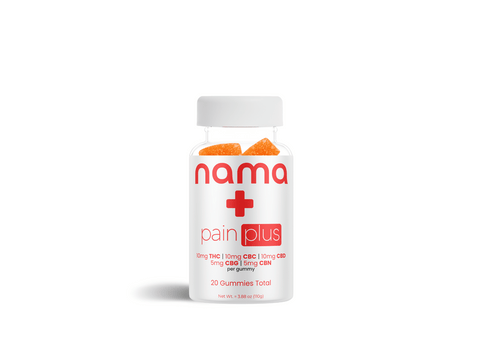
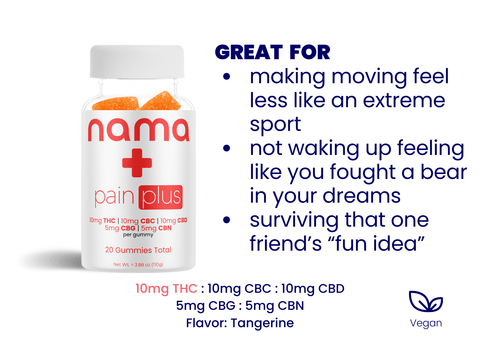
10mg THC | 10mg CBD | 10mg CBC | 5mg CBG | 5mg CBN (per gummy)

THC
Love | Libido Boosting Gummies With CBD and THC
From $44.00
Love | Libido Boosting Gummies With CBD and THC

5mg THC | 5mg CBD (per gummy)

THC
The Ultimate nama Gummy Sampler
Save $4.05 THC

Resources

Wenk, G. L. (2021). Cannabinoid modulation of dopamine release during motivation, periodic reinforcement, exploratory behavior, habit formation, and attention. Frontiers in Psychiatry. https://pmc.ncbi.nlm.nih.gov/articles/PMC8222827/ 

Oleson, E. B., & Cheer, J. F. (2012). A brain on cannabinoids: the role of dopamine release in reward seeking. Cold Spring Harbor Perspectives in Medicine, 2(8), a012229. https://pmc.ncbi.nlm.nih.gov/articles/PMC3405830/ 

Katsidoni, V., Kastellakis, A., & Bhombal, S. T. (2013). Biphasic effects of Δ9-tetrahydrocannabinol on brain stimulation reward and motor activity. International Journal of Neuropsychopharmacology, 16(10), 2273–2284. https://pubmed.ncbi.nlm.nih.gov/23502947/ 

Bilkei-Gorzo, A., Albayram, O., Draffehn, A., Michel, K., Pape, H.-C., Zimmer, A., et al. (2017). A chronic low dose of Δ9-tetrahydrocannabinol (THC) restores cognitive function in old mice. Nature Medicine, 23, 782–787. https://www.nature.com/articles/nm.4311 

Ryan, J. E., Herens, A., Fruchtman, M., Veliz, P., Kelly, E. L., & Worster, B. (2026). Cannabis use in a community-based sample of adults diagnosed with ADHD: prevalence, impact on symptoms, and stimulant side effects. Journal of Attention Disorders. https://doi.org/10.1177/10870547251364575 

Stueber, A., & Cuttler, C. (2022). Self-reported effects of cannabis on ADHD symptoms, ADHD medication side effects, and ADHD-related executive dysfunction. Journal of Attention Disorders, 26(6), 942–955. https://doi.org/10.1177/10870547211050949 

CADDRA (2024). Cannabis and ADHD: a CADDRA position statement. Canadian ADHD Resource Alliance. https://www.caddra.ca/wp-content/uploads/Cannabis_ADHD_CADDRAPositionStatement_December2024.pdf 

Gibson, L. P., Giordano, G. R., Bidwell, L. C., Hutchison, K. E., & Bryan, A. D. (2024). Acute effects of ad libitum use of commercially available cannabis products on the subjective experience of aerobic exercise: a crossover study. Sports Medicine, 54, 1051–1066. https://doi.org/10.1007/s40279-023-01980-4 

YorkWilliams, S. L., Gust, C. J., Mueller, R., Bidwell, L. C., Hutchison, K. E., Gillman, A. S., & Bryan, A. D. (2019). The new runner's high? Examining relationships between cannabis use and exercise behavior in states with legalized cannabis. Frontiers in Public Health, 7, 99. https://doi.org/10.3389/fpubh.2019.00099 

Theunissen, E. L., et al. (2020). Effects of cannabidiol and delta-9-tetrahydrocannabinol on emotion, cognition, and attention: a double-blind, placebo-controlled, randomized experimental trial in healthy volunteers. Frontiers in Psychiatry, 11, 576780. https://www.ncbi.nlm.nih.gov/pmc/articles/PMC7693539/ 

Haskell, C. F., Kennedy, D. O., Milne, A. L., Wesnes, K. A., & Scholey, A. B. (2008). The effects of L-theanine, caffeine and their combination on cognition and mood. Biological Psychology, 77(2), 113–122. https://pubmed.ncbi.nlm.nih.gov/21040626/ 

Docherty, S., Doughty, F. L., & Smith, E. F. (2023). The acute and chronic effects of lion's mane mushroom supplementation on cognitive function, stress and mood in young adults: a double-blind, parallel groups, pilot study. Nutrients, 15(22), 4842. https://doi.org/10.3390/nu15224842 

Further reading

Microdosing cannabis for brain fog

Is CBD good for focus?

Will 5 mg of THC get me too high?

What are the benefits of microdosing THC?

How fast do THC drinks work?

nama CBD FDA & legal disclaimer

Our cannabis products are not intended to diagnose, treat, cure, or prevent any disease. They are not a replacement for prescription medications and have not been evaluated by the Food and Drug Administration (FDA).

The information provided on this website does not and is not intended to constitute legal advice or any statements of the status of any laws. Any information, content, and materials available on this site are for general informational purposes only and are not intended to be relied upon for any purpose.

Readers of this website should contact their attorney to obtain advice concerning any particular legal matter, including decisions on what products are, or are not, legal to sell, possess, or consume. No reader, user, or browser of this site should act or refrain from acting based on information on this site without first seeking legal advice from their counsel in the relevant jurisdiction.

Only your attorney can provide assurances that the information contained herein—and your interpretation of it—is applicable or accurate for your particular situation. Use of, and access to, this website or any of the links or resources contained within the site do not create an attorney-client relationship between the reader, user, or browser, and website authors, contributors, contributing law firms, or committee members and their respective employers.

More articles

Comments (0)

There are no comments for this article. Be the first one to leave a message!

Leave a comment

Please note: comments must be approved before they are published