Microdosing cannabis for creativity

Apr 23, 2026The nama Team

A growing body of research links microdosed cannabis to improved divergent thinking (the hallmark of creativity) without the brain fog or couch-lock associated with heavier doses.

Research links microdosed cannabis to sharper creative output. Low-dose THC may boost divergent thinking and loosen mental ruts without the fog of higher doses.

nama THC gummies and drinks with THC deliver precise, low-dose cannabinoids that keep your brain in that creative sweet spot.

Buzz Drops™ [THC Drink Drops]
On Sale from $27.95
Buzz Drops™ [THC Drink Drops]

2.5mg THC | 2.5mg CBD (per dropper full)

Save up to $41.05 THC
Buzz Packs™ [THC and CBD Powder Drink Mix]
On Sale from $29.95
Buzz Packs™ [THC and CBD Powder Drink Mix]

5mg THC | 5mg CBD (per pack)

Save up to $50.00 THC

Does cannabis make you more creative?

A 2012 study led by Gráinne Schafer tested 160 cannabis users on days when they were sober and days when they were intoxicated. The researchers split participants into "low creativity" and "high creativity" groups based on trait measures. Cannabis boosted verbal fluency in the low-creativity group to the same level as in the high-creativity group. The high-creativity group, already operating at peak divergent output, showed no change.

Schafer's team speculated that cannabis triggered dopamine release in the frontal cortex, which mimics a neurochemical state that highly creative people may already have at baseline. So if you're someone who struggles to brainstorm freely, a small amount of THC may help unlock that capacity. If you're already a prolific idea generator, it may not move the needle.

How does the endocannabinoid system influence creative thought?

The endocannabinoid system (ECS) is a network of receptors, enzymes, and endogenous cannabinoids that regulates mood, memory, stress response, and cognitive flexibility. ECS has a direct relationship with dopaminergic pathways. Two primary endocannabinoids, anandamide and 2-AG, bind to CB1 and CB2 receptors throughout the brain and body.

CB1 receptors on cortical glutamatergic afferents modulate dopamine release in areas like the nucleus accumbens, a region tied to motivation and reward. Endocannabinoid signaling in the ventral tegmental area stimulates dopamine neurons. Interplay between the ECS and dopamine system shapes goal-directed behavior, reward processing, and, by extension, creative motivation.

When the ECS is functioning properly, it acts as a fine-tuning system for neurotransmission. This is why low-dose THC, which gently augments endocannabinoid signaling rather than overpowering it, can produce subtle cognitive benefits.

Research also suggests that the ECS plays a role in cognitive flexibility, or the ability to shift between different mental frameworks. Cognitive flexibility is a precondition for creative thinking, and it's governed in part by prefrontal circuits where dopamine and endocannabinoid systems interact. Microdosed cannabis may support creativity by optimizing the balance between cognitive persistence (staying focused on a task) and cognitive flexibility (exploring new approaches).

How does THC affect the creative process?

THC binds to CB1 receptors in the brain, which are concentrated in areas that govern mood and cognition, including the prefrontal cortex, the region responsible for planning, decision-making, and abstract thought. When THC activates these receptors at low doses, it modulates neurotransmitter release in a way that loosens cognitive control just enough to let novel associations form.

Think of your default mental state as a set of well-worn pathways. You tend to reach for the same solutions, the same frameworks. Low-dose THC gently disrupts those grooves. It reduces the brain's tendency to suppress unfamiliar or unconventional connections, which gives you access to ideas you'd normally filter out before they reach conscious awareness.

This effect is dose-dependent, so the same mechanism that gently opens the floodgates at 2.5–5 mg of THC can overwhelm cognitive resources at 20+ mg and leave you less creative than if you were sober.

Does CBD play a role in creative thinking?

CBD doesn't produce the psychoactive effects that THC does, but it may play a supporting role in creative performance by managing the variables that sabotage it.

Your brain can't brainstorm freely when it's scanning for threats. CBD modulates the endocannabinoid system in a way that reduces anxious signaling without sedation. For someone who freezes up in front of a blank page or overthinks every idea before it forms, CBD may remove the emotional friction that blocks creative flow.

CBD also appears to smooth the edges of THC's effects. In combined formulations, CBD can buffer against THC-induced anxiety and paranoia, two responses that would tank any creative session. This is why many microdosing products pair the two cannabinoids together. The entourage effect suggests that cannabinoids work better in concert than in isolation, and the THC and CBD pairing is the most studied example of that synergy.

What is the link between cannabis and divergent thinking?

Creativity research splits the creative process into two modes, divergent thinking (generating many possible solutions to an open-ended problem) and convergent thinking (narrowing down to a single correct answer).

Low doses of THC may support or preserve divergent thinking, the brainstorming, idea-generating phase of creativity, while high doses impair it. Convergent thinking may suffer regardless of dose.

A 2015 study published in Psychopharmacology by Kowal et al. tested three groups of regular cannabis users. One received a low dose of THC (5.5 mg), one received a high dose (22 mg), and one received a placebo. The low-dose group performed better than the placebo group on three out of four divergent thinking tasks, while the high-dose group performed significantly worse on every measure.

Earlier research found that oral THC at 7.5 and 15 mg dose-dependently improved verbal fluency, a core component of divergent thinking. Block (1992) similarly reported that cannabis administration increased the number of original responses on associative tasks compared to placebo.

Product QUIZ

Need help deciding what product is best for you? Take our quiz, just three questions until your perfect match!

Best nama products for creativity

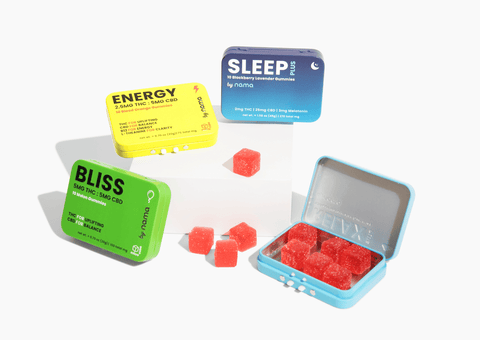
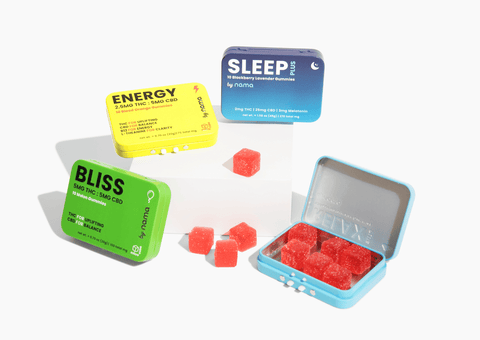
Energy gummies

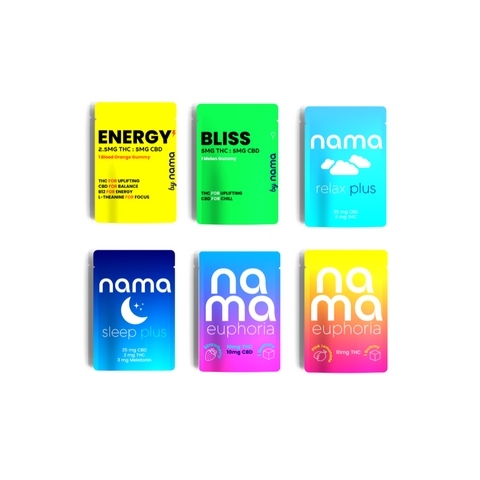
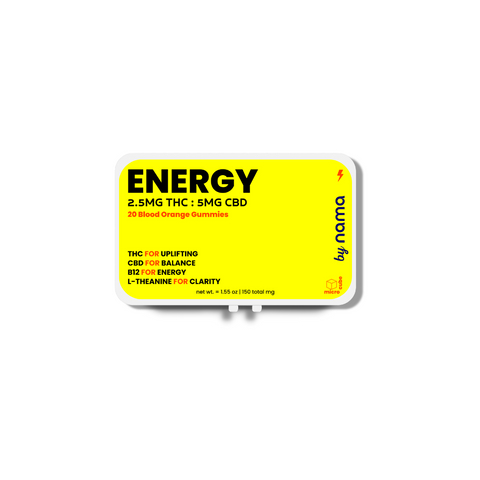
nama Energy gummies combine 2.5 mg of THC with 5 mg of CBD, 1000 mcg of vitamin B12, and 50 mg of L-theanine. THC provides cognitive loosening, CBD smooths any edges, L-theanine promotes calm alertness, and B12 supports sustained mental energy.

Bliss gummies

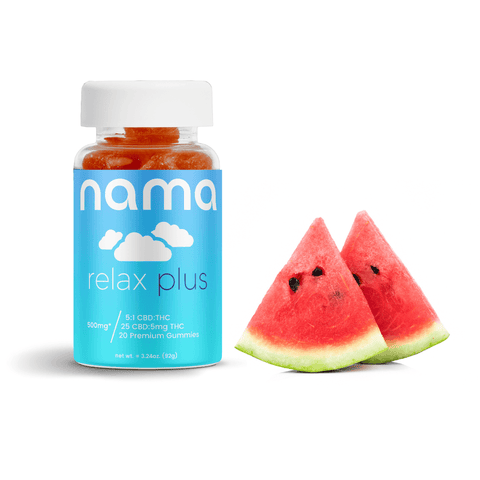
Bliss gummies deliver 5 mg of THC and 5 mg of CBD per gummy, a straightforward microdose for people who want a gentle mood lift without additional ingredients. 

Buzz Drops

Buzz Drops provide 2.5 mg of THC and 2.5 mg of CBD per dropper. Flavorless and calorie-free, they dissolve into any beverage, so you can build a creative ritual around something you already enjoy. 

Elevate Delta-8 gummies

Elevate gummies contain 12.5 mg of Delta-8 THC, which produces milder, less anxious effects than Delta-9. Some users report that Delta-8 provides a clear-headed, focused experience that pairs well with creative work.

Lion's mane mushroom gummies

For a non-cannabinoid approach to creative cognition, our mental clarity gummies with lion's mane combine 2000 mg of Lion's Mane extract with L-theanine and vitamins C, D3, and B12. Lion's Mane is a functional mushroom studied that can support nerve growth factor and cognitive function. Stack it with a microdosed THC product for a comprehensive creative protocol, or use it solo to skip THC entirely.

Cannabis for creativity FAQ

Creative blocks can stem from anxiety, perfectionism, burnout, low dopamine, or just the mental rut of approaching the same problem the same way too many times. Cannabis microdosing may address several of these at once.

Evaluate your ideas when sober. Cannabis may help you generate them, but convergent thinking (selecting the best idea and refining it) tends to work better without THC in the system. The smartest creative workflow pairs microdosed brainstorming sessions with sober editing sessions.

Edibles and gummies produce effects that last 4–8 hours, with peak cognitive effects typically occurring 1–3 hours after taking them. Liquid formats like Buzz Drops kick in faster, in 10–20 minutes, and may peak sooner.

Even microdoses of Delta-9 THC can accumulate in the body and trigger a positive result on standard drug screens. Learn more about THC and drug tests.

If drug testing is a concern, some of our CBD products contain zero THC and may support creative calm without the testing risk.

At 1–5 mg of THC, most people experience no perceptible impairment. The goal of microdosing is sub-psychoactive effects, so you feel functional, clear-headed, and slightly more relaxed. If you've never microdosed, test your response on a day without obligations before introducing it into your work routine.

Low-dose THC appears to have a favorable safety profile for most adults, but tolerance can develop with daily use. Many microdosers take tolerance breaks (one or two days off per week) to maintain sensitivity. Anyone with a history of psychiatric conditions or cannabis sensitivity should consult a healthcare provider before starting a regular microdosing routine.

Top Sellers

New? Start with our Ultimate Sampler!
Buzz Packs™ [THC and CBD Powder Drink Mix]
On Sale from $29.95
Buzz Packs™ [THC and CBD Powder Drink Mix]

5mg THC | 5mg CBD (per pack)

Save up to $50.00 THC
Buzz Drops™ [THC Drink Drops]
On Sale from $27.95
Buzz Drops™ [THC Drink Drops]

2.5mg THC | 2.5mg CBD (per dropper full)

Save up to $41.05 THC
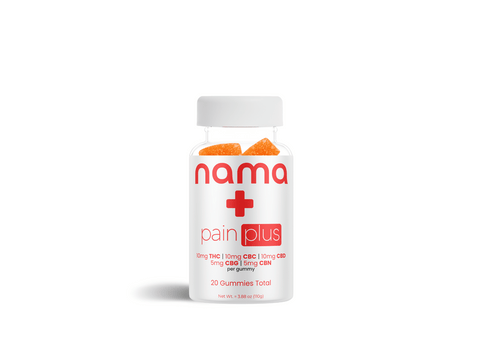
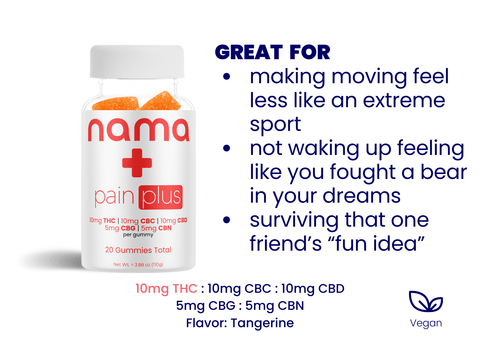
Pain Plus Gummies | THC, CBD, CBG, CBC, CBN
From $49.00
Pain Plus Gummies | THC, CBD, CBG, CBC, CBN

10mg THC | 10mg CBD | 10mg CBC | 5mg CBG | 5mg CBN (per gummy)

THC
Love | Libido Boosting Gummies With CBD and THC
From $44.00
Love | Libido Boosting Gummies With CBD and THC

5mg THC | 5mg CBD (per gummy)

THC
The Ultimate nama Gummy Sampler
Save $4.05 THC

Resources

Schafer, G., Feilding, A., Morgan, C. J., Agathangelou, M., Freeman, T. P., & Valerie Curran, H. (2012). Investigating the interaction between schizotypy, divergent thinking and cannabis use. Consciousness and cognition, 21(1), 292–298. https://doi.org/10.1016/j.concog.2011.11.009

Ganat, Y. M., Calder, E. L., Kriks, S., Nelander, J., Tu, E. Y., Jia, F., Battista, D., Harrison, N., Parmar, M., Tomishima, M. J., Rutishauser, U., & Studer, L. (2012). Identification of embryonic stem cell-derived midbrain dopaminergic neurons for engraftment. The Journal of clinical investigation, 122(8), 2928–2939. https://doi.org/10.1172/JCI58767

Klugmann, M., Goepfrich, A., Friemel, C. M., & Schneider, M. (2011). AAV-Mediated Overexpression of the CB1 Receptor in the mPFC of Adult Rats Alters Cognitive Flexibility, Social Behavior, and Emotional Reactivity. Frontiers in behavioral neuroscience, 5, 37. https://doi.org/10.3389/fnbeh.2011.00037

Ketcherside, A., Noble, L. J., McIntyre, C. K., & Filbey, F. M. (2017). Cannabinoid Receptor 1 Gene by Cannabis Use Interaction on CB1 Receptor Density. Cannabis and cannabinoid research, 2(1), 202–209. https://doi.org/10.1089/can.2017.0007

Kowal, M. A., Hazekamp, A., Colzato, L. S., van Steenbergen, H., van der Wee, N. J., Durieux, J., Manai, M., & Hommel, B. (2015). Cannabis and creativity: highly potent cannabis impairs divergent thinking in regular cannabis users. Psychopharmacology, 232(6), 1123–1134. https://doi.org/10.1007/s00213-014-3749-1

Curran, H. V., Brignell, C., Fletcher, S., Middleton, P., & Henry, J. (2002). Cognitive and subjective dose-response effects of acute oral Delta 9-tetrahydrocannabinol (THC) in infrequent cannabis users. Psychopharmacology, 164(1), 61–70. https://doi.org/10.1007/s00213-002-1169-0

Block, R. I., Farinpour, R., & Braverman, K. (1992). Acute effects of marijuana on cognition: Relationships to chronic effects and smoking techniques. Pharmacology Biochemistry and Behavior, 43(3), 907–917. https://doi.org/10.1016/0091-3057(92)90424-e 

Further reading

The benefits of microdosed THC

Will 5 mg of Delta 9 THC get me high?

What are the best weed strains for focus and creativity?

The best THC microdosing amounts

Should you microdose THC for anxiety?

nama CBD FDA & legal disclaimer

Our cannabis products are not intended to diagnose, treat, cure, or prevent any disease. They are not a replacement for prescription medications and have not been evaluated by the Food and Drug Administration (FDA).

The information provided on this website does not and is not intended to constitute legal advice or any statements of the status of any laws. Any information, content, and materials available on this site are for general informational purposes only and are not intended to be relied upon for any purpose.

Readers of this website should contact their attorney to obtain advice concerning any particular legal matter, including decisions on what products are, or are not, legal to sell, possess, or consume. No reader, user, or browser of this site should act or refrain from acting based on information on this site without first seeking legal advice from their counsel in the relevant jurisdiction.

Only your attorney can provide assurances that the information contained herein—and your interpretation of it—is applicable or accurate for your particular situation. Use of, and access to, this website or any of the links or resources contained within the site do not create an attorney-client relationship between the reader, user, or browser, and website authors, contributors, contributing law firms, or committee members and their respective employers.

More articles

Comments (0)

There are no comments for this article. Be the first one to leave a message!

Leave a comment

Please note: comments must be approved before they are published