Panic attacks might not be life-threatening, but they can derail your life and leave you dreading the next one. Pharmaceutical treatments are often unsuccessful and come with serious potential side effects. This has inspired some to turn to cannabis.
One in six medical marijuana patients uses cannabis to manage panic attacks. Microdosed cannabis can calm the nervous system without the paranoia that sends anxious people spiraling. We’ll explore the science of anxiety and cannabis, including dosing, consumption methods, and tolerance, so you can safely try cannabis to combat panic attacks.
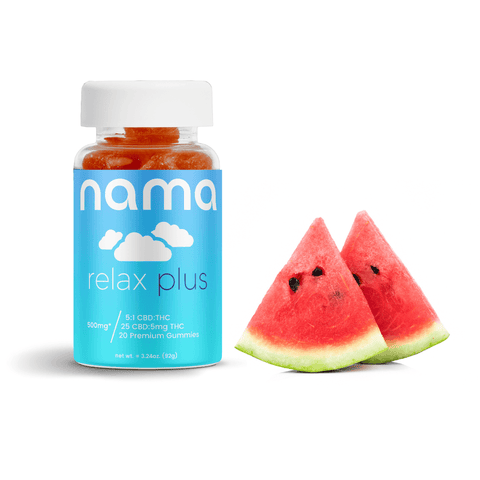
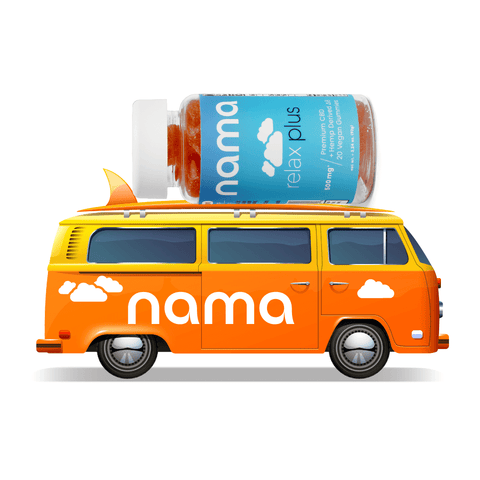
nama™ Relax Plus gummies hit the anti-panic sweet spot with 5 mg THC with 25 mg CBD. This ratio keeps you functional while shutting down the physical symptoms that make panic attacks so terrifying.
How does cannabis help with panic attacks?
Cannabis interacts with your endocannabinoid system, which regulates mood, stress response, and emotional processing. According to a 2025 study review, CBD activates serotonin receptors, specifically 5-HT1A. This mimics the action of anti-anxiety medications without the harsh side effects.
At microdoses (1–3 mg), THC improves your endocannabinoid system's natural calming mechanisms. THC binds to CB1 receptors. These receptors have a bidirectional effect on anxiety, according to research. This means that light activation can provide anxiety-relieving effects, while too much activation may trigger more anxiety.
Small amounts of THC boost this system without overwhelming it. Higher doses flood those same receptors and trigger the opposite effect, which can cause racing thoughts and panic.
Why is CBD better than THC for panic attacks?
Clinical trials consistently show CBD's anxiolytic effects in healthy volunteers and anxiety patients, with no risk of triggering panic or paranoia. A 4-week study of daily CBD use in adolescents with social anxiety showed consistent improvements.
While low doses of THC might help some people relax, the evidence remains ambiguous, with many experiencing increased anxiety at higher doses.
Researchers in an Australian study review note that, while CBD shows promise as an anxiety treatment, THC-dominant products produce relief for some and exacerbation for others. This variability makes CBD the safer, more predictable choice for panic attack sufferers who need consistent relief without rolling the dice on their symptoms.
Can THC trigger panic attacks?
The biphasic nature of THC means low doses might reduce anxiety while higher doses increase it. This threshold varies between people based on tolerance, genetics, and existing anxiety levels. First-time users and those with anxiety disorders face higher risks of THC-induced panic, especially with today's high-potency products.
High doses of THC activate the amygdala, the brain's fear center, which can trigger the anxiety you're trying to avoid. Research on THC and depression found that anxiety and psychotic symptoms emerged in over 50% of hospitalized patients who took high doses of THC to treat depression.
Your safest bet is starting with CBD-dominant products and introducing THC gradually if desired. Microdosing THC keeps levels below the anxiety threshold while still providing therapeutic benefits.
How does D-limonene affect THC-induced anxiety?
D-limonene is a citrus-scented limonene terpene, found in lemon peels and certain cannabis strains, that selectively blocks THC's anxiogenic effects according to recent research. Scientists discovered that D-limonene increases THC's therapeutic index for anxiety treatment.
The mechanism involves D-limonene's interaction with adenosine A2A receptors and its ability to modulate neurotransmitter systems. When combined with THC, D-limonene acts like a molecular bodyguard and prevents THC from overstimulating anxiety pathways while preserving its therapeutic properties.
Cannabis strains high in this cannabis terpene include Super Lemon Haze, Durban Poison, and Jack Herer.
What is the best THC to CBD ratio for anxiety?
The magic ratio for anxiety relief typically falls between 1:5 and 1:10 THC to CBD, though individual responses vary. This ratio leverages CBD's ability to counteract THC's psychoactive effects while maintaining therapeutic benefits.
Start with CBD-only products and gradually introduce small amounts of THC if desired. The entourage effect means these compounds work better together than alone, with CBD tempering THC's anxiety-inducing potential.
Your optimal CBD to THC ratio depends on these factors:
- Anxiety severity and type
- Cannabis tolerance
- Metabolism and body chemistry
- Time of day and setting
- Concurrent medications
Start with higher CBD ratios (1:10 or 1:20) and adjust based on your response. Many find that 2.5–5 mg of THC paired with 25–50 mg of CBD hits the sweet spot for daytime anxiety management.
Can you build tolerance to cannabis for panic attacks?
Cannabis tolerance develops differently for anxiety and panic attack relief than for recreational effects. While you might need higher doses over time to feel "high," the anxiolytic benefits of CBD remain stable with consistent use. CBD doesn't produce tolerance in the traditional sense, with some evidence even suggesting reverse tolerance, where lower doses become more effective over time.
THC tolerance is more predictable. Regular use downregulates CB1 receptors, so you need higher doses for the same effect. Tolerance breaks (T-breaks) can reset your sensitivity if needed. A 48–72 hour break significantly reduces tolerance, while 2–4 weeks provides complete receptor recovery. For panic attack management, gradual dose reduction works better than quitting cold turkey, as it lessens the chances of rebound symptoms while allowing receptor upregulation.
Product QUIZ
Need help deciding what product is best for you? Take our quiz, just three questions until your perfect match!
What are the side effects of using cannabis for panic disorder?
People are exploring cannabis as a panic disorder treatment because it causes significantly less serious side effects than pharmaceuticals. CBD's side effect profile remains remarkably mild: drowsiness, dry mouth, and occasional digestive changes top the list.
THC products can cause more side effects in high doses:
- Dry mouth and red eyes
- Increased heart rate (usually mild)
- Short-term memory effects during use
- Drowsiness or fatigue
- Increased appetite
These effects typically diminish with regular use as your body adjusts. Start low and increase the dose gradually to minimize side effects while your endocannabinoid system adapts. Most users report that side effects fade within 1–2 weeks of consistent dosing.
nama CBD products for panic attacks
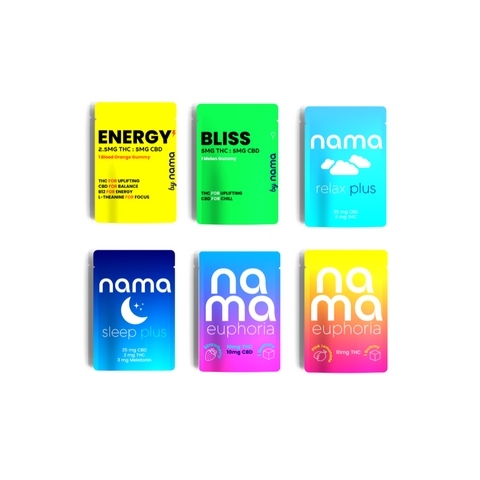
Our Relax Plus gummies lead the pack for panic attack treatment with their optimized 1:5 THC to CBD ratio. Each fresh watermelon gummy delivers 5 mg of THC and 25 mg of CBD.
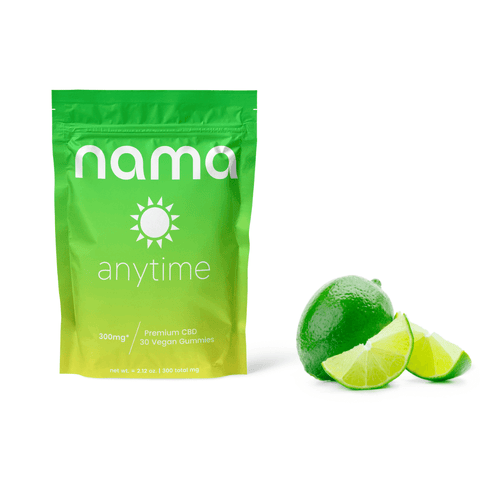
For those who prefer CBD-only options, our Relax CBD gummies combine 25 mg of hemp-derived CBD with 100 mg of ashwagandha per gummy. This adaptogenic blend targets anxiety from multiple angles without any THC. The watermelon flavor makes daily dosing enjoyable, and the vegan, gluten-free formula works for almost any dietary restriction.
For precise liquid dosing, try our THC drinks. For example, our Buzz Drops offer 2.5 mg each of THC and CBD per dropper, so they’re a good choice for beginners. Add them to any beverage for customizable anxiety relief.
Microdosing cannabis for panic attacks FAQ
Cannabis shouldn't replace prescribed medications without medical supervision. Some people successfully transition from benzodiazepines or SSRIs to cannabis under their doctor's guidance, but abrupt medication changes can be dangerous. Always consult your healthcare provider before you change any anxiety treatment regimen.
Discontinue cannabis use immediately if it triggers panic attacks. Stop using the product and let the effects pass.
THC is most likely responsible for increased panic. This cannabinoid can trigger anxiety in sensitive people, especially at higher doses. CBD-only products at 10–25 mg daily for anxiety relief without panic-inducing effects. Some people simply don't tolerate THC, but CBD alone can still provide some calming benefits.
Only if you use a product with THC. Even microdoses of THC can accumulate in your system and trigger positive drug tests. THC metabolites remain detectable for days to weeks, depending on frequency of use, metabolism, and test sensitivity. CBD-only products made from broad-spectrum hemp shouldn’t cause positive tests. If drug testing is a concern, stick to THC-free options or discuss medical marijuana protections with your employer.
Signs you're taking too much THC include increased heart rate, racing thoughts, paranoia, or worsening anxiety 1–2 hours after dosing. If you experience any anxiety increase, reduce your dose by half or eliminate THC for a few days.
Top Sellers
New? Start with our Ultimate Sampler!
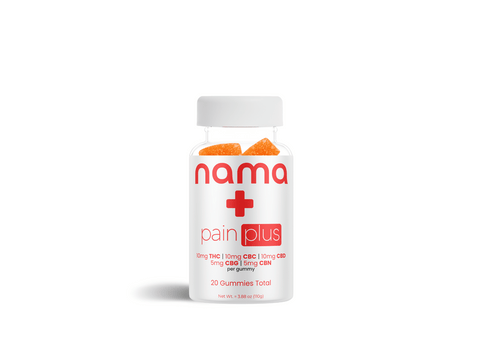
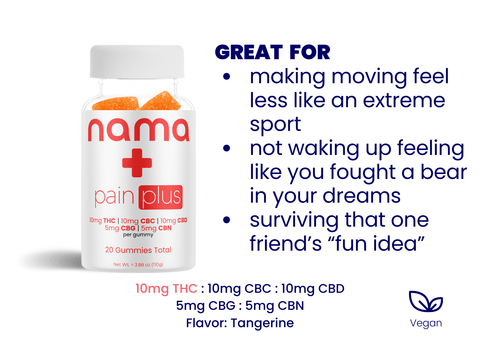
THC: 10 mg | CBC: 10 mg | CBD: 10 mg | CBG: 5 mg | CBN 5mg
Resources
Reinarman, C., Nunberg, H., Lanthier, F., & Heddleston, T. (2011). Who are medical marijuana patients? Population characteristics from nine California assessment clinics. Journal of psychoactive drugs, 43(2), 128–135. https://doi.org/10.1080/02791072.2011.587700
Alexander, C., Jeon, J., Nickerson, K., Hassler, S., & Vasefi, M. (2025). CBD and the 5-HT1A receptor: A medicinal and pharmacological review. Biochemical Pharmacology, 233, 116742. https://doi.org/10.1016/j.bcp.2025.116742
Masataka N. (2019). Anxiolytic Effects of Repeated Cannabidiol Treatment in Teenagers With Social Anxiety Disorders. Frontiers in psychology, 10, 2466. https://doi.org/10.3389/fpsyg.2019.02466
Ketcherside, A., Noble, L. J., McIntyre, C. K., & Filbey, F. M. (2017). Cannabinoid Receptor 1 Gene by Cannabis Use Interaction on CB1 Receptor Density. Cannabis and cannabinoid research, 2(1), 202–209. https://doi.org/10.1089/can.2017.0007
Ruehle, S., Rey, A. A., Remmers, F., & Lutz, B. (2012). The endocannabinoid system in anxiety, fear memory and habituation. Journal of psychopharmacology (Oxford, England), 26(1), 23–39. https://doi.org/10.1177/0269881111408958
Berger, M., Amminger, G. P., & McGregor, I. S. (2022). Medicinal cannabis for the treatment of anxiety disorders. Australian Journal of General Practice, 51(8), 586–592. https://doi.org/10.31128/ajgp-04-21-5936
Stanciu, C. N., Brunette, M. F., Teja, N., & Budney, A. J. (2021). Evidence for Use of Cannabinoids in Mood Disorders, Anxiety Disorders, and PTSD: A Systematic Review. Psychiatric services (Washington, D.C.), 72(4), 429–436. https://doi.org/10.1176/appi.ps.202000189
Spindle, T. R., Zamarripa, C. A., Russo, E., Pollak, L., Bigelow, G., Ward, A. M., Tompson, B., Sempio, C., Shokati, T., Klawitter, J., Christians, U., & Vandrey, R. (2024). Vaporized D-limonene selectively mitigates the acute anxiogenic effects of Δ9-tetrahydrocannabinol in healthy adults who intermittently use cannabis. Drug and Alcohol Dependence, 257, 111267. https://doi.org/10.1016/j.drugalcdep.2024.111267
Fox M. N. (1973). Cannabis and reverse tolerance: pharmacological entity or psychological phenomenon?. The Medical Journal of Australia, 2(18), 863–865. https://doi.org/10.5694/j.1326-5377.1973.tb76585.x
Further reading
CBD for stress and anxiety management
What is the best weed strain for anxiety?
How to microdose edibles for anxiety
nama CBD FDA & legal disclaimer
Our cannabis products are not intended to diagnose, treat, cure, or prevent any disease. They are not a replacement for prescription medications and have not been evaluated by the Food and Drug Administration (FDA).
The information provided on this website does not and is not intended to constitute legal advice or any statements of the status of any laws. Any information, content, and materials available on this site are for general informational purposes only and are not intended to be relied upon for any purpose.
Readers of this website should contact their attorney to obtain advice concerning any particular legal matter, including decisions on what products are, or are not, legal to sell, possess, or consume. No reader, user, or browser of this site should act or refrain from acting based on information on this site without first seeking legal advice from their counsel in the relevant jurisdiction.
Only your attorney can provide assurances that the information contained herein—and your interpretation of it—is applicable or accurate for your particular situation. Use of, and access to, this website or any of the links or resources contained within the site do not create an attorney-client relationship between the reader, user, or browser, and website authors, contributors, contributing law firms, or committee members and their respective employers.

About
Learn
Join us on this journey
© Copyright 2025 nama Products LLC. All Rights Reserved.
†These statements have not been evaluated by the Food and Drug Administration. These products are not intended to diagnose, treat, cure or prevent any disease. All information presented here is not meant as a substitute for or alternative to information from health care practitioners. Please consult your health care professional about potential interactions or other possible complications before using any product.
††The information provided on this website does not, and is not intended to, constitute legal advice or any statements of the status of any laws. Any information, content, and materials available on this site are for general entertainment purposes only, and are not intended to be relied upon for any purpose.
By clicking ‘Yes,’ you agree to our
Terms & Conditions and Privacy Policy
123 John Doe Street
Your Town, YT 12345
Store Hours
Sun: Closed
Mon-Fri: 9:00 - 17:00
Sat: 10:00 - 13:00
What to expect at pickup
Closed
Closing at 5pm
Closing at 5pm
Closing at 5pm
Closing at 5pm
Closing at 5pm
Closing at 1pm

Comments (0)
There are no comments for this article. Be the first one to leave a message!