Endometriosis causes chronic pelvic pain, debilitating menstrual cramps, gastrointestinal disruption, and sleep loss that compound other symptoms. Standard treatments manage the condition incompletely for many women, and long-term pharmaceutical use can cause side effects.
A 2021 observational study tracked 252 people with endometriosis who logged over 16,000 cannabis sessions through the Strainprint app. Users reported meaningful drops in pelvic pain, cramps, and gastrointestinal pain, with most reaching for products that combined THC and CBD.
nama microdosed THC products offer a precise, consistent dose in every piece, so you can focus on healing instead of getting the dosage right.
Key takeaways
- Endometriosis affects 6–10% of women of reproductive age and is linked to dysfunction in the endocannabinoid system.
- A survey found that cannabis was rated the most effective self-management strategy for endometriosis symptoms.
- Preclinical research shows THC may alleviate pelvic hypersensitivity and inhibit endometrial cyst development.
- CBD reduces pro-inflammatory cytokines and lesion size in animal models.
- Microdosed edibles offer a more controlled, predictable delivery method than smoking or vaping.
Why is endometriosis pain hard to treat?
Endometriosis is when endometrial-like tissue grows outside the uterus, triggering repetitive inflammatory cascades, nerve sensitisation, and scar tissue formation. Pain occurs at both peripheral and central levels, so single-mechanism treatments that target inflammation or nerve pain are often insufficient.
More than 60% of women with endometriosis live with chronic pelvic pain, and getting a diagnosis for it takes an average of nine years. That delay means years of pain dismissed as "normal" periods, multiple doctor visits before anyone orders the right imaging or laparoscopy, and a long stretch where the only tools offered are painkillers and hormonal therapy. By the time many women are diagnosed, the pain has already shifted from something purely period-linked to a daily, full-body problem. The diagnosis gap has encouraged women to seek alternative management tools.
Endometriosis and endocannabinoid deficiency
The endocannabinoid system plays a role in endometriosis pathology, and researchers have described the condition in part as an "endocannabinoid deficiency." Women with endometriosis show lower levels of CB1 receptors in endometrial tissue than women without the condition, and reduced endocannabinoid system function has been linked to the growth of endometriotic tissue and severe pain.
CB1 and CB2 receptors have been detected in ovarian endometriotic lesions, and their expression in epithelial cells within those lesions suggests that the tissue may be responsive to cannabinoid-based intervention. This means endometriotic lesions have the biological machinery to receive cannabinoid signals.
Research suggests that as endometriosis progresses, it dysregulates the endocannabinoid system further and creates a cycle where lower ECS function contributes to worse pain, and worsening pain suppresses ECS function. Taking cannabinoids, such as CBD and low doses of THC, may interrupt that cycle by supplying the receptor input the system is failing to generate on its own.
How microdosing cannabis relieves endometriosis pain
The strongest real-world evidence for cannabis and endometriosis pain comes from a 2024 cross-sectional survey of 912 women. Cannabis was rated the most effective self-management strategy for symptom intensity, with a self-rated efficacy score of 7.6 out of 10. Around 90% of cannabis users in the study were able to reduce their intake of pain medication, and 90% reported improvement in menstrual pain specifically.
A separate retrospective cohort study tracked 252 women with endometriosis across 16,193 cannabis use sessions via the Strainprint app. Cannabis appeared effective for pelvic pain, gastrointestinal issues, and mood, with effectiveness varying by delivery method. Oral forms showed superior results for mood and gastrointestinal symptoms, while inhaled forms showed slightly higher efficacy for acute pain.
Animal studies have shown similar results. In a mouse model of surgically induced endometriosis, daily treatment with THC alleviated mechanical hypersensitivity and pain in the caudal abdomen, restored cognitive function that had been impaired by the condition, and, notably, inhibited the development of endometrial cysts without inducing tolerance. These findings imply that THC isn’t just a pain suppressor but a potential disease-modifying agent. Human trials are needed to confirm the effect.
Read more about microdosing THC for pain management.
Microdosing cannabis for inflammation related to endometriosis
Inflammation is central to endometriosis progression. Endometriotic lesions sustain themselves partly through elevated pro-inflammatory cytokines TNF-α, IL-6, and IL-1β, alongside high COX-2 activity and prostaglandin E2 (PGE2) levels in the peritoneal environment. These are the same pathways that NSAIDs try to interrupt, and cannabis targets several of them.
In an animal study of endometriosis, CBD administration reduced endometriotic lesion diameter, volume, and surface area, while lowering IL-6 and TNF-α levels. The same study found that CBD decreased COX-2 expression and reduced PGE2 and IL-1α levels in peritoneal fluid, targeting inflammation in multiple ways.
NSAIDs such as ibuprofen block two enzymes at once, COX-1 and COX-2. COX-2 is the one that drives inflammation and pain, so blocking it is the point. COX-1 produces prostaglandins that tell the gut lining to make protective mucus and bicarbonate and to keep blood flowing to the mucosa. Remove COX-1, and you strip away that protection, which is why long-term NSAID use is linked to irritation, ulcers, and bleeding.
CBD appears to act more selectively on COX-2. It doesn’t affect COX-1 as much, which keeps the stomach lining intact. That distinction may matter for endometriosis patients, many of whom already deal with gastrointestinal symptoms as part of the condition and can least afford a painkiller that adds more.
THC contributes to the anti-inflammatory picture through CB2 receptor activation. CB2 receptors are expressed on macrophages, immune cells that drive the inflammatory cascade in endometriotic lesions, and their activation suppresses the release of pro-inflammatory cytokines. Products with THC and CBD engage these pathways in combination, reflecting what the research describes as a synergistic effect between cannabinoids, the entourage effect.

Microdosing cannabis to improve sleep with endometriosis
Chronic pain activates the nervous system during the night, and hormonal fluctuations through the menstrual cycle compound sleep disruption for endometriosis. In a 2024 survey, sleep was the domain with the greatest reported improvement among cannabis users with endometriosis, where 91% reported better sleep.
The mechanisms are consistent with what research shows about cannabis and sleep more broadly. THC shortens the time it takes to fall asleep and reduces pain-related arousal during the night. CBD contributes through its anxiolytic and muscle-relaxant effects.
How to microdose cannabis for endometriosis
Because endometriosis symptoms vary throughout the menstrual cycle, a consistent daily microdose is more reliable than reactive, high-dose use during acute flares. The goal is to maintain a baseline of endocannabinoid system support throughout the month, with the option to supplement during more uncomfortable periods.
Daytime pain and inflammation management:
- Dose: 5–10 mg THC with 10–25 mg CBD
- Goal: Reduce pelvic tension, lower inflammatory tone, and maintain daily function without impairment
- Timing: Morning or early afternoon; allow 45–60 minutes for onset
- Format: Oral gummies for consistent, measured delivery
Evening and sleep support:
- Dose: 2–5 mg THC with 25 mg CBD and 3 mg melatonin
- Goal: Reduce pain-related arousal, ease into sleep, and support uninterrupted rest
- Timing: 45–60 minutes before bed
- Format: Oral gummies with CBN or melatonin
Acute flare days:
- Dose: Increase THC to 10 mg with at least 10 mg CBD; consider a multi-cannabinoid formulation
- Goal: Broader cannabinoid coverage across CB1 and CB2 pathways for more significant pain and inflammation relief
- Timing: At the onset of cramping or pelvic pain, before the pain peaks
- Format: THC drinks or multi-cannabinoid oral gummies with THC, CBD, CBN, CBC, and CBG.
- Note: Start at the lower end of any new dose range and assess response before increasing
Start low, track your response across at least two full menstrual cycles before evaluating efficacy. Endometriosis symptoms fluctuate with hormonal changes, and a protocol that works in week one may need adjustment by week three.
Product QUIZ
Need help deciding what product is best for you? Take our quiz, just three questions until your perfect match!
nama products for endometriosis relief
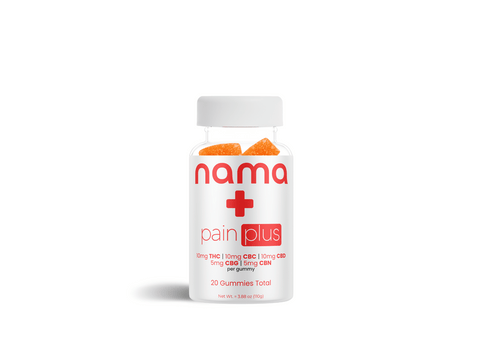
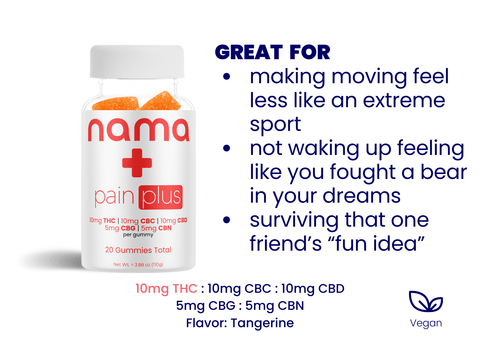
- For pain and inflammation: Pain Plus gummies contain 10 mg THC, 10 mg CBC, 10 mg CBD, 5 mg CBG, and 5 mg CBN per gummy, covering CB1 and CB2 receptor pathways. The multi-cannabinoid profile mirrors what the research suggests works best for complex chronic pain.
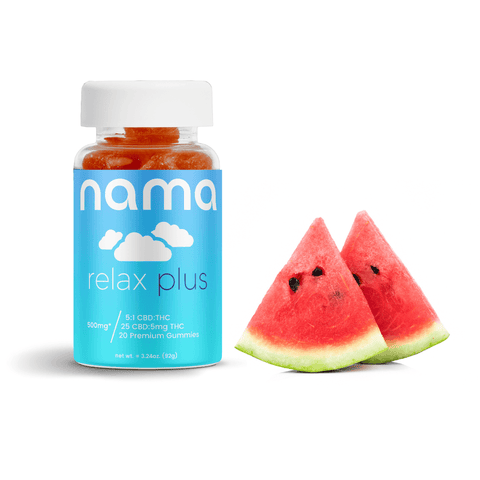
- For daytime symptom management without heavy sedation: Relax Plus gummies deliver 5 mg THC alongside 25 mg CBD, a ratio weighted toward physical ease and inflammation reduction, with enough THC to activate CB1 pathways without producing a pronounced head effect.
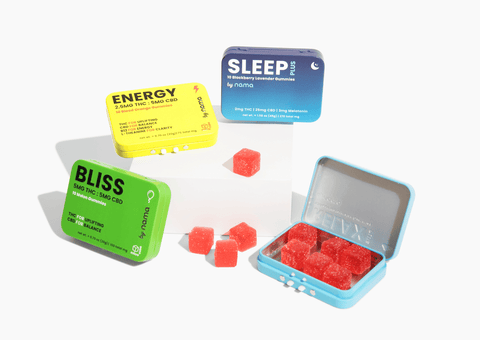
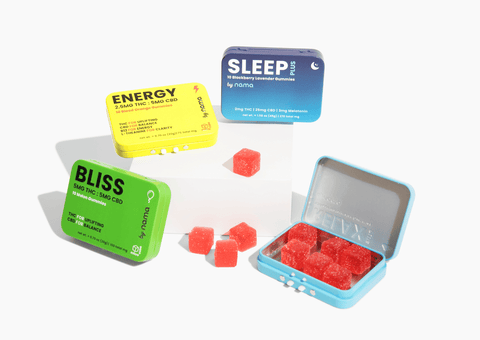
- For sleep: Sleep Plus gummies combine 25 mg CBD with 2 mg THC and 3 mg melatonin. The THC quiets the nervous system activation that pain keeps running overnight; the CBD adds muscle relaxation and anxiety reduction; the melatonin anchors the sleep cycle.
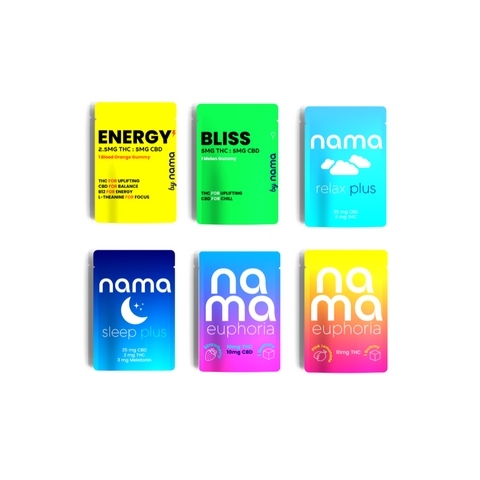
Not sure where to start? The Ultimate nama sampler lets you try single gummies across multiple formulations before committing to a full pack. For a chronic condition, finding the right dose and formula across the menstrual cycle is worth the patience.
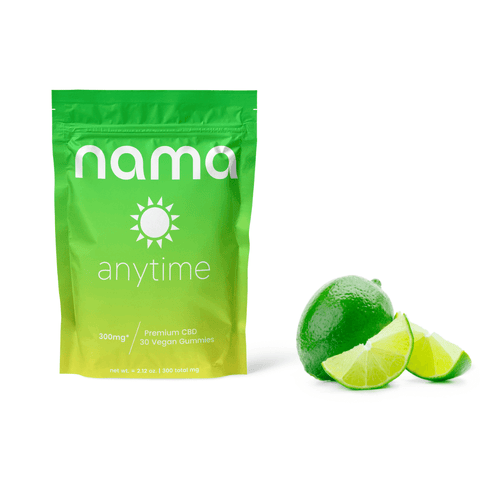
Browse nama THC products or try our CBD products without THC.
Microdosing cannabis and endometriosis FAQ
The research points toward a combination of both. THC activates CB1 receptors to reduce pain perception and CB2 receptors to suppress inflammatory cytokines. CBD targets inflammation through COX-2 inhibition and shows direct effects on lesion size and cytokine levels in preclinical models.
Used together, they engage more of the receptor pathways involved in endometriosis than either does in isolation, which is why multi-cannabinoid products tend to perform better in observational data than CBD-only or THC-only approaches.
At true microdose levels, 2.5–5 mg THC, most people experience no impairment. The goal of microdosing is to stay well below the threshold that produces intoxication, using just enough cannabinoid activity to support pain regulation and reduce inflammatory tone. Products with a high CBD-to-THC ratio, like Relax Plus gummies, are formulated for that functional range.
Oral gummies take 45–90 minutes to reach full effect, depending on whether they are taken with food and individual metabolism. For chronic symptom management, consistent daily use across several weeks provides a clearer picture than single-dose trials. Effects often become more consistent and reliable with regular use.
Cannabis should be considered a complementary strategy alongside existing medical care, not a replacement for it. The evidence, while promising, does not yet include the high-quality randomised controlled trials needed to establish cannabis as a standalone treatment.
Top Sellers
New? Start with our Ultimate Sampler!
10mg THC | 10mg CBD | 10mg CBC | 5mg CBG | 5mg CBN (per gummy)
Further reading
Microdosing THC for inflammation
Resources
Armour, M. et al. (2021). Effects of cannabis ingestion on endometriosis-associated pelvic pain and related symptoms. PLOS ONE, 16(10), e0258940. https://doi.org/10.1371/journal.pone.0258940
Bouaziz, J. et al. (2022). Detection of cannabinoid receptor expression by endometriotic lesions in women with endometriosis as an alternative to opioid-based pain medication. Journal of Pain Research, 15, 1461–1470. https://pmc.ncbi.nlm.nih.gov/articles/PMC9184153/
Escudero-Lara, A. et al. (2020). Disease-modifying effects of natural Δ9-tetrahydrocannabinol in endometriosis-associated pain. eLife, 9, e50356. https://pmc.ncbi.nlm.nih.gov/articles/PMC6977967/
Genovese, T. et al. (2022). Molecular and biochemical mechanism of cannabidiol in the management of the inflammatory and oxidative processes associated with endometriosis. Antioxidants, 11(6), 1060. https://pmc.ncbi.nlm.nih.gov/articles/PMC9141153/
McLaren, J. et al. (2026). A scoping systematic review of cannabis use in endometriosis. Australian and New Zealand Journal of Obstetrics and Gynaecology. https://pmc.ncbi.nlm.nih.gov/articles/PMC12920050/
Sanchez, A.M. et al. (2016). The clinical significance of endocannabinoids in endometriosis pain management. Cannabis and Cannabinoid Research, 1(1), 133–138. https://pmc.ncbi.nlm.nih.gov/articles/PMC5436335/
Schäfer, S.D. et al. (2024). Cannabis use in endometriosis: the patients have their say — an online survey for German-speaking countries. Archives of Gynecology and Obstetrics, 310, 2091–2101. https://doi.org/10.1007/s00404-024-07652-6
Toguri, J. T., Lehmann, C., Laprairie, R. B., Szczesniak, A. M., Zhou, J., Denovan-Wright, E. M., & Kelly, M. E. (2014). Anti-inflammatory effects of cannabinoid CB(2) receptor activation in endotoxin-induced uveitis. British journal of pharmacology, 171(6), 1448–1461. https://doi.org/10.1111/bph.12545
Maddern J, Grundy L, Castro J and Brierley SM (2020) Pain in Endometriosis. Front. Cell. Neurosci. 14:590823. https://doi.org/10.3389/fncel.2020.590823
nama CBD FDA & legal disclaimer
Our products are not intended to diagnose, treat, cure, or prevent any disease. They are not a replacement for prescription medications and have not been evaluated by the U.S. Food and Drug Administration (FDA).
The information provided on this website does not and is not intended to constitute legal advice or any statement of the status of any laws. Any information, content, and materials available on this site are for general informational purposes only and are not intended to be relied upon for any purpose.
Readers of this website should contact their attorney to obtain advice with respect to any particular legal matter, including decisions on what products are, or are not, legal to sell, possess, or consume. No reader, user, or browser of this site should act or refrain from acting based on the information on this site without first seeking legal advice from their own counsel in the relevant jurisdiction.
About
Learn
Join us on this journey
© Copyright 2026 nama Products LLC. All Rights Reserved.
†These statements have not been evaluated by the Food and Drug Administration. These products are not intended to diagnose, treat, cure or prevent any disease. All information presented here is not meant as a substitute for or alternative to information from health care practitioners. Please consult your health care professional about potential interactions or other possible complications before using any product.
††The information provided on this website does not, and is not intended to, constitute legal advice or any statements of the status of any laws. Any information, content, and materials available on this site are for general entertainment purposes only, and are not intended to be relied upon for any purpose.
nama: The only source for Buzz Drops™
By clicking ‘Yes,’ you agree to our
Terms & Conditions and Privacy Policy
123 John Doe Street
Your Town, YT 12345
Store Hours
Sun: Closed
Mon-Fri: 9:00 - 17:00
Sat: 10:00 - 13:00
What to expect at pickup
Closed
Closing at 5pm
Closing at 5pm
Closing at 5pm
Closing at 5pm
Closing at 5pm
Closing at 1pm

Comments (0)
There are no comments for this article. Be the first one to leave a message!