Head high vs. body high

Jun 07, 2026The nama Team

A head high and a body high are two distinct patterns of cannabinoid activity in the body, rooted in receptor distribution, dose, and delivery method. Before you choose your next product, decide what kind of high you want.

nama microdosed THC gummies remove the guesswork from your cannabis ritual. Each product is formulated around a specific outcome, with a consistent dose in every piece.

A head high lifts your mood and sparks creativity. A body high melts tension and might sedate you. Dose and cannabinoid ratio determine your high and its intensity.

Key takeaways

  • A head high is caused by THC activating CB1 receptors concentrated in the brain, producing euphoria, creativity, and altered sensory perception.
  • A body high reflects cannabinoid activity across the peripheral nervous system and immune tissues, producing physical relaxation, tension relief, and the sensation commonly called “couch lock”.
  • Dose, delivery method, cannabinoid ratio, and individual physiology shape which kind of high you feel, and most cannabis experiences blend both.
  • Precisely dosed edibles remove the guesswork, giving you a predictable, repeatable effect every time.
Buzz Drops™ [THC Drink Drops]
On Sale from $27.95
Buzz Drops™ [THC Drink Drops]

2.5mg THC | 2.5mg CBD (per dropper full)

Save up to $41.05 THC
Buzz Packs™ [THC and CBD Powder Drink Mix]
On Sale from $29.95
Buzz Packs™ [THC and CBD Powder Drink Mix]

5mg THC | 5mg CBD (per pack)

Save up to $50.00 THC

What is a head high?

A head high happens when THC lands mostly in the brain. CB1 receptors are expressed most abundantly in the brain, with the highest densities found in association with limbic and associative cortices (regions that govern motivation, emotion, memory, and cognitive processing). THC binds to these receptors as a partial agonist and triggers the cascade of effects people typically describe as "getting high."

What does a head high feel like?

  • Euphoria: a warm, often spontaneous sense of wellbeing
  • Creativity: lateral thinking, novel associations, heightened curiosity
  • Sensory amplification: music sounds richer, food tastes more vivid, colours feel brighter
  • Mood lift: reduced social friction, easier laughter
  • Mental fog: at higher doses, short-term memory and attention can falter

Head highs are associated with sativa-leaning cannabis strains. But that framing is imprecise, as the sativa/indica distinction reflects plant genetics more than it predicts effects. You can still use this general rule of thumb: products or doses that emphasise THC's activity in the brain tend to produce more cerebral, energising effects.

What is a body high?

A body high describes cannabis effects felt primarily outside the brain and head. CB2 receptors operate in immune cells, the spleen, the gastrointestinal tract, and peripheral nerves, and their activation reduces the release of inflammatory molecules called cytokines while guiding immune cells toward repair. Activating CB2 receptors can help relax the body, which aids muscle repair and alleviates pain.

CBD contributes to body-dominant effects. Unlike THC, CBD does not bind to CB1 receptors in a way that produces intoxication. Instead, CBD has activity at the CB2 receptor and has demonstrated anti-inflammatory, neuroprotective, muscle relaxant, and antioxidant effects.

What does a body high feel like?

  • Physical relaxation: Muscles release tension, the body feels heavy in a comfortable way.
  • Pain and discomfort relief: Pressure, ache, and tightness soften.
  • Tingly warmth: A spreading physical sensation, often starting in the torso or extremities.
  • Couch lock: The signature full-body sedation that makes leaving horizontal feel genuinely difficult.
  • Reduced mental noise: Thoughts slow without full cognitive impairment.

Body highs are most closely associated with indica-leaning strains and with high-CBD, lower-THC formulations. They tend to be the experience people are after when they want to decompress physically after a long day or prepare for sleep.

What actually determines the type of high you get?

We know that the indica-sativa split isn’t an accurate way to predict your high. Here are the real culprits.

Cannabinoid ratio

THC drives cerebral, psychoactive effects through CB1 receptor activity in the brain. CBD modulates those effects and adds its own physical relaxation through peripheral receptor pathways. A product heavy on THC with minimal CBD tends toward a stronger head high. One with a higher CBD-to-THC ratio leans into the body.

Dose

The response to cannabis is biphasically dose-dependent, so low doses tend to stimulate while high doses inhibit, with wide individuality in responses. At a microdose level (2.5–5 mg THC), effects tend to be subtle and functional: mild mood lift, slight physical ease, no impairment. At high doses (25 mg+ THC), pronounced subjective effects and marked impairment in cognitive and psychomotor functioning are observed. Even a product with a sativa profile can tip into sedation at a high enough dose.

Delivery method

The way you take cannabis shapes the character of the high. Smoking and vaping produce a fast onset, so THC hits the bloodstream through the lungs in minutes, and the effects tend to be head-forward and shorter-lived.

In edibles, THC passes through the digestive system, is metabolised by the liver into 11-hydroxy-THC (a compound that crosses the blood-brain barrier more readily than THC), and takes 30–90 minutes to peak. 

For oral cannabis, studies show that pharmacodynamic effects don't appear until 30–60 minutes after ingestion, with peak effects occurring 1.5–3 hours post-administration. The result is often more body-forward, longer-lasting, and harder to predict without a consistent dose.

Individual physiology

Two people taking the same product at the same dose can have very different experiences. Factors including body weight, metabolism, tolerance, endocannabinoid system baseline, and even stress levels at the time of consumption all play a role.

Can you feel both at the same time?

Most of the time, yes. A split between head and body is rare outside of controlled laboratory conditions. Most cannabis experiences produce a mix of cerebral and physical effects. Think a relaxed body with an active, wandering mind, or a euphoric mood lift accompanied by physical ease.

This happens because THC activates CB1 receptors across the central and peripheral tissues, and because most products contain multiple cannabinoids that interact with the endocannabinoid system in overlapping ways. The entourage effect (the synergy between cannabinoids, terpenes, and other plant compounds) means that the combined effect of a full-spectrum or broad-spectrum product is rarely reducible to a single cannabinoid.

THC and CBD have been shown to work synergistically, with CBD modulating and complementing THC's effects in ways neither achieves alone.

Unpredictability is the problem with cannabis

Understanding head highs and body highs is useful, but most cannabis consumption methods make it hard to predict what you're actually going to feel.

Smoking flower involves variability in cannabinoid concentration from batch to batch and draw to draw. Homemade edibles are inconsistent. Even commercial products without precise milligram dosing leave too much to chance. As a result, plenty of people have had uncomfortable experiences, either too intense, too sedating, or unexpectedly anxious, not because cannabis doesn't work for them, but because they had no reliable control over what they took.

Small, consistent doses make effects predictable, functional, and repeatable. Microdosing THC keeps the experience in a range where the benefits are accessible without the discomfort of overconsumption.

Product QUIZ

Need help deciding what product is best for you? Take our quiz, just three questions until your perfect match!

nama gummies deliver reliable effects

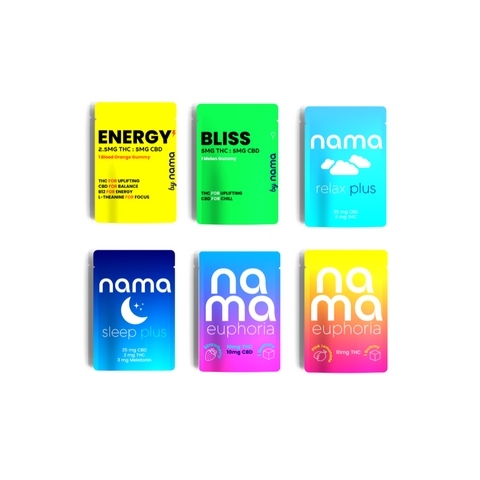
With nama, the head-versus-body question has a much simpler answer: read the label. Every nama gummy is formulated around specific outcomes, with a consistent, precise dose in every piece.

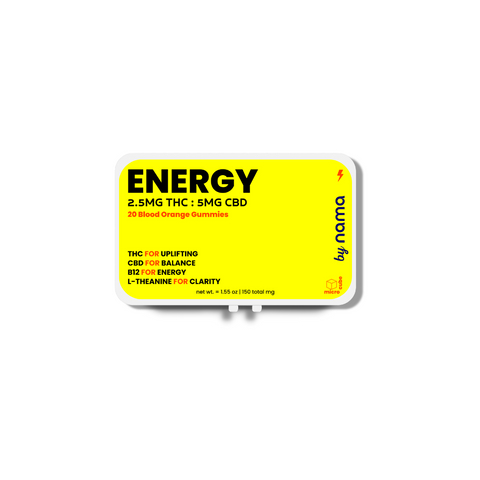
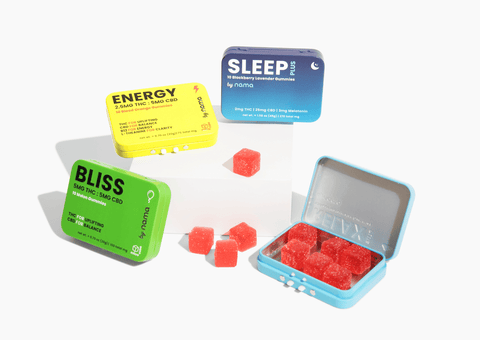
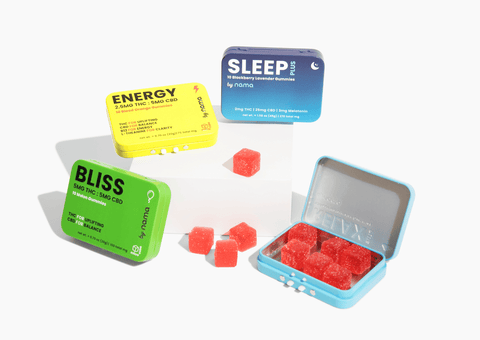
Want a gentle mental lift with a creative edge? Energy gummies pair 2.5 mg THC with 5 mg CBD, 1000 mcg B12, and 50 mg L-theanine, a formulation aimed at calm focus rather than intoxication.

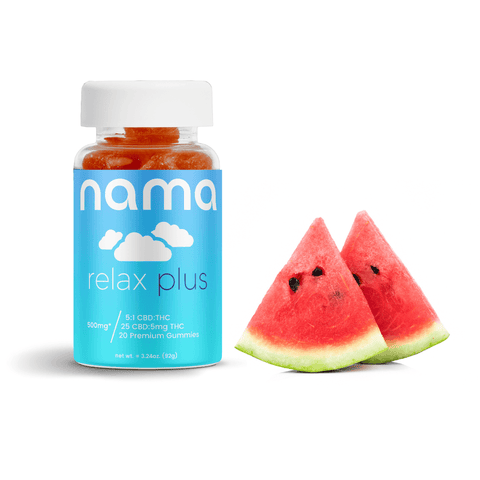
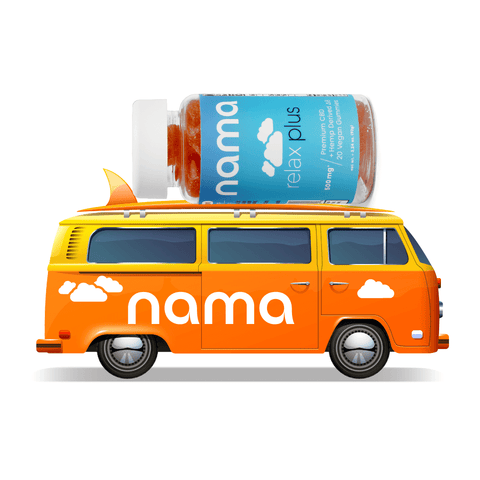
Want the body high without the mental fog? Relax Plus gummies deliver 5 mg THC alongside 25 mg CBD, tipping the cannabinoid ratio toward physical ease and tension release.

Want a soft, social mood lift with light physical relaxation? Bliss gummies at 5 mg THC and 5 mg CBD will keep you enjoying the party.

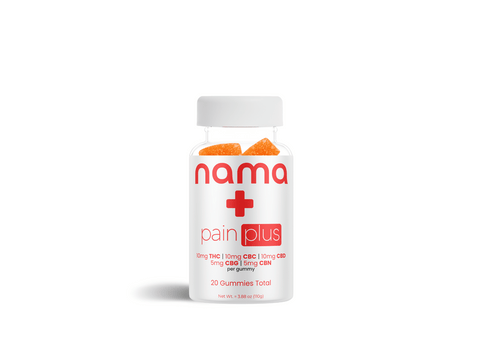
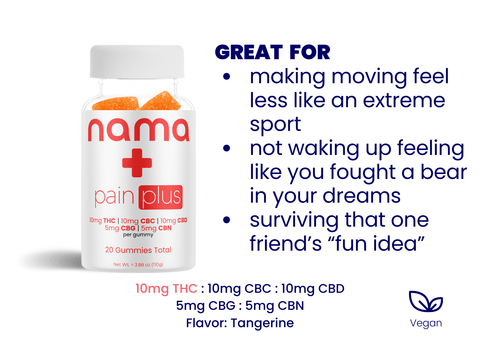
Need more potency with targeted physical relief? Pain Plus gummies contain 10 mg THC, 10 mg CBC, 10 mg CBD, 5 mg CBG, and 5 mg CBN in a formulation built for whole-body comfort.

Not sure where to start? The Ultimate nama Sampler lets you try gummies from our full range before committing to a pack.

Shop nama's THC products, and find the effect you're actually looking for.

Body high vs head high FAQ

CBD doesn't produce a high in the traditional sense, but it does contribute to the physical relaxation people associate with a body high. Its effect on CB2 receptors and anti-inflammatory pathways supports muscle ease and tension relief without intoxication. High-CBD, lower-THC products and CBD-only products are formulated around exactly that effect.

Oral THC is processed by the liver into 11-hydroxy-THC before entering the bloodstream, a compound that tends to produce more physically sedating effects than inhaled THC. Edibles also have a slower onset and longer duration, which shifts the experience toward the body-forward, extended relaxation that people describe as a full-body high.

It often does, particularly as a session progresses or with higher doses. THC's dose-dependent effects mean that what starts as a mild cerebral lift can tip toward sedation and physical heaviness as blood concentration rises. Microdosing maintains the functional, mood-lifting effects of a head high without sliding into couch lock.

Each product page tells you what to expect. High CBD-to-THC ratios lean physical, while equal ratios produce a blend of head and body high, and our THC-only edibles produce the strongest head high. 

Formulations with added functional ingredients, such as B12 and L-theanine in Energy gummies and the multi-cannabinoid blend in Pain Plus, are built around specific uses. 

Read the label, start with one gummy, and you'll know where you're going.

Top Sellers

New? Start with our Ultimate Sampler!
Buzz Packs™ [THC and CBD Powder Drink Mix]
On Sale from $29.95
Buzz Packs™ [THC and CBD Powder Drink Mix]

5mg THC | 5mg CBD (per pack)

Save up to $50.00 THC
Buzz Drops™ [THC Drink Drops]
On Sale from $27.95
Buzz Drops™ [THC Drink Drops]

2.5mg THC | 2.5mg CBD (per dropper full)

Save up to $41.05 THC
Pain Plus Gummies | THC, CBD, CBG, CBC, CBN
From $49.00
Pain Plus Gummies | THC, CBD, CBG, CBC, CBN

10mg THC | 10mg CBD | 10mg CBC | 5mg CBG | 5mg CBN (per gummy)

THC
Love | Libido Boosting Gummies With CBD and THC
From $44.00
Love | Libido Boosting Gummies With CBD and THC

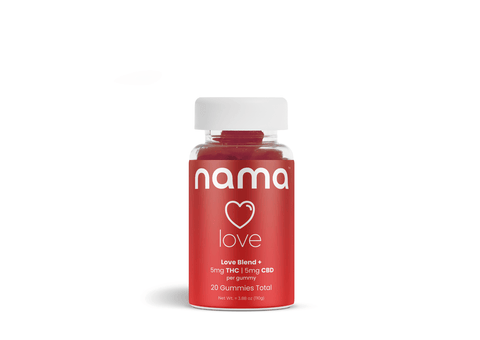
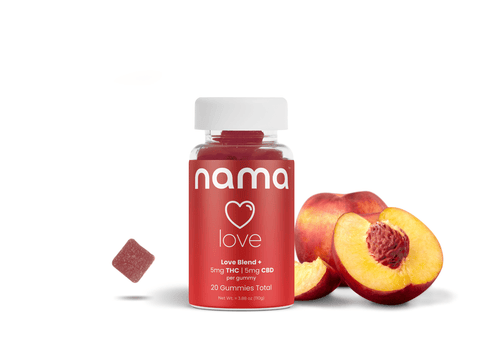
5mg THC | 5mg CBD (per gummy)

THC
The Ultimate nama Gummy Sampler
Save $4.05 THC

Resources

Grotenhermen, F. (2003). Pharmacokinetics and pharmacodynamics of cannabinoids. Clinical Pharmacokinetics, 42(4), 327–360. https://doi.org/10.2165/00003088-200342040-000003 

Spindle, T.R. et al. (2020). Pharmacodynamic dose effects of oral cannabis ingestion in healthy adults who infrequently use cannabis. Drug and Alcohol Dependence, 214, 108–192. https://doi.org/10.1016/j.drugalcdep.2020.108192 

Iffland, K. & Grotenhermen, F. (2023). An individuality of response to cannabinoids: challenges in safety and efficacy of cannabis products. Frontiers in Pharmacology. https://pmc.ncbi.nlm.nih.gov/articles/PMC10058560/ 

Russo, E.B. & Guy, G.W. (2006). A tale of two cannabinoids: the therapeutic rationale for combining tetrahydrocannabinol and cannabidiol. Medical Hypotheses, 66(2), 234–246. https://doi.org/10.1016/j.mehy.2005.08.026 

Further reading

Can you take low doses of cannabis for focus?

CBD vs. THC: What's the difference?

How do delta-9 gummies make you feel?

Microdosing THC benefits

Is cannabis good for brain fog?

nama CBD FDA & legal disclaimer

Our products are not intended to diagnose, treat, cure, or prevent any disease. They are not a replacement for prescription medications and have not been evaluated by the U.S. Food and Drug Administration (FDA).

The information provided on this website does not and is not intended to constitute legal advice or any statement of the status of any laws. Any information, content, and materials available on this site are for general informational purposes only and are not intended to be relied upon for any purpose.

Readers of this website should contact their attorney to obtain advice with respect to any particular legal matter, including decisions on what products are, or are not, legal to sell, possess, or consume. No reader, user, or browser of this site should act or refrain from acting based on the information on this site without first seeking legal advice from their own counsel in the relevant jurisdiction.

More articles

Comments (0)

There are no comments for this article. Be the first one to leave a message!

Leave a comment

Please note: comments must be approved before they are published