Vaginismus affects about 5–17% of women. Emerging research suggests cannabis may ease some of the anxiety and muscle guarding that drive vaginismus.
Pelvic floor physical therapy, graded dilator work, and psychosexual or trauma-informed counseling remain the strongest evidence-backed paths, and cannabis fits as a possible adjunct, not a replacement.
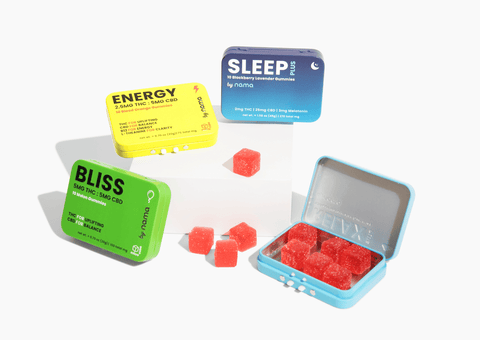
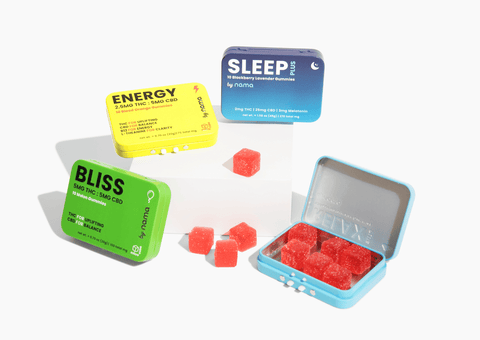
nama makes precisely dosed, hemp-derived THC drinks and edibles with as low as 2.5 mg of THC, as well as CBD edibles with no THC. That lets you better control a condition where too much can tighten the muscles you are trying to relax.
Key takeaways
- Vaginismus is an involuntary tightening of the pelvic floor muscles that makes penetration extremely painful.
- Cannabis may reduce the anxiety and muscle tension that cause vaginismus.
- Cannabis microdoses tap into the benefits of THC and CBD without causing the anxiety spikes associated with high doses.
What is vaginismus?
Vaginismus is an involuntary contraction of the pelvic floor muscles around the vaginal opening, tight enough to make penetration painful or difficult. The tightening is a protective reflex, not a conscious choice, which is why willpower rarely loosens it. Clinicians group vaginismus with dyspareunia under a single diagnosis called genito-pelvic pain/penetration disorder, or GPPPD, in the DSM-5.
Primary vaginismus means penetration has been painful or impossible from the first attempt. Secondary vaginismus develops after a stretch of pain-free intercourse, often triggered by infection, childbirth injury, hormonal shifts, or trauma.
The muscle at the center of it is the levator ani, the sling that supports the bladder, uterus, and rectum. When it sits in a chronically high-tone or hypertonic state, pressure that normally feels neutral becomes painful.
The pain–fear–guarding loop
Vaginismus is cyclical: anticipated pain triggers anxiety, which causes the pelvic floor to tighten, which makes the next attempt painful and reinforces the anticipatory fear. This loop strengthens with each repetition as the nervous system learns to brace for danger.
Cannabis can help lower the baseline anxiety and anticipatory tension that feed this loop, but it is not a cure. It acts as a tool to make recovery work more tolerable rather than a replacement for rehabilitation.
Lasting recovery requires pelvic floor physical therapy and consistent, graded dilator work to retrain the muscles and break the learned guarding reflex. Cannabis may lower the wall of anxiety, but physical retraining is what leads to improvement.
Lasting improvement requires pelvic floor physical therapy and consistent dilator work to retrain the muscles and address the underlying physical cause.
Read about how cannabis can increase libido.
What does research say about cannabis for pelvic floor pain?
The strongest research signal comes from how many people with pelvic pain already use cannabis and report it working.
A 2023 cross-sectional study surveyed 135 women with myofascial pelvic pain across two Vancouver pelvic pain centers. Among the 57 percent who used cannabis, 69 percent rated its effectiveness at relieving pelvic pain a 7 or higher on a 10-point scale, and roughly 3 of 4 respondents were open to trying vulvar or vaginal cannabis products.
A 2024 review examined CBD for painful pelvic floor conditions and proposed a mechanism: acting on the endocannabinoid system, CBD may ease the hyperalgesia and allodynia common to these disorders and promote muscle relaxation.
A 2022 systematic review in Obstetrics & Gynecology looked at medical cannabis across several gynecologic pain conditions. Survey data showed most women reported that cannabis improved their gynecologic pain, and cohort studies, plus one randomized controlled trial using palmitoylethanolamide-combination products, reported pain reduction.
Is CBD or THC better for vaginismus-related pain?
CBD and THC pull different levers, and for a fear-and-tension condition, the safer starting point is usually CBD.
CBD is non-intoxicating and is studied for anti-inflammatory, anxiolytic, and muscle-relaxation effects. It suits daytime use and people who want to lower baseline tension without feeling altered.
THC modulates pain perception and can deepen relaxation, but in sensitive people, high doses can raise anxiety, and anxiety tightens the pelvic floor. It should be avoided or minimally dosed.
A general guide on taking CBD or low-dose THC for vaginismus:
- CBD-forward: Daytime anxiety and baseline muscle tension, minimal intoxication, easiest entry point.
- Low-dose THC with CBD: Pre-therapy or evening relaxation and pain modulation, only at doses small enough to avoid an anxiety spike.
- What neither does: Rewire the guarding reflex or replace pelvic floor therapy.
The benefits of microdosing cannabis for vaginismus
Microdosing is a safe, relaxing way to experiment with therapeutic cannabis. A microdose delivers a small, consistent amount of cannabinoids that takes the edge off without intoxication.
- Starting dose: 2.5–5 mg THC in a CBD-forward product for those avoiding intoxication entirely.
- Goal: Lower anticipatory anxiety and baseline muscle tension without dissociation or impairment.
- Timing: 30–60 minutes before a dilator session or pelvic floor appointment, coordinated with your therapist.
- Adjustment: Track pain, ease of insertion, and anxiety after each session, and change one variable at a time.
Product QUIZ
Need help deciding what product is best for you? Take our quiz, just three questions until your perfect match!
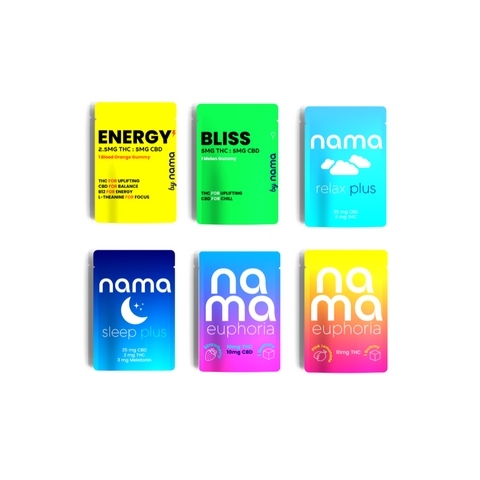
nama products for pelvic floor relief
Receive medical clearance before using cannabis for vaginismus. Pair any of these products with pelvic floor work and coordinate timing with your therapist.
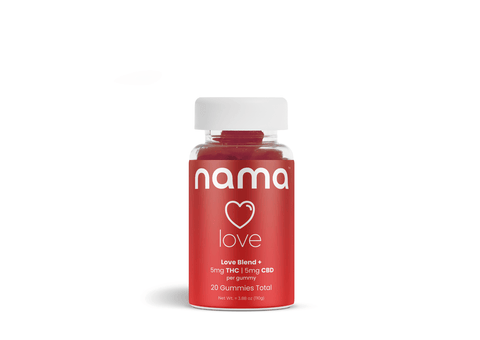
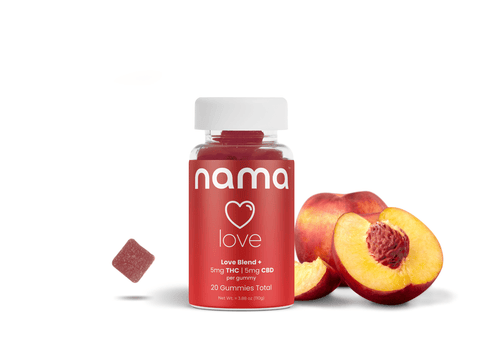
- Love gummies: 5 mg THC, 5 mg CBD, plus a botanical blend including ashwagandha, damiana, and maca.
- Buzz Drops: 2.5 mg THC and 2.5 mg CBD per full dropper, added to any drink.
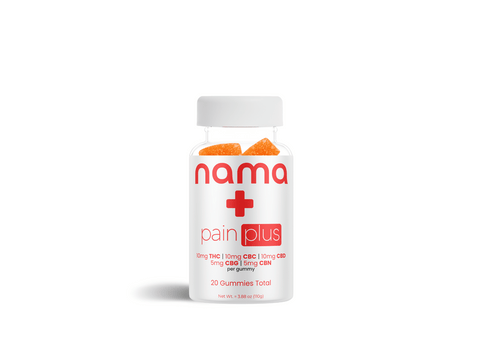
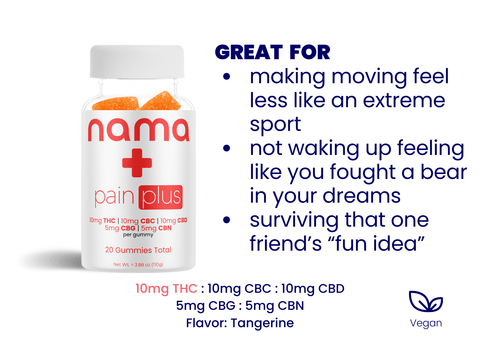
- Pain Plus gummies: 10 mg THC, 10 mg CBC, 10 mg CBD, 5 mg CBG, 5 mg CBN per gummy.
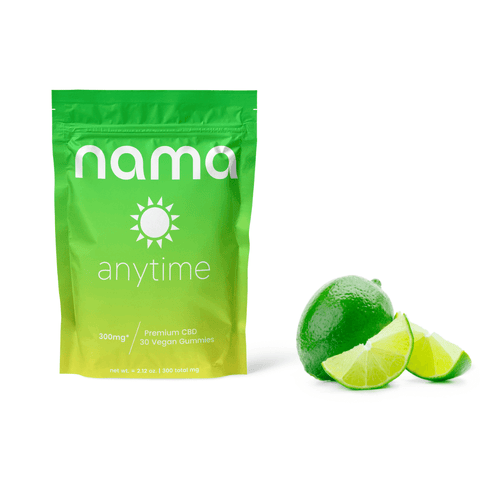
- Relax CBD gummies: 25 mg CBD and 100 mg ashwagandha per gummy, zero THC.
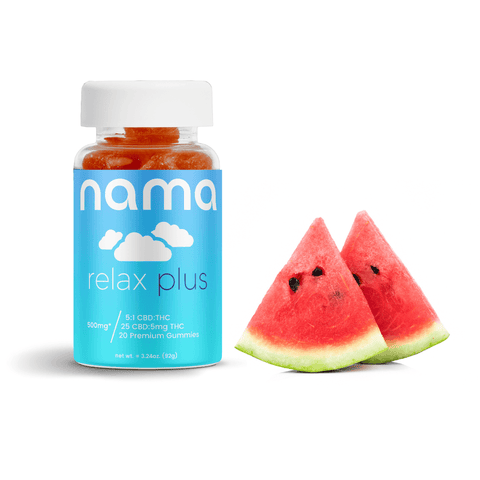
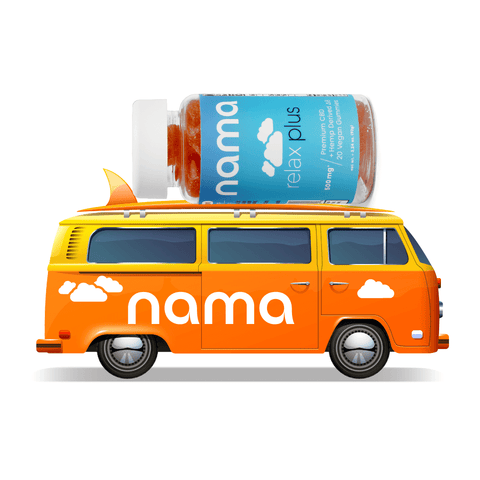
- Relax Plus gummies: 5 mg THC and 25 mg CBD per gummy.
Weed and vaginismus FAQ
A 2.5 mg THC dose is a microdose, small enough that most people feel calmer and less tense rather than intoxicated. Effects scale with the amount, so the risk of feeling high rises as the dose climbs, which is the reason to start at the floor and adjust slowly.
Hemp-derived THC products that meet the federal limit are sold without a medical card and ship to most states, unlike state medical-cannabis programs that require a qualifying condition or board approval. Read about how Delta-9 is legal for the specifics on the federal hemp framework.
Trauma-informed care belongs at the center of treatment, and cannabis should never replace counseling that addresses it. If used at all, a low dose should support consent, pacing, and emotional safety rather than bypass them, and a clinician should be part of that decision.
Open questions about your symptoms, psychology, and lifestyle will help your gynecologist determine if cannabis is right for you. Questions could include:
- "Is my pain pattern vaginismus, vulvodynia, pelvic floor myalgia, or something else?" to avoid misclassifying the problem.
- "Do I have high-tone pelvic floor dysfunction?" to connect symptoms to muscle guarding directly.
- "Could cannabis interfere with my treatment or mask symptoms?" to weigh the adjunct honestly.
- "What dose and timing would fit around my therapy sessions?" to align any cannabis use with the real work.
- "Are there medications or conditions in my history that make cannabis a bad idea?" to screen for interactions and contraindications.
Most clinicians who treat pelvic pain have heard these questions before. Asking questions turns cannabis from a guess into a coordinated, lower-risk part of a plan.
Top Sellers
New? Start with our Ultimate Sampler!
10mg THC | 10mg CBD | 10mg CBC | 5mg CBG | 5mg CBN (per gummy)
Further reading
Does cannabis help with endometriosis?
How to increase libido in women?
Do edibles make you last longer in bed?
Resources
Yang, E. C., Koenig, N. A., Gong, M., Brotto, L. A., Barr, A. M., Lee, T., Yong, P. J., & Geoffrion, R. (2023). Cannabis use preferences in women with myofascial pelvic pain: A cross-sectional study. European Journal of Obstetrics & Gynecology and Reproductive Biology. https://www.sciencedirect.com/science/article/pii/S2590161323000170
Bonanni, R., Ratano, P., Cariati, I., Tancredi, V., & Cifelli, P. (2024). Treatment strategies for painful pelvic floor conditions: A focus on the potential benefits of cannabidiol. Biomolecules, 14(12), 1627. https://doi.org/10.3390/biom14121627
Liang, A. L., Gingher, E. L., & Coleman, J. S. (2022). Medical cannabis for gynecologic pain conditions: A systematic review. Obstetrics & Gynecology, 139(2), 287–296. https://doi.org/10.1097/AOG.0000000000004656
Wikipedia contributors. (2026, March 14). Vaginismus. Wikipedia. https://en.wikipedia.org/wiki/Vaginismus
nama CBD FDA & legal disclaimer
Our products are not intended to diagnose, treat, cure, or prevent any disease. They are not a replacement for prescription medications and have not been evaluated by the U.S. Food and Drug Administration (FDA).
The information provided on this website does not and is not intended to constitute legal advice or any statement of the status of any laws. Any information, content, and materials available on this site are for general informational purposes only and are not intended to be relied upon for any purpose.
Readers of this website should contact their attorney to obtain advice with respect to any particular legal matter, including decisions on what products are, or are not, legal to sell, possess, or consume. No reader, user, or browser of this site should act or refrain from acting based on the information on this site without first seeking legal advice from their own counsel in the relevant jurisdiction.

About
Learn
Join us on this journey
© Copyright 2026 nama Products LLC. All Rights Reserved.
†These statements have not been evaluated by the Food and Drug Administration. These products are not intended to diagnose, treat, cure or prevent any disease. All information presented here is not meant as a substitute for or alternative to information from health care practitioners. Please consult your health care professional about potential interactions or other possible complications before using any product.
††The information provided on this website does not, and is not intended to, constitute legal advice or any statements of the status of any laws. Any information, content, and materials available on this site are for general entertainment purposes only, and are not intended to be relied upon for any purpose.
nama: The only source for Buzz Drops™
By clicking ‘Yes,’ you agree to our
Terms & Conditions and Privacy Policy
123 John Doe Street
Your Town, YT 12345
Store Hours
Sun: Closed
Mon-Fri: 9:00 - 17:00
Sat: 10:00 - 13:00
What to expect at pickup
Closed
Closing at 5pm
Closing at 5pm
Closing at 5pm
Closing at 5pm
Closing at 5pm
Closing at 1pm

Comments (0)
There are no comments for this article. Be the first one to leave a message!