Microdosing cannabis for sundowning

Jun 29, 2026The nama Team

Cannabis has been studied for several symptoms that cluster into sundowning, though no trial has tested it against sundowning as a whole. The strongest evidence comes from prescription synthetic cannabinoids given under medical supervision for agitation and anxiety as symptoms of sundowning. Dose and supervision matter more here than in almost any other use, because older adults are sensitive to THC's side effects.

Cannabis is studied for dementia-related agitation, not sundowning itself, and the strongest evidence is for synthetic cannabinoids used under medical care.

Key takeaways

  • Cannabis is studied for dementia-related agitation, not for sundowning as a separate condition, and the evidence so far is preliminary.
  • The strongest trials used prescription synthetic cannabinoids, nabilone and dronabinol, under medical supervision, not dispensary cannabis or retail edibles.
  • THC raises the risk of sedation, dizziness, balance problems, and confusion in older adults, and any of these can worsen falls or deepen sundowning itself.
  • Non-drug measures like a steady routine, daytime light, and calmer evenings remain the first-line approach, with cannabis considered only alongside a clinician.

Buzz Drops™ [THC Drink Drops]
On Sale from $27.95
Buzz Drops™ [THC Drink Drops]

2.5mg THC | 2.5mg CBD (per dropper full)

Save up to $41.05 THC
Buzz Packs™ [THC and CBD Powder Drink Mix]
On Sale from $29.95
Buzz Packs™ [THC and CBD Powder Drink Mix]

5mg THC | 5mg CBD (per pack)

Save up to $50.00 THC

What is sundowning in dementia?

Sundowning is a pattern of rising confusion, agitation, and restlessness that shows up in the late afternoon and evening for some people with dementia. The Alzheimer's Association describes it as increased confusion from dusk through the night, sometimes with anxiety, pacing, hallucinations, and disrupted sleep. It is a cluster of behaviors tied to dementia, not a separate diagnosis.

End-of-day exhaustion, a disrupted internal body clock, low evening light, overstimulation, and unmet needs like pain or hunger can all trigger or worsen sundowning. Untreated pain, infection, constipation, and medication side effects can all look like sundowning, which is the reason the underlying cause matters before any treatment.

Read about microdosing cannabis for dementia.

What the research shows about cannabis for sundowning symptoms

Sundowning bundles several kinds of symptoms, and cannabis research lines up with some of them. The findings below come from dementia studies that measured these symptoms individually, since no trial has tested cannabis against sundowning as a whole. 

A 2022 systematic review examined 25 studies from 1991 to 2021 and found an apparent association between synthetic cannabinoids and relief from behavioral and psychological symptoms of dementia, while describing its own conclusions as preliminary.

Cannabis for agitation, anxiety, and mood

This cluster carries the strongest evidence, and it covers the emotional core of sundowning. A 2019 double-blind crossover trial in the American Journal of Geriatric Psychiatry tested nabilone, a synthetic cannabinoid, against placebo in 39 people with moderate-to-severe Alzheimer's agitation. Nabilone produced a medium-sized reduction in agitation, with more sedation than placebo, at 45% versus 16%.

A 2025 randomized placebo-controlled trial in the same journal tested dronabinol, a synthetic form of THC, in 75 people with Alzheimer's agitation, titrated to 10 mg per day. It found a meaningful drop in agitation on the Pittsburgh Agitation Scale, with an effect size of 0.53 and drowsiness as the main side effect.

An exploratory secondary analysis of the nabilone trial, published in 2025, found greater reductions in anxiety and depression during nabilone than placebo. Anxiety and emotional volatility sit at the center of sundowning, so easing them speaks straight to the evening pattern.

Cannabis for appetite and nutrition

Mealtime resistance and appetite loss are part of how sundowning shows up, and cannabinoids are known to stimulate appetite. The nabilone trial improved nutrition, and its secondary analysis found greater positive change in appetite and eating habits during treatment than under placebo. Steadier eating can ease one of the unmet needs, hunger, that drives evening distress in the first place.

Cannabis for sleep and the body clock

Day-night reversal and nighttime waking are among the hardest parts of sundowning, and this is where the evidence is thinnest. Cannabinoids may influence sleep-wake cycles and circadian rhythm, the systems that go off track in sundowning, which could help ease sleep issues, but dementia-specific sleep and cannabis research remain limited. The dronabinol researchers dosed in the morning and early afternoon to cover daytime agitation.

Read about using THC for sleep.

How cannabinoids may affect sundowning symptoms

Cannabinoids interact with the body's endocannabinoid system, which helps regulate mood, arousal, sleep-wake cycles, pain, and appetite. In dementia, researchers think cannabinoids may ease agitation by dampening neuroinflammation, modulating neurotransmitters, and influencing sleep-wake patterns.

Sundowning rarely has a single cause, so one compound is unlikely to address all of it. A person's dementia stage, medication list, frailty, pain, and evening environment all shape the outcome, which is why the same product can calm one person and agitate another. The appeal of cannabis microdosing is dose control, but control of the dose does not guarantee control of the response in this group.

Risks of cannabis for older adults with dementia

A 2024 systematic review and meta-analysis pooled 58 randomized trials, covering more than 6,600 participants with average ages from 50 to 87, and found that THC-containing cannabinoid medicines dose-dependently increased dizziness, drowsiness, balance and coordination problems, and thinking or perception problems. 

Serious adverse events and deaths were not significantly higher, but those everyday side effects land hardest in the group least able to absorb them.

  • Sedation can worsen mobility and make nighttime supervision harder.
  • Dizziness and balance problems raise fall risk, already elevated in older adults.
  • Confusion and perception changes can mimic or deepen the sundowning they are meant to relieve.
  • Drug interactions can happen when a person takes several medications, as many dementia patients do.

Product QUIZ

Need help deciding what product is best for you? Take our quiz, just three questions until your perfect match!

What to try before cannabis

Most dementia specialists favor non-drug approaches first for evening agitation and sleep disruption, with medication considered when those fall short. These measures carry little risk and sometimes resolve the problem on their own.

  • Consistent routine: Hold wake, meal, and bedtime schedules steady from day to day.
  • Daylight exposure: Morning and daytime light helps reset a disrupted body clock.
  • Calmer evenings: Lower noise, reduce clutter, and improve lighting as dusk approaches.
  • Trigger tracking: Note when agitation starts and what precedes it to find patterns.
  • Lighter evening choices: Smaller late meals, limited daytime naps, and no alcohol, caffeine, or nicotine close to evening.

Where nama fits

nama does not make a product for sundowning or dementia agitation. Those products are not the prescription synthetic cannabinoids the research relied on.

What nama does make is precisely dosed hemp THC and CBD products for adults who want everyday calm or better sleep, where measured doses and third-party testing cut the guesswork. 

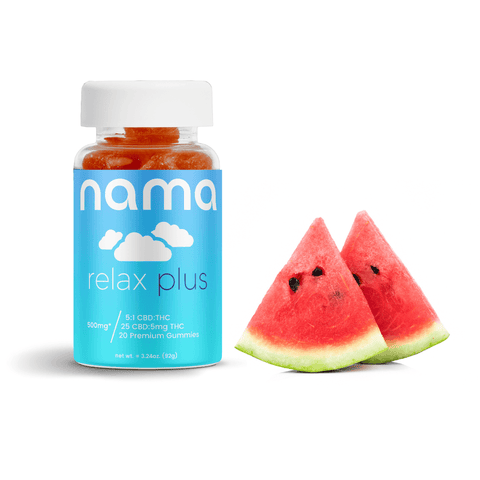
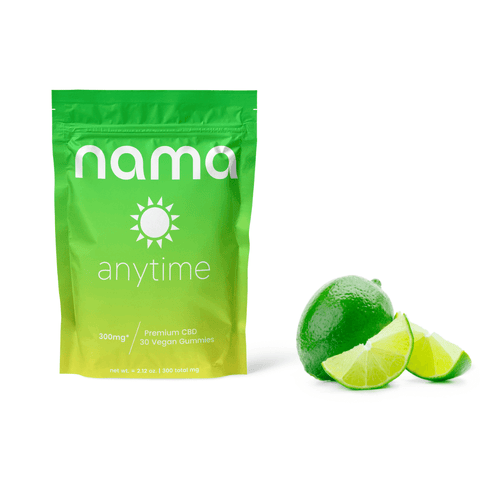
Low-dose options like Relax Plus gummies or zero-THC Anytime broad-spectrum CBD gummies are built around predictable, repeatable doses. Any decision involving a person with dementia belongs with their doctor.

Weed for sundowning FAQ

Direct evidence for CBD and sundowning is limited. Most dementia-agitation research has used synthetic cannabinoids like nabilone and dronabinol rather than CBD, and retail CBD products vary widely in actual content. CBD is non-intoxicating and generally well tolerated, but it can interact with other medications, so a doctor should review it first.

No product can be called best, because the research does not support naming one, and the compounds with the strongest evidence are prescription synthetic cannabinoids rather than retail items. For a person with dementia, the appropriate choice depends on their diagnosis, other medications, and a clinician's judgment rather than a product label.

Cannabis can deepen the symptoms it is meant to ease. THC can cause confusion, dizziness, anxiety, and over-sedation in older adults, and any of these can intensify evening agitation or raise fall risk. Starting low, under medical supervision, and tracking the response closely reduces that chance.

Sleep effects are inconsistent and not well studied for dementia specifically. Some cannabinoids influence sleep-wake patterns, but THC can also fragment sleep or cause next-day grogginess, and sundowning involves more than insomnia. Non-drug sleep measures and a medical review come first.

Read about microdosing THC for sleep.

Top Sellers

New? Start with our Ultimate Sampler!
Buzz Packs™ [THC and CBD Powder Drink Mix]
On Sale from $29.95
Buzz Packs™ [THC and CBD Powder Drink Mix]

5mg THC | 5mg CBD (per pack)

Save up to $50.00 THC
Buzz Drops™ [THC Drink Drops]
On Sale from $27.95
Buzz Drops™ [THC Drink Drops]

2.5mg THC | 2.5mg CBD (per dropper full)

Save up to $41.05 THC
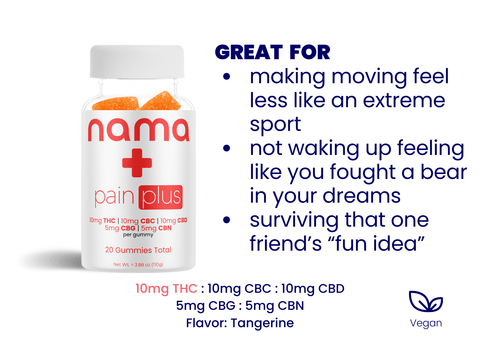
Pain Plus Gummies | THC, CBD, CBG, CBC, CBN
From $49.00
Pain Plus Gummies | THC, CBD, CBG, CBC, CBN

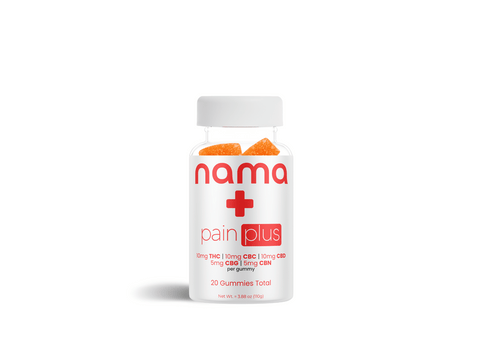
10mg THC | 10mg CBD | 10mg CBC | 5mg CBG | 5mg CBN (per gummy)

THC
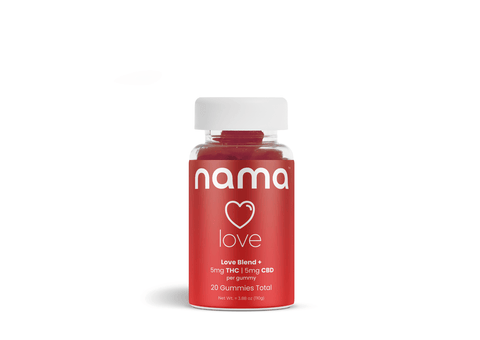
Love | Libido Boosting Gummies With CBD and THC
From $44.00
Love | Libido Boosting Gummies With CBD and THC

5mg THC | 5mg CBD (per gummy)

THC
The Ultimate nama Gummy Sampler
Save $4.05 THC

Further reading

Microdosing edibles for Alzheimer's

Microdosing THC for Parkinson's disease

How to use CBD for dementia

CBD for sleep in the elderly population

CBD for stress and anxiety

Resources

Bahji, A., Breward, N., Duff, W., Absher, N., Patten, S. B., Alcorn, J., & Mousseau, D. D. (2022). Cannabinoids in the management of behavioral, psychological, and motor symptoms of neurocognitive disorders: a mixed studies systematic review. Journal of Cannabis Research, 4(11). https://doi.org/10.1186/s42238-022-00119-y 

Herrmann, N., Ruthirakuhan, M., Gallagher, D., Verhoeff, N. P. L. G., Kiss, A., Black, S. E., & Lanctôt, K. L. (2019). Randomized placebo-controlled trial of nabilone for agitation in Alzheimer's disease. The American Journal of Geriatric Psychiatry, 27(11), 1161–1173. https://doi.org/10.1016/j.jagp.2019.05.002 

Pan, T. J., Wang, H. J., Herrmann, N., Ruthirakuhan, M., Gallagher, D., Verhoeff, N. P. L. G., Kiss, A., Black, S. E., & Lanctôt, K. L. (2025). The effect of nabilone on neuropsychiatric symptoms in Alzheimer's disease: a secondary analysis. Alzheimer's & Dementia (exploratory secondary analysis). https://doi.org/10.1002/alz70857_105775 

Rosenberg, P. B., Amjad, H., Burhanullah, H., et al. (2025). A randomized controlled trial of the safety and efficacy of dronabinol for agitation in Alzheimer's disease. The American Journal of Geriatric Psychiatry. Advance online publication. PMID: 41350162. https://pubmed.ncbi.nlm.nih.gov/41350162/ 

Velayudhan, L., Pisani, S., Dugonjic, M., McGoohan, K., & Bhattacharyya, S. (2024). Adverse events caused by cannabinoids in middle aged and older adults for all indications: a meta-analysis of incidence rate difference. Age and Ageing, 53(11), afae261. https://doi.org/10.1093/ageing/afae261 

Alzheimer's Association. Sleep issues and sundowning. https://www.alz.org/help-support/caregiving/stages-behaviors/sleep-issues-sundowning 

More articles

Comments (0)

There are no comments for this article. Be the first one to leave a message!

Leave a comment

Please note: comments must be approved before they are published