Microdosing cannabis for dementia symptoms

Feb 20, 2026The nama Team

Early clinical trials show that low-dose THC and CBD may reduce agitation and improve quality of life for people with dementia without the harsh side effects of pharmaceutical drugs. The results aren't definitive, but they're promising enough that major research institutions are running larger trials.

Microdosing cannabis may reduce agitation and other symptoms of dementia. Learn how THC and CBD interact with the brain to ease dementia complications.

Precisely dosed THC and CBD products make it easy for dementia patients to explore the potential benefits of cannabis with consistency and control.

Buzz Drops™ [THC Drink Drops]
On Sale from $27.95
Buzz Drops™ [THC Drink Drops]

THC: 2.5 mg | CBD: 2.5 mg (per serving)

Save up to $41.05 THC
Buzz Packs™ [THC and CBD Powder Drink Mix]
On Sale from $29.95
Buzz Packs™ [THC and CBD Powder Drink Mix]

THC: 5 mg | CBD: 5 mg (per serving)

Save up to $50.00 THC

Why are researchers studying cannabinoids for dementia?

The endocannabinoid system regulates mood, anxiety, appetite, and sleep. These functions are typically disrupted by dementia. 

CB1 receptors cluster in the hippocampus (memory), amygdala (emotion), and prefrontal cortex (behavior), the brain regions worst affected by Alzheimer's. CB2 receptors are primarily located on immune cells, including the brain's microglia, where they affect inflammation.

Cannabinoids may help dementia patients through several mechanisms:

  • Neuroinflammation reduction: Chronic brain inflammation accelerates dementia, and cannabinoids demonstrate anti-inflammatory effects in the nervous system.
  • Anxiety relief: Both THC (at low doses) and CBD show anti-anxiety properties that may calm fear-based agitation.
  • Appetite stimulation: THC's effect on hunger signals helps patients who refuse food when agitated.
  • Sleep regulation: Cannabinoids may stabilize sleep-wake cycles disrupted by dementia.

Cannabis and dementia research

Clinical trials testing cannabinoids for dementia-related agitation have produced encouraging results, though researchers stress the need for larger studies.

THC shows promise for dementia-related agitation

Synthetic THC compounds have demonstrated roughly 30% reductions in agitation among Alzheimer's patients. A 2019 randomized, double-blind trial gave participants 1–2 mg of Nabilone twice daily and found significant improvements in patient behavior and caregiver stress levels. Dronabinol, another synthetic THC, produced similar results in a separate randomized trial.

Researchers chose synthetic formulations for their exact dosing and consistent potency. “The goal is precision medicine," the Nabilone research team noted. "We may one day use biomarkers and clinical factors to predict which patients will respond best."

Low-dose THC binds to cannabinoid receptors in the brain to calm agitation without causing sedation or cognitive decline. It also stimulates appetite, which is helpful for patients who refuse food when distressed.

Learn more about the benefits of THC for dementia.

CBD research for dementia

A study using CBD-rich oil found that over 94% of patients experienced a 30% or greater drop in agitation. Caregiver distress also fell substantially, which matters because burnout is a leading reason families seek institutional care.

Unlike THC, CBD doesn't cause intoxication. It indirectly affects the endocannabinoid system to produce anti-inflammatory and anti-anxiety effects.

Read about the benefits of CBD for inflammation.

Taking THC and CBD together for dementia

Pairing both cannabinoids may offer additional benefits for dementia patients. CBD appears to soften THC's psychoactive effects while adding its own therapeutic value.

A Geneva pilot study tested this combination in patients with severe dementia. Both agitation and motor rigidity improved, which suggests cannabinoids can address multiple symptoms at once. 

Georgetown University is now running a multi-site trial of CBD and THC treatment for end-of-life agitation in dementia patients. They are hoping for an effective, gentler alternative to morphine that doesn't carry respiratory depression risks.

CBN for dementia relief

There is no human research on CBN for dementia, but animal research shows promise. A recent study found that CBN improves learning and memory in aging mice, with the benefits being strongest in females. Researchers traced the effect to mitochondria, the energy factories inside cells that break down as dementia progresses. CBN kept these structures healthy and functioning.

Mitochondrial dysfunction is central to Alzheimer's disease. When mitochondria fail, brain cells lose energy and die. CBN appears to protect them directly, without activating the receptors that make THC psychoactive, so it won't get anyone high.

What cannabis dose should I take for dementia?

Microdosed cannabis for dementia patients maximizes potential benefits while minimizing the risks that make regular cannabis use inappropriate for this population.

Higher THC doses cause confusion, disorientation, and anxiety. In someone already experiencing cognitive impairment, these effects would compound existing problems rather than solve them. But at low doses, THC may calm agitation and stimulate appetite without producing intoxication.

The clinical trials showing positive results all used precisely controlled doses. The Nabilone study used 1–2 mg twice daily. The dronabinol trial that achieved 30% agitation reduction used similarly controlled amounts. Researchers emphasize standardized formulations, not the variable potency found in many recreational products.

Dementia patients who microdose benefit from:

  • Predictable effects: Consistent low doses produce consistent responses, so symptom management is easier for caregivers.
  • Reduced adverse effect risk: Low doses are far less likely to trigger confusion, paranoia, or falls.
  • Easier titration: Caregivers can start with the smallest effective dose and adjust gradually.
  • CBD synergy: Combining low-dose THC with CBD may enhance calming effects while reducing psychoactive impact.

How should caregivers approach cannabinoid therapy?

  • Consult the medical team first. Discuss cannabinoids with your loved one's physician before trying anything. They can review current medications for interactions, assess individual risk factors, and help monitor response.
  • Choose precisely dosed products. Clinical trials use standardized formulations for good reason. Products with clearly labeled cannabinoid content (in milligrams per serving) allow predictable effects and easier dose adjustment. Avoid products with vague labeling or inconsistent potency. Third-party tested products verify that labels match contents.
  • Start low, go slow. Begin with the lowest available dose, often 1–2.5 mg of THC, and wait several days before increasing. Edibles take 1–2 hours to reach full effect. Track time of dosing, observed behaviors, appetite changes, and sleep quality.
  • Watch for adverse effects. Increased confusion, excessive sedation, worsening agitation, or food refusal could signal that the dose is too high or that cannabinoids aren't appropriate. Report concerns to the healthcare team immediately.
  • Set realistic expectations. Cannabinoids may help manage symptoms but won't cure or reverse dementia. The goal is reducing distress, supporting appetite, and improving sleep, not stopping disease progression.

Product QUIZ

Need help deciding what product is best for you? Take our quiz, just three questions until your perfect match!

Microdosed cannabis edibles for dementia patients

Researchers use microdosed cannabis to treat dementia patients because it can be precisely dosed. If you’re interested in trying cannabis for dementia, edibles are the gentlest and most consistent consumption method.

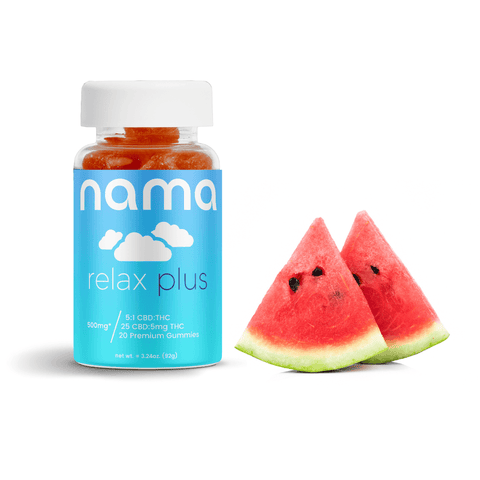
Relax Plus gummies contain 5 mg of THC and 25 mg of CBD per gummy. A high CBD content buffers THC's psychoactive effects and contributes anti-inflammatory and anti-anxiety benefits.

Each batch is third-party tested, so the label always matches the contents. Our gummies are vegan, gluten-free, and made without artificial additives.

Start with half a gummy (2.5 mg THC, 12.5 mg CBD) and observe the response over several hours. If that's well tolerated, you have a clear baseline to work from.

Work with your healthcare provider before trying any cannabinoid product. They can review current medications for interactions and help monitor for adverse effects. But when you're ready to explore cannabis, precision-dosed CBD and THC edibles offer medical-grade control.

Cannabis and dementia FAQ

At high doses, THC causes confusion and disorientation that would compound dementia challenges. At low doses, research shows reduced agitation, improved appetite, and better sleep without cognitive worsening.

Oral cannabis products typically take 45–90 minutes to begin working, with peak effects at 2–3 hours. The effects last for around 4–8 hours. Caregivers shouldn't increase the dose before waiting at least 4 hours to assess full response. Some water-soluble formulations act within 15–30 minutes, though these are less studied in dementia populations.

Read more about taking edibles for Alzheimer's.

Cannabinoids can interact with certain medications, including blood thinners and drugs metabolized by the liver's CYP450 system. Common dementia medications like donepezil (Aricept) or memantine (Namenda) don't have well-documented cannabinoid interactions, but individual responses vary. A pharmacist or physician should review the medication list before starting cannabinoid therapy.

Hemp-derived cannabinoid products containing less than 0.3% THC by dry weight are federally legal under the 2018 Farm Bill. Medical cannabis laws vary by state. 

Cannabis isn't FDA-approved as a dementia treatment, though synthetic cannabinoids nabilone and dronabinol are approved medications for other conditions. Check your state's regulations and consult healthcare providers about legal access options.

This information was accurate when published, but regulations change frequently.

Oral products with precise dosing, such as gummies, oils, and THC drinks, are most appropriate. They provide consistent doses, don't require inhalation, and produce effects lasting 2–8 hours. Smoking and vaping aren't recommended due to respiratory concerns and unpredictable dosing. High-dose products (10+ mg THC per serving) should be avoided entirely.

Top Sellers

New? Start with our Ultimate Sampler!
Buzz Packs™ [THC and CBD Powder Drink Mix]
On Sale from $29.95
Buzz Packs™ [THC and CBD Powder Drink Mix]

THC: 5 mg | CBD: 5 mg (per serving)

Save up to $50.00 THC
Buzz Drops™ [THC Drink Drops]
On Sale from $27.95
Buzz Drops™ [THC Drink Drops]

THC: 2.5 mg | CBD: 2.5 mg (per serving)

Save up to $41.05 THC
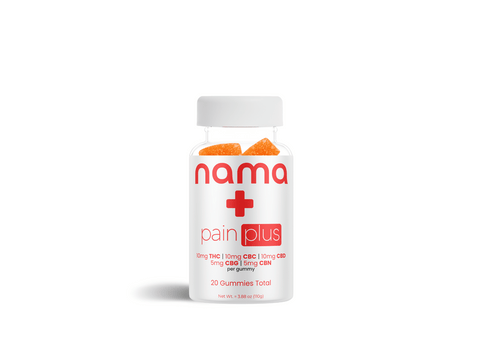
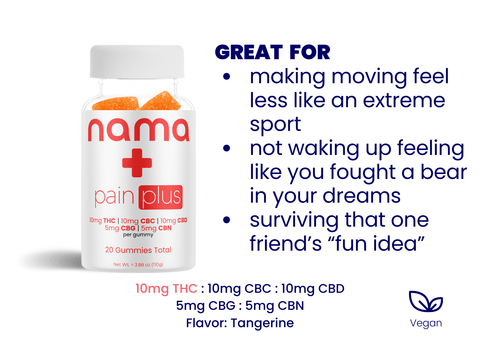
Pain Plus Gummies | THC, CBD, CBG, CBC, and CBN
From $49.00
Pain Plus Gummies | THC, CBD, CBG, CBC, and CBN

THC: 10 mg | CBC: 10 mg | CBD: 10 mg | CBG: 5 mg | CBN 5mg

THC
Love | Libido Boosting Gummies With CBD and THC
From $44.00
Love | Libido Boosting Gummies With CBD and THC

THC: 5 mg | CBD: 5 mg

THC
The Ultimate nama Gummy Sampler
Save $4.05 THC

Resources

Herrmann, N., Ruthirakuhan, M., Gallagher, D., Verhoeff, N. P. L. G., Kiss, A., Black, S. E., & Lanctôt, K. L. (2019). Randomized Placebo-Controlled Trial of Nabilone for Agitation in Alzheimer's Disease. The American journal of geriatric psychiatry : official journal of the American Association for Geriatric Psychiatry, 27(11), 1161–1173. https://doi.org/10.1016/j.jagp.2019.05.002

Rosenberg, P. B., Amjad, H., Burhanullah, H., Nowrangi, M., Vandrey, R., Pierre, M. J., Outen, J. D., Schultz, M., Marano, C., Agronin, M., Wilkins, J. M., Harper, D., Laffaye, T., Reardon, E., Turner, K., Ozonsi, R., Drury, M., Nguyen, A., Hasoğlu, T., . . . Forester, B. P. (2025). A randomized controlled trial of the safety and efficacy of dronabinol for agitation in Alzheimer’s disease. American Journal of Geriatric Psychiatry, 34(2), 167–179. https://doi.org/10.1016/j.jagp.2025.10.011

Navarro, C. E., & Pérez, J. C. (2024). Treatment of Neuropsychiatric Symptoms in Alzheimer's Disease with a Cannabis-Based Magistral Formulation: An Open-Label Prospective Cohort Study. Medical cannabis and cannabinoids, 7(1), 160–170. https://doi.org/10.1159/000541364

Broers, B., Patà, Z., Mina, A., Wampfler, J., de Saussure, C., & Pautex, S. (2019). Prescription of a THC/CBD-Based Medication to Patients with Dementia: A Pilot Study in Geneva. Medical cannabis and cannabinoids, 2(1), 56–59. https://doi.org/10.1159/000498924

Skr. (2024, July 23). Georgetown Study explores THC/CBD combination to reduce dementia-related agitation at the end of Life - Georgetown University Medical Center. Georgetown University Medical Center. https://gumc.georgetown.edu/news-release/georgetown-study-explores-thc-cbd-combination-to-reduce-dementia-related-agitation-at-the-end-of-life/

Dar, N. J., Currais, A., Taguchi, T., Andrews, N., & Maher, P. (2025). Cannabinol (CBN) alleviates age-related cognitive decline by improving synaptic and mitochondrial health. Redox Biology, 84, 103692. https://doi.org/10.1016/j.redox.2025.103692 

Further reading

Can I take Delta 8 for dementia?

How much CBD should you take for dementia

Can microdosing edibles improve memory?

Does CBD alleviate stress and anxiety?

The benefits of microdosing THC for inflammation

nama CBD FDA & legal disclaimer

Our cannabis products are not intended to diagnose, treat, cure, or prevent any disease. They are not a replacement for prescription medications and have not been evaluated by the Food and Drug Administration (FDA).

The information provided on this website does not and is not intended to constitute legal advice or any statements of the status of any laws. Any information, content, and materials available on this site are for general informational purposes only and are not intended to be relied upon for any purpose.

Readers of this website should contact their attorney to obtain advice concerning any particular legal matter, including decisions on what products are, or are not, legal to sell, possess, or consume. No reader, user, or browser of this site should act or refrain from acting based on information on this site without first seeking legal advice from their counsel in the relevant jurisdiction.

Only your attorney can provide assurances that the information contained herein—and your interpretation of it—is applicable or accurate for your particular situation. Use of, and access to, this website or any of the links or resources contained within the site do not create an attorney-client relationship between the reader, user, or browser, and website authors, contributors, contributing law firms, or committee members and their respective employers.

More articles

Comments (0)

There are no comments for this article. Be the first one to leave a message!

Leave a comment

Please note: comments must be approved before they are published