The best weed for anxiety is usually high in CBD and low in THC. Strains like ACDC, Harlequin, and Cannatonic are often mentioned in clinical research and user conversations, because CBD buffers the anxiety-amplifying properties of THC. And indicas and hybrids are generally more calming than sativas.
But strain names only take you so far. Two batches of the same strain can have different cannabinoid profiles depending on the grower and the harvest. The cannabinoid ratio, terpene profile, dose, and consumption method determine whether you’re vibing out or shifting in your seat.
If you want a predictable, repeatable experience that calms you down, try nama Relax edibles and enjoy precision dosing in every gummy.
Best CBD:THC ratios for anxiety
Strain names are marketing shorthand. A Harlequin strain from one dispensary might test at 8% CBD and 4% THC. From another, it could be 12% CBD and 6% THC. The ratio stays similar, but the dose doesn't.
A 2024 randomized study published in Cannabis and Cannabinoid Research compared three market forms across 300 people with anxiety symptoms:
- THC-dominant (24% THC)
- Balanced THC+CBD (12/12%)
- CBD-dominant (<1% THC, 24% CBD).
CBD-dominant users scored significantly lower on anxiety measures than THC-dominant users, with a difference of −1.03 on the DASS anxiety subscale (p=0.02). For anxiety, Type II and Type III are almost always the better starting point.
How do THC and CBD affect anxiety?
THC binds to CB1 receptors in the brain. CB1 receptors modulate activity across stress-response circuits. At low doses, THC can produce a sense of calm. A 2020 review in Dialogues in Clinical Neuroscience explains how the endocannabinoid system regulates fear, anxiety, and stress responses across the limbic system and prefrontal cortex (the same circuits that anxiety disorders disrupt).
CBD works through a different pathway. Rather than binding strongly to CB1 receptors, it activates 5-HT1A serotonin receptors (the receptors targeted by anti-anxiety medications). A 2024 systematic review and meta-analysis covering 316 participants across 8 randomized controlled trials found a substantial effect size for CBD on anxiety. When CBD and THC are both present, CBD also appears to soften THC's psychoactive edges (via the entourage effect), which is why balanced and CBD-dominant strains tend to produce calmer experiences than THC-dominant strains.
Why high-THC strains make anxiety worse
THC has a biphasic relationship with anxiety: low doses tend to reduce it, while higher doses trigger or amplify it. A 2022 review in PMC found that THC administration can have anxiogenic effects (increased anxiety), particularly at high doses or in users with low tolerance. This is a consistent pattern across multiple studies and a large body of user experience.
At low doses, THC dials down glutamatergic (excitatory) signaling in the brain, reducing the mental noise that feeds anxiety. At higher doses, it affects GABAergic (inhibitory) neurons too much, disrupting the brain's balance and pushing some users into racing thoughts, heightened self-consciousness, or paranoia. This is also why the same strain can feel relaxing in one session and uncomfortable in another.
Best high-CBD strains for anxiety
These strains have minimal THC (typically under 1%) and high CBD. They produce little to no psychoactive effect, which makes them the safest starting point for anxiety-prone users, people new to cannabis, and anyone who can't afford to feel impaired.
ACDC
Cannabinoid ratio: ~20:1 CBD:THC
One of the most consistently recommended high-CBD strains in clinical and consumer contexts. Users describe feeling relaxed and clear-headed without any high. CBD levels often test above 14%, with THC rarely exceeding 1%.
Remedy
Cannabinoid ratio: ~14:1 CBD:THC
Bred for minimal psychoactivity. Its lemon-pine profile comes from a terpene composition that leans calming, and user reviews consistently mention reduced anxiety without sedation.
Charlotte's Web
Cannabinoid ratio: ~13:1 CBD:THC
One of the best-known hemp-derived high-CBD profiles. It's often added to wellness products and tends to produce a functional, non-intoxicating calm that works well during the day.
Cherry Wine
Cannabinoid ratio: ~25:1 CBD:THC
A 13:1 CBD:THC ratio and a flavor profile users describe as smooth and mellow. It's reported to relax muscles and quiet mental noise without impairment.
Ringo's Gift
Cannabinoid ratio: 13:1 to 20:1 CBD:THC
A cross of ACDC and Harle-Tsu. It tests high in CBD and low in THC, and users consistently report reduced anxiety and improved sleep without a significant psychoactive effect. Learn more about hybrid weed for anxiety.
Harle-Tsu
Cannabinoid ratio: ~24:1 CBD:THC
Best CBD Flower at the 2014 Emerald Cup with lab results showing 21.05% CBD and 0.86% THC. Its reputation for reducing anxiety while improving mood and focus has held up over the years.
Elektra Sour Space Candy
Cannabinoid ratio: Elektra (~16:1 CBD:THC; and Sour Space Candy (~17:1 CBD:THC)
Hemp-derived options with calming reputations and low paranoia risk.
Best balanced weed strains for anxiety
Balanced strains contain meaningful amounts of CBD and THC, typically in ratios between 1:1 and 5:2 CBD:THC. They produce mild psychoactive effects, but the CBD buffers the THC enough that anxiety spikes are less likely than with high-THC strains. These are better suited to experienced users or people who tolerate low-dose THC well.
Harlequin
Cannabinoid ratio: 5:2 CBD:THC
Gentle euphoria alongside a calming body effect. The CBD content keeps the THC from running away with the experience. Users describe it as focused and social-ready. Think anxiety without sedation.
Cannatonic
Cannabinoid ratio: 1:1 to 6:1 CBD:THC
Originally bred for medical use. It calms and improves focus, and its terpene profile (heavy on myrcene and pinene) contributes to its calming reputation.
Canna-Tsu
Cannabinoid ratio: 1:1 to 2:1 CBD:THC
A cross of Cannatonic and Sour Tsunami. Some users report 4+ hours of anxiety reduction with improved social ease and a calming physical sensation.
Sour Tsunami
Cannabinoid ratio: 1:1 to 13:1 CBD:THC, depending on phenotype
One of the first high-CBD strains bred for medicinal use. Its balanced phenotypes improve mental clarity and calm for daytime use.
Product QUIZ
Need help deciding what product is best for you? Take our quiz, just three questions until your perfect match!
Best weed strains for specific anxiety types
Some strains have a reputation for improving specific anxiety conditions.
Best weed for social anxiety
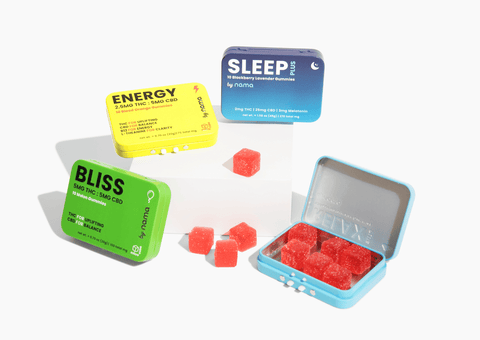
Balanced strains with a 1:1 or 5:2 CBD:THC ratio tend to work better than high-THC sativas for social settings. Research published in Brain Sciences (2024) found that 42% of people with social anxiety disorder used cannabis as a coping mechanism, with long-term retention suggesting perceived benefit. Harlequin and Canna-Tsu are the most consistently mentioned for this use case. For a smoke-free option that fits this profile, try Bliss gummies (5 mg THC + 5 mg CBD).
Best weed for nighttime anxiety and sleep disruption
Indica-leaning strains with sedating terpene profiles are better than balanced options for nighttime anxiety. Granddaddy Purple (indica-dominant, high myrcene) and Northern Lights (pure indica) are the most commonly cited. Both produce physical relaxation that quiets racing thoughts and reduces sleep latency.
Best weed for racing and intrusive thoughts
Clinical cannabis communities and online forums consistently prefer balanced 1:1 strains over pure THC for racing thoughts. The CBD component reduces the ruminative amplification that high-THC strains cause. Cannatonic and Canna-Tsu are the most commonly recommended for this use case.
Best weed for general daytime anxiety
High-CBD options like ACDC and Remedy are the safest choice for keeping anxiety low without impairment. For a THC-free edible equivalent, Anytime broad-spectrum CBD gummies (10 mg CBD, zero THC) give you daytime calm without intoxication. If you're new to microdosing THC and CBD, starting with a CBD-dominant ratio gives you the most control over the experience.
Strains to avoid if you get anxious
High-THC sativas are the most consistent trigger for cannabis-induced anxiety. Their stimulating, cerebral effects can amplify racing thoughts rather than quieting them. Green Crack, Sour Diesel, Trainwreck, Super Silver Haze, and Jack Herer all have high THC percentages and terpene profiles dominated by terpinolene (a compound associated with a racier, more stimulating experience).
The general rule is that if a strain is above 15% THC and low in CBD, approach with caution or avoid. If it's haze-dominant, skip it until you understand your tolerance.
How do terpenes affect anxiety?
Terpenes are the aromatic compounds that give cannabis strains their smells and flavors. They also interact with cannabinoids in ways that modify how a strain hits, another aspect of the entourage effect. A foundational 2020 review in Current Neuropharmacology concluded that terpene-rich, full-spectrum formulations may outperform CBD isolates for anxiety and mood disorders because of these interactions.
Research and user experience consistently mention these four anxiety-fighting terpenes:
- Linalool: The same compound that makes lavender calming. Found in high-CBD strains and associated with reduced nervous system excitability.
- Myrcene: Common in indica-leaning strains. Associated with sedation and physical relaxation.
- Beta-caryophyllene: Activates CB2 receptors (the only terpene known to interact with the endocannabinoid system this way). Found in earthy, peppery strains.
- Limonene: A citrus-forward terpene that may counteract THC-induced anxiety. A 2024 Johns Hopkins double-blind crossover study found that d-limonene dose-dependently reduced THC-induced anxiety and paranoia in healthy adults without altering other THC effects. This is the first clinical evidence for a terpene-mediated entourage effect in humans.
When choosing a strain for anxiety, look for products with lab-reported terpene profiles showing linalool, myrcene, beta-caryophyllene, or limonene. Avoid terpinolene-dominant profiles if you're anxiety-prone.
Edibles vs. smoking vs. vaping for anxiety
Your cannabis consumption method affects onset, duration, and controllability.
- Smoking produces effects within minutes, but dose control is nearly impossible. A joint or bowl delivers varying quantities of THC and CBD depending on the strain's lab results, how much you consumed, and how deeply you inhaled. For anxiety-prone users, that unpredictability can be a trigger. Plus, inhalation irritates the lungs, which might affect breathing and heart rate.
- Vaping is better than smoking since temperature-controlled devices allow slightly more experience modulation, and onset is fast at 5–15 minutes. But the dose problem doesn't go away. You're still working from an unknown per-puff quantity, still dependent on batch-to-batch variation in the cartridge, and still guessing at how much cannabinoid you actually consumed.
- Edibles solve the problems of smoking and vaping. The dose on the label is exact, the same gummy delivers the same cannabinoid load every time, and the CBD:THC ratio you chose is the ratio you're getting. Hemp-derived edibles with verified cannabinoid content let you build a repeatable protocol in a way that smoking and vaping can’t.
For consistent, repeatable calming experiences, microdose edibles to find your calm. Whichever method you choose, start with a low dose and find your sweet spot through experimentation. Only redose after the activation period of your chosen consumption method (e.g. wait at least 90 minutes before redosing with edibles).
Best nama products for measured, smoke-free calm
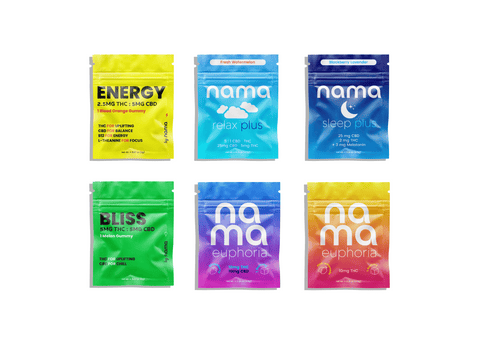
nama hemp-derived edibles let you access that same profile in a precisely dosed, smoke-free format.
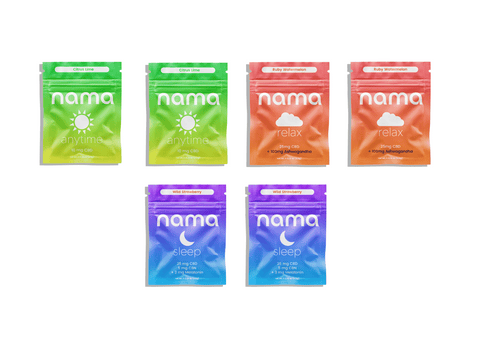
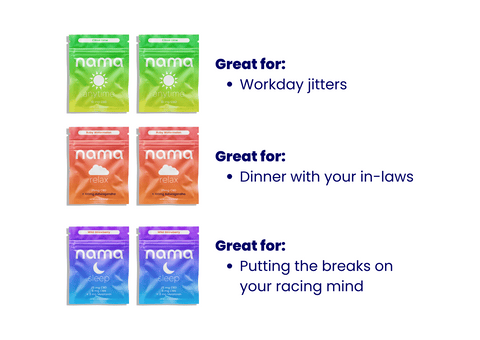
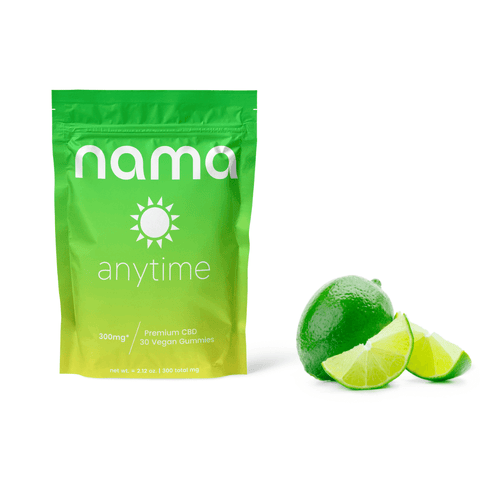
- For the high-CBD, low-THC profile (ACDC / Remedy / Charlotte's Web equivalent), Anytime broad-spectrum CBD gummies contain 10mg CBD and zero THC per gummy. Users find them calming, non-intoxicating, and suitable for daytime use without impairment.
- For stronger CBD support with adaptogens, Relax gummies pair 25mg CBD with 100mg ashwagandha per gummy, targeting the cortisol and stress response pathways that anxiety disrupts.
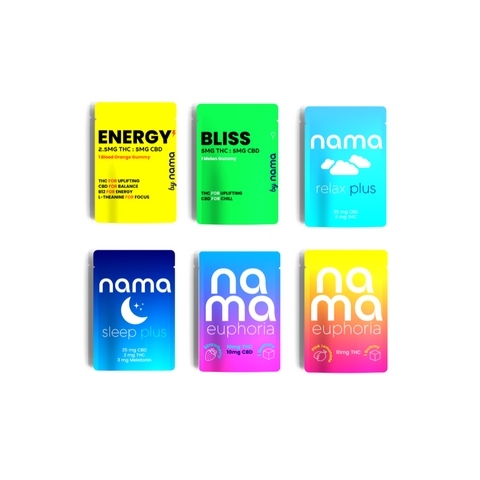
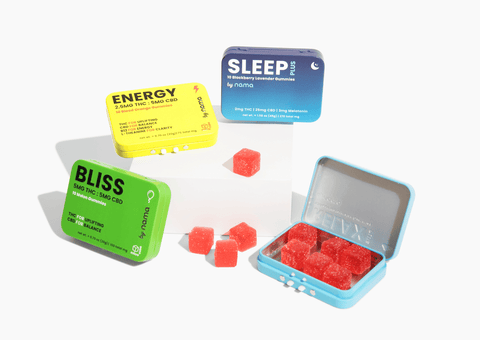
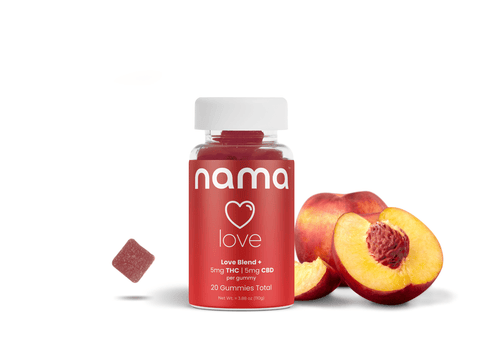
- For the balanced CBD:THC profile (Harlequin / Canna-Tsu equivalent), Bliss gummies deliver 5mg THC and 5mg CBD per gummy for a mild mood lift and enough CBD to keep the THC in check.
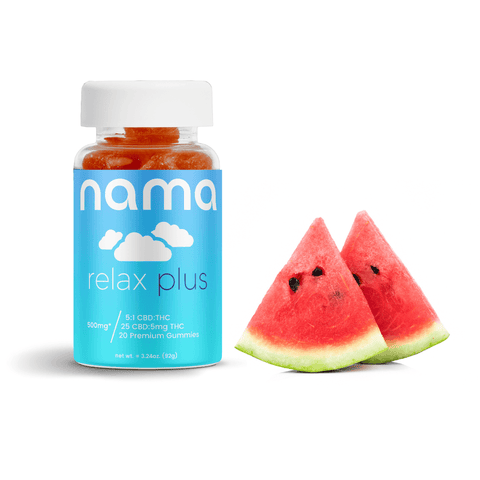
- For a high CBD ratio, Relax Plus gummies contain CBD: 5mg THC and 25mg CBD per gummy. The 5:1 CBD:THC ratio produces similar effects to Harlequin and Canna-Tsu.
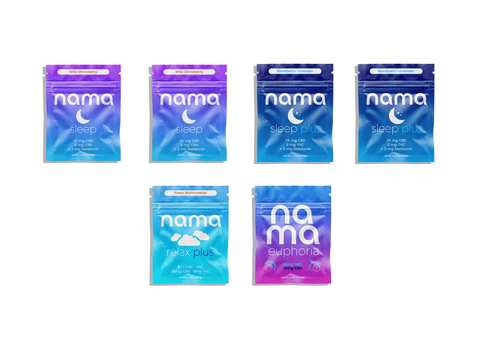
- For nighttime anxiety and sleep disruption, Sleep Plus gummies combine 25mg CBD, 2mg Delta-9 THC, and 3mg melatonin to relax anxious minds and encourage sleep onset without heavy sedation. If you’re looking to go deeper, try Extra Strength Sleep Drops (100mg CBD, 2.5mg THC, plus CBG, CBC, CBDa, and CBDV per serving).
Not sure where to start?
The Ultimate nama Sampler lets you try all of our gummy formulations before committing to a full bottle.
Weed for anxiety relief FAQ
CBD-dominant ratios, 10:1, 13:1, 20:1, have the most established calming effects. Balanced ratios (2:1 or 1:1) are also effective (particularly for social anxiety or mild daytime use) for those who understand their THC tolerance. Ratios below 1:1 (more THC than CBD) can cause or enhance anxiety.
2.5–5 mg is a well-established starting point for cannabis newbies. Many people find that 2.5 mg THC paired with at least an equal (or greater) amount of CBD brings on the calm. There is no universal correct dose; start low, wait the full onset window, and increase incrementally.
A 2024 systematic review of 11 RCTs found that CBD may reduce anxiety with minimal adverse effects compared to placebo, though results varied by dose and disorder type. A Phase 3 trial found CBD improved GAD-7 and HAM-A anxiety scores over 15 weeks. While emerging evidence is promising, CBD should not replace professional mental health treatment. It works best as part of a broader approach to managing anxiety. Learn more about the best gummies for anxiety.
CBD is the most studied cannabinoid for anxiety, but it's not the only one worth knowing. CBG (cannabigerol) interacts with both CB1 and CB2 receptors and has shown anxiolytic potential in preclinical research, with a profile that is closer to an antidepressant than a sedative. CBN (cannabinol) doesn't target anxiety directly, but its mild sedating properties may reduce nighttime anxiety and sleep disruption. See CBN for anxiety for a deeper look. Low-dose THC can also reduce anxiety when paired with an equal or greater ratio of CBD. Avoid THC-dominant strains for anxiety relief.
No plant or supplement has clinical approval as an anxiety treatment. CBD has the strongest human trial data in the natural category. A 2024 meta-analysis of eight RCTs found a substantial effect size for CBD on anxiety symptoms. Ashwagandha, an adaptogen that reduces cortisol and modulates the HPA axis, is another well-studied option.
nama's Relax gummies combine 25 mg CBD with 100 mg ashwagandha per gummy for a stacked approach. Our gummies don’t replace therapy or medication for clinical anxiety disorders, but they can help your day-to-day get a little more relaxing.
Herbal teas with linalool-rich botanicals (lavender, chamomile) have a history of mild anxiolytic effects.
For something with more clinical backing, try low-dose THC drinks. Their water-soluble formulation absorbs in 10–20 minutes and gives you dose control that tea can't. nama's Buzz Drops contain 2.5 mg THC and 2.5 mg CBD per dropper and mix flavorlessly into any beverage.
See THC drinks vs. alcohol to learn why this format is becoming a popular solution to social and evening anxiety.
Top Sellers
New? Start with our Ultimate Sampler!
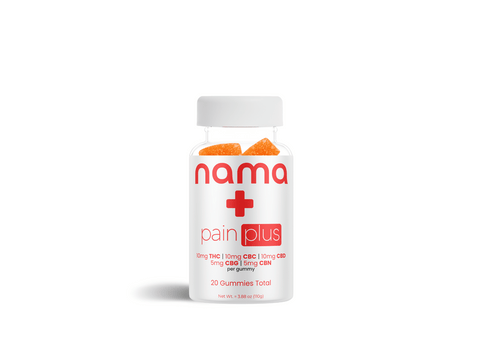
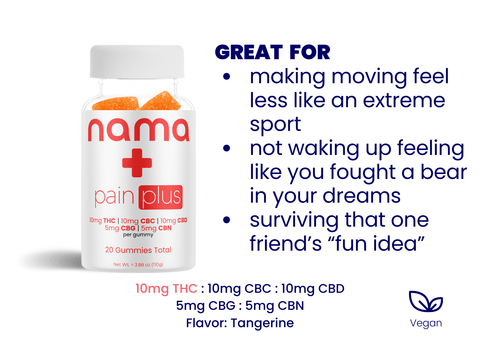
10mg THC | 10mg CBD | 10mg CBC | 5mg CBG | 5mg CBN (per gummy)
Further reading
Microdosing edibles for anxiety
Microdosing cannabis for panic attacks
Full-spectrum vs. broad-spectrum CBD for anxiety
References
Maldonado, R., et al. (2020). The endocannabinoid system in modulating fear, anxiety, and stress. Dialogues in Clinical Neuroscience, 22(3), 229–239. https://repositori-api.upf.edu/api/core/bitstreams/cd1aaf1b-b723-4461-91cd-7f54e13817ce/content
Kayser, R. R., et al. (2024). Vaporized D-limonene selectively mitigates the acute anxiogenic effects of THC. Drug and Alcohol Dependence. Johns Hopkins University. https://pure.johnshopkins.edu/en/publications/vaporized-d-limonene-selectively-mitigates-the-acute-anxiogenic-e/
Melas, P. A., et al. (2024). Acute and extended anxiolytic effects of cannabidiol in cannabis flower. Cannabis and Cannabinoid Research, Aug 2024. https://www.liebertpub.com/doi/abs/10.1089/can.2023.0187
De Aquino, J. P., et al. (2024). Therapeutic potential of CBD in anxiety disorders: a systematic review and meta-analysis. Psychiatry Research, Sep 2024. https://pubmed.ncbi.nlm.nih.gov/38924898/
Ferber, S. G., et al. (2020). The entourage effect: terpenes coupled with cannabinoids for the treatment of mood disorders and anxiety disorders. Current Neuropharmacology, 18(2), 87–96. https://pmc.ncbi.nlm.nih.gov/articles/PMC7324885/
Elsaid, S., Wang, R., Kloiber, S., Hassan, A. N., & Le Foll, B. (2024). Expectancies of the effects of cannabis use in individuals with social anxiety disorder (SAD). Brain Sciences, 14(3), 246. https://doi.org/10.3390/brainsci14030246
Turna, J., et al. (2022). THC, CBD, and anxiety: a review of recent findings. PMC/NIH. https://pmc.ncbi.nlm.nih.gov/articles/PMC10722902/
Coelho, C. de F., Vieira, R. P., Araújo-Junior, O. S., Lopes-Martins, P. S. L., dos Santos, L. G., Dias, L. D., de Sá Filho, A. S., Leonardo, P. S., Dutra e Silva, S., & Lopes-Martins, R. A. B. (2024). The impact of cannabidiol treatment on anxiety disorders: a systematic review of randomized controlled clinical trials. Life (Basel), 14(11), 1373. https://doi.org/10.3390/life14111373
Han, K., Wang, J.-Y., Wang, P.-Y., & Peng, Y.-C.-H. (2024). Therapeutic potential of cannabidiol (CBD) in anxiety disorders: a systematic review and meta-analysis. Psychiatry Research, 339, 116049. https://doi.org/10.1016/j.psychres.2024.116049
nama CBD FDA & legal disclaimer
Our cannabis products are not intended to diagnose, treat, cure, or prevent any disease. They are not a replacement for prescription medications and have not been evaluated by the Food and Drug Administration (FDA).
The information provided on this website does not and is not intended to constitute legal advice or any statements of the status of any laws. Any information, content, and materials available on this site are for general informational purposes only and are not intended to be relied upon for any purpose.
Readers of this website should contact their attorney to obtain advice concerning any particular legal matter, including decisions on what products are, or are not, legal to sell, possess, or consume. No reader, user, or browser of this site should act or refrain from acting based on information on this site without first seeking legal advice from their counsel in the relevant jurisdiction.
Only your attorney can provide assurances that the information contained herein—and your interpretation of it—is applicable or accurate for your particular situation. Use of, and access to, this website or any of the links or resources contained within the site do not create an attorney-client relationship between the reader, user, or browser, and website authors, contributors, contributing law firms, or committee members and their respective employers.

About
Learn
Join us on this journey
© Copyright 2026 nama Products LLC. All Rights Reserved.
†These statements have not been evaluated by the Food and Drug Administration. These products are not intended to diagnose, treat, cure or prevent any disease. All information presented here is not meant as a substitute for or alternative to information from health care practitioners. Please consult your health care professional about potential interactions or other possible complications before using any product.
††The information provided on this website does not, and is not intended to, constitute legal advice or any statements of the status of any laws. Any information, content, and materials available on this site are for general entertainment purposes only, and are not intended to be relied upon for any purpose.
nama: The only source for Buzz Drops™
By clicking ‘Yes,’ you agree to our
Terms & Conditions and Privacy Policy
123 John Doe Street
Your Town, YT 12345
Store Hours
Sun: Closed
Mon-Fri: 9:00 - 17:00
Sat: 10:00 - 13:00
What to expect at pickup
Closed
Closing at 5pm
Closing at 5pm
Closing at 5pm
Closing at 5pm
Closing at 5pm
Closing at 1pm

Comments (0)
There are no comments for this article. Be the first one to leave a message!