For occasional users, Delta 8 becomes undetectable in urine within about 3 days, while Delta 9 can take 3–7 days. For heavy or daily users, both types of THC can take up to 30 days or more to clear. Metabolite accumulation in fat tissue (not the THC variant) determines how long THC stays in your system.
What drives your personal clearance window is body fat percentage, how often you use cannabis, and how much THC you consume.
Key takeaways
- Delta 8 THC leaves your body faster than Delta 9 THC.
- Both THC types produce THC-COOH, the compound that triggers a positive drug test result.
- Occasional users can expect Delta 8 THC to clear their system in about 3 days, whereas Delta 9 THC takes 3–7 days to clear.
Does Delta 8 leave your system faster than Delta 9?
Delta 8 THC has an approximate half-life of around 24 hours, compared to Delta 9's longer half-life, which varies based on usage frequency but can extend to a week or more in chronic users. That means Delta 8 clears from your bloodstream more quickly after a single use.
The liver metabolizes Delta 8 and Delta 9 into THC-COOH, the compound that urine drug tests screen for. Once that metabolite accumulates in fat tissue, Delta 8’s comparatively short half-life matters much less. Your detection window is governed by how long THC-COOH lingers, not how fast the original molecule clears your blood.
Why does THC stay in your system?
THC is lipophilic (it binds to fat rather than water). After you consume Delta 8 or Delta 9, the cannabinoids enter your bloodstream and travel to the brain, where they bind to CB1 receptors in the endocannabinoid system. As THC leaves the bloodstream, it gets deposited into fat cells throughout the body rather than being flushed out quickly, the way water-soluble substances are.
From fat tissue, THC is gradually released back into the bloodstream, where the liver metabolizes it into THC-COOH. That metabolite is then filtered into the urine. A 2007 pharmacokinetics review confirms that this slow, steady release from fat storage is what creates detection windows measured in days or weeks. The more THC you've accumulated in fat tissue, the longer that release process takes.
This fat-storage mechanism is the same for Delta 8 and Delta 9. Both compounds are equally lipophilic, so frequency of use and body composition matter far more than which THC variant you consumed.
How long does Delta 8 stay in your system?
Specific human elimination data on Delta 8 is limited, but because its metabolic pathway mirrors Delta 9's, detection windows are assumed to follow a similar pattern. Based on a 2007 cannabinoid pharmacokinetics review and a 2014 urinary pharmacokinetics data, estimated clearance windows have been established.
Clearance windows are informational only.
Urine (most common test)
- Single or occasional use: up to 3 days
- Moderate use (3–4 times per week): 5–7 days
- Daily use: up to 15 days
- Heavy daily use: potentially 30 days or more
Blood
- Occasional use: 12–24 hours
- Frequent use: up to 7 days
Saliva
- Occasional use: 1–3 days
- Frequent use: up to 29 days
Hair
- Up to 90 days for any level of use (metabolites deposit into hair follicles over time)
Delta 8's shorter half-life may compress the lower end of these windows slightly for occasional users, but the upper ranges for heavy or frequent users are comparable to Delta 9.
How long does Delta 9 stay in your system?
Delta 9 has a more studied elimination profile. A 2012 study of cyclic THC-COOH concentration changes in frequent cannabis users shows that metabolite levels fluctuate daily even under abstinence, which complicates fixed clearance estimates. Desrosiers et al. provided blood and saliva detection benchmarks that inform the windows below. For occasional users, clearance is significantly faster.
Clearance windows are informational only.
Urine
- Single use: 3–4 days
- Moderate use (3–4 times per week): 7–21 days
- Daily use: up to 30 days
- Heavy daily use: 30–60 days in some cases
Blood
- Occasional use: up to 24 hours
- Frequent use: up to 7 days
Saliva
- Occasional use: 1–3 days
- Frequent use: up to 29 days
Hair
- Up to 90 days regardless of use pattern
Does Delta 8 show up on a drug test?
Yes. A 2023 study tested six major commercial urine immunoassay kits, the standard test used in workplace and clinical drug screens, and found that all six produced positive results for Delta 8 metabolites in the same way they do for Delta 9. The immunoassays cross-react with THC-COOH at approximately 87–112% reactivity regardless of which THC variant produced it.
If you've used Delta 8 recently and you take a standard urine drug test, you will very likely test positive for THC. The test won't tell anyone whether that positive came from Delta 8 or Delta 9, as it detects the metabolite, not the source.
Confirmatory testing, gas chromatography-mass spectrometry (GC-MS) or liquid chromatography-mass spectrometry (LC-MS), can technically distinguish Delta 8 from Delta 9 metabolites. But most labs don't report which variant was detected unless specifically requested, and a standard positive screen will simply read as THC.
What factors affect how long THC stays in your system?
Frequency of use
This is the biggest variable. Occasional users accumulate less THC-COOH in fat tissue than daily users, and their bodies clear it faster.
Body fat percentage
Because THC is fat-soluble, people with higher body fat percentages store more THC metabolites and release them more slowly. Huestis noted that two people with identical use patterns can have detection windows that differ by a week or more based purely on body composition. Metabolic rate compounds this, so faster metabolisms process and eliminate THC-COOH more efficiently.
Dose per use
Higher doses mean more THC entering the fat storage cycle. Microdosing THC at 2.5–5 mg keeps metabolite concentrations significantly lower than recreational doses of 25–50 mg, which may compress the lower end of the detection window for occasional users.
Method of consumption
Inhalation delivers THC to the bloodstream rapidly but also clears it faster. Edibles process through the liver first, which produces a longer-lasting effect and creates a more sustained metabolite release pattern.
Hydration and exercise
Neither reliably accelerates clearance before a test. Drinking water dilutes urine, but modern tests screen for dilution. Exercise can temporarily mobilize stored THC metabolites from fat tissue back into the bloodstream, which may actually spike urine concentrations in the short term. Neither method should be relied on as a clearance strategy.
Test type
Urine tests have the longest detection windows and are the most common. Blood and saliva tests capture recent use only, typically within 24–72 hours for occasional users. Hair tests have the longest window of all, up to 90 days, and are the least susceptible to any short-term clearance attempts.

Product QUIZ
Need help deciding what product is best for you? Take our quiz, just three questions until your perfect match!
How to lower your detection risk
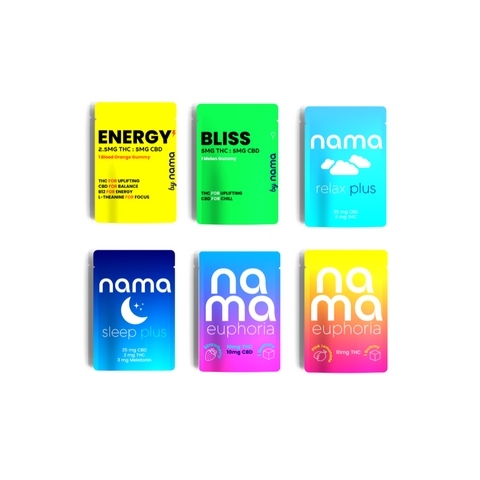
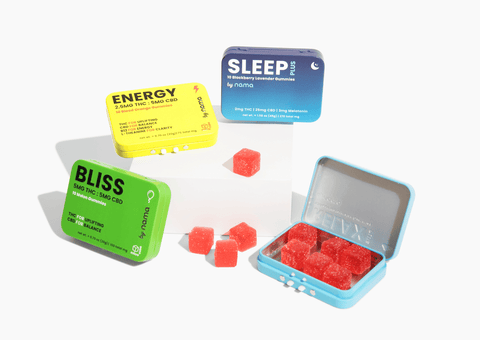
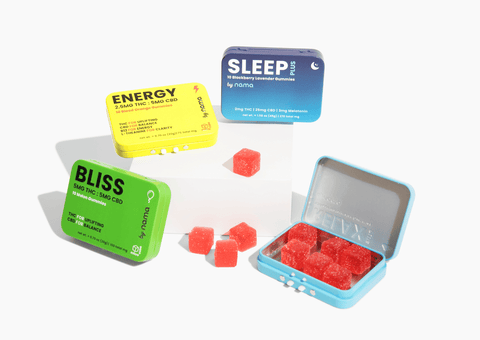
Keeping doses low reduces metabolite accumulation, which shortens the detection window for occasional users. Our Bliss gummies at 5 mg delta 9 THC and the Elevate Delta-8 gummies at 12.5 mg Delta 8 sit at the lower end of the dose spectrum, the kind of use that clears faster than high-dose or daily consumption. Microdosing reduces risk; it doesn't eliminate it. If you have an upcoming drug test, stop THC use with enough lead time.
If you don’t want to take the risk, try CBD-only products. They still provide a gentle, relaxing buzz and won’t make you fail a drug test.
Delta 8 vs Delta 9 drug test FAQ
For occasional use, Delta 8 metabolites are typically detectable in urine for up to 3 days. Variables like body fat, hydration, and individual metabolism can push that window in either direction. For a single low-dose use (5 mg or below), clearance may be faster, but no fixed timeline can be guaranteed due to individual variation.
Hemp-derived Delta 8 is federally legal under the 2018 Farm Bill, but the legality of the product doesn't affect a drug test result. Employers, athletic organizations, and courts set their own THC policies independent of federal law. A positive drug test for THC metabolites typically carries the same consequences regardless of whether the source was legal Delta 8 or marijuana-derived Delta 9.
Lower doses produce lower metabolite concentrations, which may shorten detection windows for occasional users. A single 2.5–5 mg microdose generates significantly less THC-COOH than a 25–50 mg recreational dose. That said, frequent microdosing still accumulates metabolites over time, and it's the combination of dose and frequency that determines how long the window extends.
Both THC drinks and edibles route through hepatic (liver) metabolism and produce similar metabolite accumulation patterns. The detection window is more closely tied to dose and frequency than to format. THC drinks using water-soluble cannabinoids have faster onset times, but that absorption speed doesn't meaningfully change how long metabolites persist in urine.
Top Sellers
New? Start with our Ultimate Sampler!
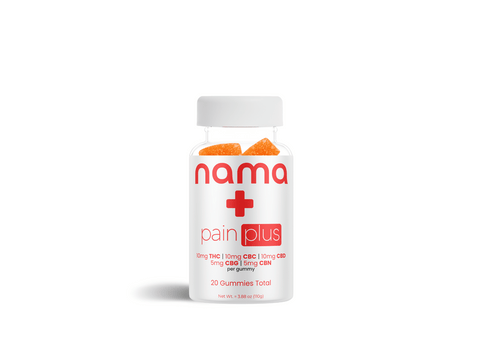
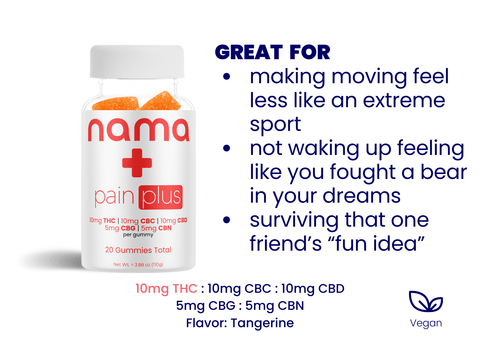
10mg THC | 10mg CBD | 10mg CBC | 5mg CBG | 5mg CBN (per gummy)
Resources
Desrosiers, N. A., et al. (2014). Urinary pharmacokinetics of tetrahydrocannabinol, cannabidiol, and cannabinol after smoked cannabis administration. Clinical Chemistry, 60(7), 1002–1009. https://doi.org/10.1373/clinchem.2014.222380
Huestis, M. A. (2007). Human cannabinoid pharmacokinetics. Chemistry & Biodiversity, 4(8), 1770–1804. https://doi.org/10.1002/cbdv.200790152
Schwope, D. M., et al. (2012). Cyclic changes in urinary 11-nor-9-carboxy-Δ9-tetrahydrocannabinol-to-creatinine ratios in frequent cannabis smokers. Clinical Chemistry, 58(12), 1629–1637. https://doi.org/10.1373/clinchem.2012.190512
Spindle, T. R., et al. (2023). Delta-8-THC and immunoassay cross-reactivity in urine. Journal of Analytical Toxicology, 47(1), 1–8. https://doi.org/10.1093/jat/bkac092
Further reading
Will microdosing THC show up on a drug test?
How long do Delta 9 edibles last?
How much Delta 8 THC should I take?
nama CBD FDA & Legal Disclaimer
Our products are not intended to diagnose, treat, cure, or prevent any disease. They are not a replacement for prescription medications and have not been evaluated by the Food and Drug Administration (FDA).
The information provided on this website does not, and is not intended to, constitute legal advice or any statements of the status of any laws. Any information, content, and materials available on this site are for general informational purposes only, and are not intended to be relied upon for any purpose.
Readers of this website should contact their attorney to obtain advice with respect to any particular legal matter including decisions on what products are, or are not, legal to sell, possess, or consume. No reader, user, or browser of this site should act or refrain from acting on the basis of information on this site without first seeking legal advice from their own counsel in the relevant jurisdiction.
About
Learn
Join us on this journey
© Copyright 2026 nama Products LLC. All Rights Reserved.
†These statements have not been evaluated by the Food and Drug Administration. These products are not intended to diagnose, treat, cure or prevent any disease. All information presented here is not meant as a substitute for or alternative to information from health care practitioners. Please consult your health care professional about potential interactions or other possible complications before using any product.
††The information provided on this website does not, and is not intended to, constitute legal advice or any statements of the status of any laws. Any information, content, and materials available on this site are for general entertainment purposes only, and are not intended to be relied upon for any purpose.
nama: The only source for Buzz Drops™
By clicking ‘Yes,’ you agree to our
Terms & Conditions and Privacy Policy
123 John Doe Street
Your Town, YT 12345
Store Hours
Sun: Closed
Mon-Fri: 9:00 - 17:00
Sat: 10:00 - 13:00
What to expect at pickup
Closed
Closing at 5pm
Closing at 5pm
Closing at 5pm
Closing at 5pm
Closing at 5pm
Closing at 1pm

Comments (0)
There are no comments for this article. Be the first one to leave a message!